Larger churches and fx

The Church Army’s latest research bulletin has some interesting articles and helps with an ongoing discussion. The bulletin is particularly asking:

Are larger churches a help or a hindrance in our mission to reach the non-churched?
Are they a relic from the past, or a vision of the future?
Do they limit maturity or create the right environment for growth?
If we look closely at the numbers, is the numerical growth we see actually hiding the number of people leaving through the back door?
Are there ways they could better cater for those who are struggling?
Is their theology too rigid for people searching for deeper answers?
How does one decide what maturity looks like for church communities; is it individual or relational?

Steve Hollinghurst kicks the paper off by asking, intriguingly, whether we can learn anything from larger retailers and how they have operated in a  changing world. He ends  by suggesting, rightly in my opinion, that ‘a greater diversity of churches is needed, but not a greater commercialisation of them.’

Go have a read here

pray for peace …

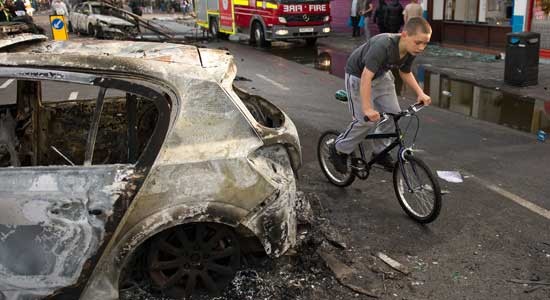
There’s not a lot to say at times like this.
The shock has been well expressed by others.
Those livingn with the reality of the riots are far better placed to make statements than me.

I received this prayer today from the CofE comms update:

A prayer for peace in our communities

Gracious God,
We pray for peace in our communities this day.
We commit to you all who work for peace and an end to tensions,
And those who work to uphold law and justice.
We pray for an end to fear,
For comfort and support to those who suffer.
For calm in our streets and cities,
That people may go about their lives in safety and peace.
In your mercy, hear our prayers,
now and always. Amen
Please pray ….

apostolic living

I just received a flyer from Affirming Catholicism advertising Apostolic Living, a day being held on 28th January in Southwark Cathedral. It’s a grand title and the speaking line up looks to be able to back it up with Paula Gooder, Mark Russell, Mark Oakley and Janette O’Neill. The program looks good but most of all seems to be quite practical in its outlook.

It’s looks like I might be hanging out in Southwark Cathedral on 28th January. Anyone fancy joining me?

creating space

It has been an interesting weekend with a mixture of stuff going on to reflect on.

There was the excitement of having the house to myself while the rest of the family are away. The silence of a house which needs a family to make it home. The fun of setting up camp with those staying at Detling. The pleasure of eating Chinese food with friends. The joy of seeing Gills win the opening game of the season. The frustration with people angry over a temporary change in the BCP eucharist service. The helplessness while watching images of riots in London on the TV screen. The disappointment of upsetting people. The emotion of watching Lovely Bones.
It seems I packed a lot of emotion into this weekend!
Being home alone is a pretty unique experience for me and is probably only the second time this has happened. I hope to use the time to reflect, to read and reflect some more, as well as to really take time to think seriously about how things are going, what I should be doing in the future and where things like the gathering seem to be leading. 
I want to hold all of that though in the sentiment and attitude of the Thomas Morton prayer I drew attention to last week. So I am kind of seeking direction while being fairly comfortable with the mystery in which God seems to often chose to leave us. I am conscious, however, that over the last few months time alone and quiet with God has all but disappeared due to changing circumstances … and so a concerted effort to re-develop a good habit is needed. I intend to try and spend some time sitting and thinking, or ‘hanging out’ with God. I think I am going to have to work at creating this space to ‘ponder’.
One reflection after 3 years of doing what I do is the mild frustration I experience with people that still don’t seem to get it. There is always a pressure, some feel, to do, to create, to act, to be proactive, to get ‘out there’ … but the waiting rather than racing ahead, the watching rather than doing, the joining in rather than creating, the listening rather than speaking and the serving are the places where I see sparks of the divine. I fail to be able to express the joy I experience when I notice those Godly moments; but I can say I hunger to see them more and more. 
So over the next few days I expect to miss the family a little bit, I expect to see some friends, and I expect to spend time in that contemplative way, not necessarily looking for answers but creating that space so that I can have a greater chance of being led by God in what I do – all the while realising there are no guarantees here!

what do I believe?

Over the last few months I have had some very interesting conversations on my travels both within and outside Medway.

In particular I have found myself in ‘debate’ with Christians who have a very legalistic view of our faith. I guess I am on sensitive ground here as I don’t want to berate or get into the whole ‘I’m right and you are wrong’ crap that flies around Christianity far too much. But I do, somehow, want to start a dialogue over how we live out our faith. It seems to be that there is a significant section (I have not researched enough to be able to say significant ‘minority’, significant ‘majority’ … so ‘section’ will have to do) of Christians that will excuse any behaviour by simply saying ‘well it is scriptural’ or ‘it is in the bible’.

The Bible is important. The Bible is the word of God. In that sense I am still a good evangelical; but we still need to ask what does that mean. I mean, when we say this is the word of God, what do we actually mean by that?

Do we mean that these words come direct from the mouth of Creator God and so cannot be altered in any way and are totally, irrevocably 100% to be adhered to the the exact infinite letter? Well … if we do there is a slight problem of age and culture to get around there. The most recent parts of scripture are some 2000 years old … and a lot more is older. This means this whole question is not as easy as some people would have us think.

I want to share a little incident from home that is relevant here. Around the dinner table recently one of my children said ‘that’s sick’. In translation he meant ‘it was brilliant, or cool, or amazing’. Only  few years ago, ‘that’s sick’ would have meant ‘gross, horrible, or maybe ugly’. In the space of just a few years one word ‘sick’ is being used in a totally different, and maybe even opposite, way than it used to be used.

If we were to write down that conversation and it was read in a few hundred years, let alone thousands of years, would the people have any idea what we were talking about? Would they have to try and second guess what was being said? Would they understand that ‘sick’ meant ‘amazing?’

There are plenty of other word we can use that we may or may not know what people were saying when they wrote them: cool, gay, yellow, slate, slag, waste, ace, acid, dabs, deck, dipstick, pad …. the list can go on and on and on.

I do believe the Bible is the word of God … but I do also believe it was written by humans who had only the language of their time and culture to be able to express what God was telling them. So, our task in discovering what it means requires that, first, we try to work out and consider what was being said at the time it was written – and that only comes after the complicated process of translation because (shock horror!) the Bible was not written in English ….. not even in 1662 BCP type English!  Here a knowledge of the culture and history of the time becomes very helpful, and I would say vital.

For me, as well, there are some clear standards and attributes that go with God and so I believe that what the Bible ‘says’ should mirror who God ‘is’. Surely that must be the case … mustn’t it?

I believe Jesus came to earth and that we can look to Jesus to see what God is like. Jesus being God in flesh is a pretty orthodox Christian belief (100% human and 100% God – too big for my brain to get around … but God is God!).

From the gospels we that Jesus is compassionate, loving and inclusive. So it follows simply that God is compassionate, loving and inclusive. It then follows in my mind that any interpretation from the bible for relevance today that is not compatible with those values does not fit with who God is. If biblical interpretation does not fit with the character of God then I query whether we have interpreted correctly.

So … it is not as straight forward as it may seem. I do not believe we can simply say ‘the bible says x and so we have to do y’ and then believe we are ok and right. I think it is more about finding out what the bible said then in a particular time and culture and why and then bringing that same practice into the here and now and living a way that displays the compassion, love and inclusivity of God. After all … there is no point being ‘right’ if the way we live is crap, discriminatory and abusive!

But saying all that … I refer to my opening remarks … I could very well be wrong … and I’d love to know what others who come here think …

calling … mary salome and barnabas

Yesterday I drove Meghan and Luke back to Heathrow and waved bye as they returned to the US and COTA.

The three week placement has gone pretty quickly and as well as now considering 2 people that I did not really know before to be ‘friends’ it has been a great experience to have Meghan shadowing me for large parts of what I do in Rochester.

Over the last month or so we have chatted a lot and it has been really enlightening to hear another pioneers perspective and observations on what I am doing. We have not always agreed about stuff but the time has, I think, been beneficial and challenging in a  positive way for both of us.

For myself it has been really valuable to have someone alongside to share ideas and seek feedback from. In many ways Meghan has fulfilled a ‘St. Mary Salome’ type role for me: a character that is believed to have been the person that was asking Jesus questions and challenging … maybe asking ‘why do you do this and not this?’ (there’s a bit of poetic licence there as we really know very little about Mary Salome). In other words Meghan’s comments and questions have required me to think about what I do, to remind myself what I am about, and to challenge me to remember what it is that I am trying to achieve. It is also good to hear how a fellow person views and experiences the same situation.

As I said, it has been great having Meghan around. It has supported in my mind the belief that I need two other people to join with me on this journey.

For sometime now in my weekly prayer emails I have been asking my friends to join me in praying for two other people to join me on my travels. I believe these two people  may best described as a Mary Salome and a Barnabas character: one remembered for their questioning ability, and the other for their encouragement. So … I’m still on the look out for these 2 people. If you are the praying kind … please join me in asking that I may find them soon.

which way?

Following on from yesterdays post about searching and not really knowing what I am doing, I have been encouraged to see others grappling with the same kind of issue:

Graham posts from Eugene Peterson’s Contemplative Pastor:

I don’t know what I am doing half the time. I am interrupted, I am asking questions to which I have no answers. I am put in situations for which I am not adequate. I find myself attempting tasks for which I have no aptitude or inclination.’

I think even more helpful was a comment from Ig with this quote from Thomas Merton:

‘My Lord God, I have no idea where I am going. I do not see the road ahead of me. I cannot know for certain where it will end. Nor do I really know myself, and the fact that I think I am following your will does not mean that I am actually doing so. But I believe that the desire to please you does in fact please you’.

It’s encouraging to know that others have existed in this and do exist in this. It can be frustrating if you are impatient like me. It can also be exciting as we explore whether we are going in the right direction. In our society there seems to be some infatuation about destination which manifests itself in 5 year plans and strategies and so on. Although these are not bad things in themselves I do wonder whether we need to just allow the mystery of God to take a little more control.

I guess the best I can do in my situation is move forward and hope … and pray that I am moving in the right direction.

the search goes on …

Each Sunday night or Monday morning, I put together a weekly email that some very wonderful people receive as they pray for me and what I am doing throughout the week. In my email I outline what I will be doing and when.

I have just admitted in that email that I do not know what I am doing! Now many of you have probably been aware of this for a while, in fact a lot of you will be saying something along the lines of ‘well … no change there then!’

While this used to worry me, I have surprised myself by how relaxed I now feel about this statement.

I might not know what I am doing, but I do know what it is that I am trying to achieve. I don’t quite know how to achieve it, but I do have a direction to go in. I don’t quite know where that direction is taking me, but there are landmarks to follow.

I started thinking about this last week. A number of people have visited over the last 10 days or so and one asked me an interesting question last week. They asked ‘as you do your ‘stuff’ which character from the bible do you relate to, or think of, the most?’

Without too much thought I responded with Issac, the son of Abraham. It seemed Issac travelled around a lot in the desert. If we read his story in Genesis it is easy to think that he just aimlessly wanders around the desert with no real plan. It was because of this image I had of him that I was drawn to him. But, as I looked more closely I discovered that although Issac does wander looking for pastures for his sheep, he does not wander aimlessly. Instead, he wanders between the wells that his dad, Abraham, had already dug when he wandered the desert. This wells had since beens sealed, so Issac had to re-open them and re-dig them until he found fresh water that he could use for himself. (you can read all about this in Genesis 26)

As I considered more the story of Issac I came to see similarities with my journey. Often my journey seems pretty desert like. But, instead of looking for water, I am looking for something from within christian tradition that needs to be re-dug, rediscovered and reinterpreted for today so that is is as refreshing as good clean water in a thirsty desert. As a pioneer (a term I am increasingly coming to dislike) I am not always looking for something new …. I am looking for something that has been there for centuries, but has merely been buried under layers of christendom, consumerism, modernity, post modernism …. (I could go on…) and needs rediscovering for today.

So … I am not quite sure what I am doing, but I do know that I am searching … and I am also looking for others that are searching

the search goes on …

the upside down kingdom tour

A little while ago I blogged about Shane Claiborne and his book, The Irresistible Revolution.

I’ve just found out that Shane Claiborne is touring the UK on the Upside Down Kingdom Tour.

The nearest tour date to me is Bromley on Wednesday 31st August at 7.30pm so I will be trying hard to get along.

I loved what Claiborne writes in his book and I am interested in hearing what he will say at these events …. certainly the ‘billing’ sounds like it will be a challenging evening:

The prophets have said,
The last will be first and the first will be last.
The mighty will be cast from their thrones and the lowly will be lifted up.
The hungry will be filled with good things and the rich will be set free of their riches.
The people will beat their weapons of war into farm tools. And war will be no more.
If that’s what’s coming… why not start now?

Join a movement to re-imagine the world. Join a revolution that has been reeking havoc on empires for a couple thousand years.
Upside-Down Kingdom Tour coming to a city near you soon. 

Anyone else fancy coming along with me?

Do Christians think before they post?

I have noticed a ‘trait’ developing over the last year or so on facebook that has caused me to question. I realise as well that this blog post may well be one of those posts where I get a backlash … but hey some people will say don’t provoke a reaction with what you write then why write!

The trait I have noticed is the status updates of Christian people. Quite frankly I find it difficult to see how Christians square what they believe with what they say in some of their status’. Without wanting to give the impression that I am writing out of a thinking that I am better than others (as those that know me know that I am very obviously not!) I do wonder what is happening and how some people seem to be able to compartmentalise faith and life.

Some examples that have stuck with me over the last few months include status’ that range from wanting people who used to be friends to come to harm because they have upset someone, to obscene racism, to jealousy over the success of a rival, to comments along the lines of ‘Winehouse deserved to die!’

I am not ashamed to say that some of those status comments have drawn me to tears. Where is the compassion, or the love, or the good news or the empathy that just one reading of any of the gospels flows continually from the mouth of Jesus. What do people looking in think about the Christian faith when they see such stuff?

Jesus calls us to love our neighbour, to turn the other cheek, not to seek revenge, to walk the extra mile, to sell what we have and give to the poor, to join with him in making the world a better place …. and we could go on. Too often we seem to be portrayed as judgemental people that want our own narrow way … and I wonder if stuff like this goes towards fuelling that view.

So my question, as it says above is … do Christians think?

As I was considering what or if to write I came across something that Graham found today which seems to resonate with what I am trying to portray… so I have done a cut and paste job below:


If the church were Christian, Jesus would be a model for living, not an object of worship.
If the church were Christian, affirming our potential would be more important than condemning our brokenness.
If the church were Christian, reconciliation would be valued over judgment.
If the church were Christian, gracious behavior would be more important than right belief.
If the church were Christian, inviting questions would be more important than supplying answers.
If the church were Christian, encouraging personal exploration would be more important than communal uniformity.
If the church were Christian, it would care more about love and less about sex.
If the church were Christian, meeting needs would be more important than maintaining institutions.
If the church were Christian, peace would be more important than power.
If the church were Christian, this life would be more important than the afterlife. 


And my second question …. is the church Christian?