remember … the poppy

Today is Remembrance Day, 11.11.11. I don’t often do long posts, but today my talk at last years Remembrance Service in the cathedral seems appropriate to share in light of what has been in the press recently:

‘Silence falls. Our soldiers fade away. No mans land turns slowly into a peaceful field of poppies. The only sound is that of a bird, singing sweetly.’

The stage directions for what has become known as one of the most powerfully moving scenes ever to grace our TV screens. The final stage directions for the last ever episode of the Blackadder comedy series. We see a slow motion shot of Captain Blackadder and the rest of his company going over the top. The theme tune hauntingly plays on a piano. Explosions around them. The soldiers disappear into a Flanders field as the colour fades away. Hesitantly, colour returns until we see before us a field of vibrant red. Poppies.

This image of the poppy continues to speak powerfully to us today. The poppy has become iconic. Speaking across the generations of sacrifice and remembrance.

I stand before you today nervous and a little unsure while feeling quite inadequate in this task of speaking to you during this service of remembrance. I’m 45, have a wife and 3 children, exist fairly comfortably and like to think I know a bit about life! I am conscious that some of you here today may only be half my age and yet you have experienced many things that I cannot even begin to imagine, and if I am honest – nor do I want to!

You people of our armed forces present today are brave people who have chosen to serve this country so that others, civilians like me, can live in peace and be protected from the horror of war.

I remember in my teenage years how war was glorified by those like Hollywood giving the impression that war was full of heroics and victory. Then the Falklands War happened. I was living in Weymouth at the time and waved off a good friend Richard who had joined up 4 years earlier. Rich survived the Sir Galahad and when I met him it was clear something had changed.

Looking into his eyes something was different, something was missing. Maybe some part of him had even died. As we talked it was clear he was hiding stuff, to protect us from the horror. The Hollywood image disappeared.

There are no words, there are no anecdotes … there is simply nothing that can take away the horror of war which has resulted in the death of your friends, your family members, civilians caught up in war zones and yes the deaths of those you have fought who are sons, daughters, mothers, fathers and friends of different people.

I am struck by our iconic symbol of this day. In this cathedral you can see 2 icons before you. The thing I love about icons is that the longer you look, the more you see. Icons have layers and layers of meaning. To the casual observer these depths of meaning can be missed. If I were to ask you what a poppy symbolised you would probably say ‘remembrance’.

There are two other iconic layers I wish to draw your attention to. The poppy is the source of opium. A powerful pain killing drug. The poppy speaks of the pain of the memory but also of the desire for the pain to be taken away. Just for a little while. As much as we may want that, we also know it does not help us or the rest of society if we try to escape the reality of pain. We live with the scars. Knowing that irrespective of whether those scars are from the wounds of missing loved ones or from the actual things we have experienced during war – both massively hurt! We face up to the pain which Remembrance day helps us to do.

There is another iconic layer of meaning of the poppy. This meaning has its roots in the Greek and Roman times. It comes from the knowledge that poppies bloom every spring. The redness of the poppy, which would be seen without exception every year, seen as a promise of hope and resurrection.

In those Flanders trenches, the poppy flowering each year with the coming of the warmer weather, brought life; it brought hope and colour to that war torn landscape. Red as the colour of hope. Nearly 100 years later the icon of the poppy can continue to be a symbol of hope. A promise of new life.

In the words we heard read in Isaiah, we hear talk of justice and peace coming:

‘My people will abide in a peaceful habitation, in secure dwellings, and in quiet resting places’

When will this happen? – Isaiah  goes on to say when a spirit from on high is poured out on us.  If we had read the set gospel reading for today, we would have heard the disciples ask the same question of a similar event … ‘when will all this happen?’

That gives us hope. Faith in the resurrected Christ does not draw out the ‘if’ question but the ‘when.’ When will this happen? There is a certainty there! This is not a faith that talks of being whisked to heaven where everything is ‘fluffy’ and nice. The choir the anthem sang are words from Revelation. These words tell us what will happen. There will be a new earth, and God will live with us and wipe away the pain.

There will be no more death, no more sorrow, no more crying, no more pain. Today we can remember that we have that hope of a new world here on earth.

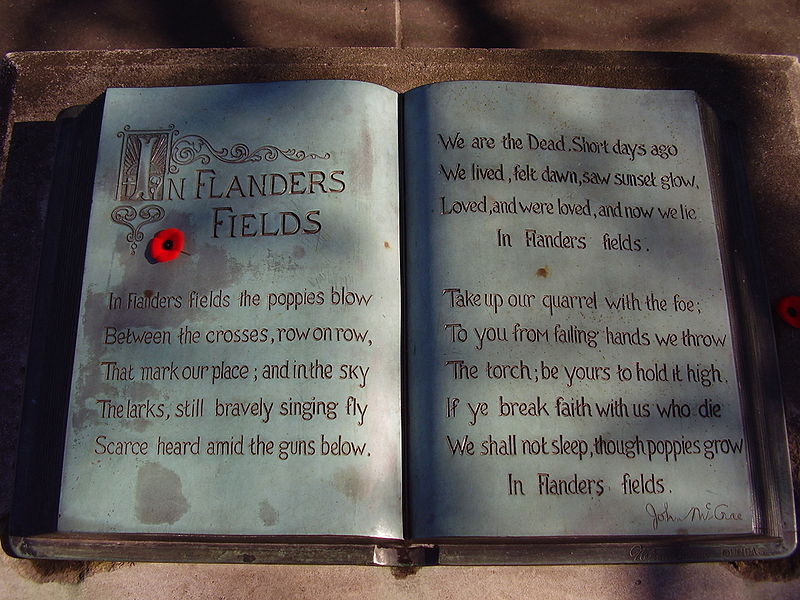
I end with the, now famous, words written by Major John McCrae from the trenches in 1915:

In Flanders fields the poppies blow
Between the crosses, row on row,
That mark our place; and in the sky
The larks, still bravely singing, fly
Scarce heard amid the guns below.

We are the Dead. Short days ago
We lived, felt dawn, saw sunset glow,
Loved and were loved, and now we lie,
In Flanders fields.

McCrae’s poppies symbolise the war dead. From the blood they shed on the battlefield, seeds germinated, sprouted, and grew into beautiful red flowers that inspired and heartened the living.

The poppy … an iconic sign of remembrance and hope – may we (are we able to) let it continue to inspire and hearten us today?
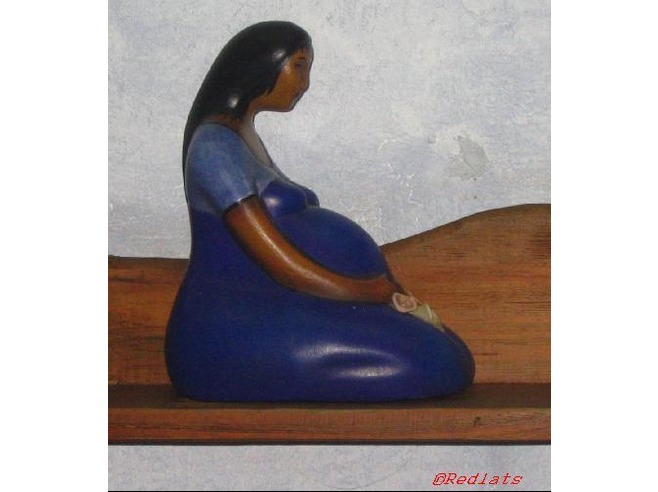
the pregnant pause … a beautiful post …

I am loving this today from Cheryl … and for the first time ever I am happy to start thinking about Advent/Christmas early.

Perhaps our mistake is thinking

that love will always come
in the shape we have known it:

a happy ending
a new beginning
a christ-child.

In this pregnant pause
while the earth holds its breath
waiting for what
it does not know,
let us have the faith
that even we,
with all our wise
and cynical
knowing,
would not imagine
the shape that love
will take

and instead just
have the faith
that it will come.

Amazingly beautiful. We simply cannot imagine the shape of love …. so I believe I need to stay alert ad look for clues … in case in my brazen dismissal I dismiss the unexpected love of God.

mind jump

It’s been a great couple of days so far at Pickwell Manor.

We are only half way through the week but my head is already very full of content, ideas, discussions and questions and so I think I need some space to just allow time to process what is going into my thinking at the moment. It is certainly amazing to have the input of both Shannon Hopkins and Steve Baker. Both have been involved in creating innovative stuff, one of Steve’s ventures being Pickwell and one of Shannon’s being Sweet Notions.

I am finding the week to be very challenging as we look at social enterprise and mission. I guess I am not fully comfortable yet with the idea of using a business model and thinking to enable or fund mission which I believe to be the responsibility of the church. I guess part of my difficulty is that I have grown in a model of church where I have always been taught and always acted with a stong ethos of the church paying for, or resourcing, mission.

By that I do not necessarily mean the establishment, although I guess I do partly. But I mean far more the actual people of the church …. us, you and me, if we call ourselves Christian. I have grown up in church where I believe there has been a strong underlying ethos that we fund mission from our giving.

To think differently, particularly in a business way, even when thinking social enterprise which I do see as more acceptable, as a means of sustaining mission activity is quite a jump to get my head around. That does not mean that it is not good and right, because I suspect it is good and right and very worth exploring (if I did not think that then I guess I would not have applied to join this course). It does mean, however, thinking differently and, for me personally, that means looking carefully at my values and ensuring what I think about doing fits well with those.

In the past when I was director of Gillingham YFC I allowed us to fall into the trap of our vision following the money and funding available. This got us into a couple of difficulties as this resulted in us having to neglect areas of our work that were key. So, my inbuilt brake or fear of mission and vision following funding rather than funding following mission and vision is on a mild to heavy alert.

I am using part of this week to think about the future and to write a proposal to present to people in the coming weeks of how my future as a pioneer could map out. There are plenty of ideas spinning around which I am now trying to settle onto paper into some understandable and achievable form … so maybe watch this space!

i may have moved … but not quite!

I had not realised how many different platforms there were out there to host SHP! It is clear that I have to move from blogger and the two main contenders at the moment are wordpress … which you are seeing now which sees as easy as blogger to use, has imported my blog quickly in its entirety, but less flexible in allowing be to customise how this looks. The other main contender is posterous which seems slower and after two attempts has only imported half of the old blog posts,  but will allow me greater control over how the blog appears to me, you and everyone else.

Any advice out there greatly received!

el azúcar

Tonight I had the pleasure of attending the private viewing of Andi’s exhibition at Deaf Cat. Andi had taken the Mexican Day of the Dead theme and produced some fantastic and beautiful work – if you are in Rochester at all this week you really need to pop into Deaf Cat to see this amazing work.

Some people without looking may dismiss the exhibition thinking it to be too morbid. But it isn’t. It is bright, vibrant and strangely alive. The festival itself is about continuation of life and the celebration of life … the complete opposite to halloween.

The picture … oh meet El Azúcar, my new monacled sugar skull. I think he looks amazing sitting on my desk, although I need to find a place to show him off proper.

rolling reformation a year on!

Yesterday I got to again deacon in a pretty unique (and technically illegal … sshhh!) service in the Rochester Bridge Chapel. I blogged about the service and experience here last year. The service we used is based on a pre-reformation text and last year the experience caused me to start to think about the idea of a ‘rolling reformation’ … trying to capture the idea that we need to be constantly undergoing reformation type acts as language and symbolism changes with time. A year on I find myself feeling this even more strongly as technology and communication seems to be fuelling a language revolution which is constantly morphing and re-morphing as it takes words that I once thought I knew how to use and give them a totally different meaning.

At the time Annie was kind enough to comment, suggesting that the idea of a rolling reformation should not be limited to religion but that the rolling reformation mindset could apply to other spheres of our life.

I liked Annie’s comment: ‘It is our nature to question and grow and evolve, and it is natural that our faith should do the same – while retaining the central core belief.’

I think that hits the nail on the head pretty much. Our understanding, our language, our expression, our living out should evolve as we grow in our learning and understanding. I wonder if this means it pulls our ‘absolutes’ to the bear minimum as it throws up in the air how we should live as Christians. Events of history, past (such as the slave trade) and very recent (such as Occupy London), show that our faith and interpretation of the Bible can be very very different and seen from totally different ends of a spectrum with both sides using the Bible in support of their stance.

I talk with a lot of people in my role – it is one of the things I love about this job at this time. I talk with people of no faith, Christians and post Christian. We talk about lots, agree and disagree about lots as well. I guess the thing that is open to debate, as I find in conversation with my new friends is what is, in fact, the central core belief that needs to be retained and what is, indeed, up for the light of a rolling reformation reinterpretation!

soul chat?

Last night’s pub theo was a pretty special event. Great atmosphere, great people, a fair amount of disagreement and challenge but always laced with a massive amount of respect, care and interest in each others views. If only church could be like this!!

The opening questions was something along the lines of ‘So come on then you Christians … what is so bad about celebrating Hallowe’en?’

The conversation moved around the belief or not of ghosts, spirits, afterlife and in particular of the soul .. and what the soul is, whether it exists, whether it lives outside the body and what happens to the soul upon death. Jade sent in comment via twitter (are you impressed how multi-faceted pub theo can be!!??) saying the body loses approximately 21 grams and  asked whether this could be the soul?

The conversation, both face to face, and the via twitter/facebook comments  was fairly fascinating and engaging. I’ve cut and paste some below … fee free to join in here or on facebook:

Sorry I couldn’t be there tonight 😦 Point to maybe lob into conversation, reportedly at the moment of death the body lightens by 21 grams – the weight of a human soul perhaps?


I think it misses the point to weigh the soul. The soul as the ‘ghost in the machine’ is a Greek import into Christianity. I don’t think the Hebrew faith known by Jesus would recognise it. We have the word ‘soul’ in English translations of the Hebrew Bible but again it’s an import. Belief in the eternal soul allowed Christians to do truly dreadful things to people’s bodies. I’m a monist when it comes to anthropology. We *are* our bodies. The soul/spirit are emergent properties of our brains. I believe in the resurrection of the body not the soul’s ascent to heaven. The troubling implication of this point of view is that death is truly the end of this experiencing self. And brain injury and disease truly affect our real self. Jesus approached his end with fear and trembling unlike Socrates (a believer in the soul) who took hemlock willingly. I’d be interested to know if this view emerged at Pub Theo. I threw it in when we discussed something similar at PUB:FAITH. Profound and fascinating stuff. Enjoy.


All the energy in the body does not disappear. Energy has to go somewhere even if it dissipates to a thin layer on the earth’s surface. The energy in the body is a result of complex chemical generation lending us our personality. Even the body if one thinks of it as our ‘matter’ has a psychodynamic relationship with our energy. Is all or part of the energy in our bodies representative of the soul?


So … want to add to the discussion?


take shape

I have had the week off.
I have had time to think, to reflect, to read, to watch movies.
I have also done a lot of walking as I ‘tweeked’ the old back after preaching last week.

As the week unexpectedly opened up for me I decided on one day that my walking should be around the Tate Modern. I love the Tate and, apart from various coffee shops, I really miss just popping in and out of this creative space like I used to be able to when I was a member and working in London twice a week when with YFC.

Personally, for me, I find I hear from God through film and art just as much as I do through Bible study.  I find wandering through the galleries of the Tate, and just wandering around the Borough Market area of London to be quite an inspiring space for me, especially when I am feeling dry as I have for the last few weeks.

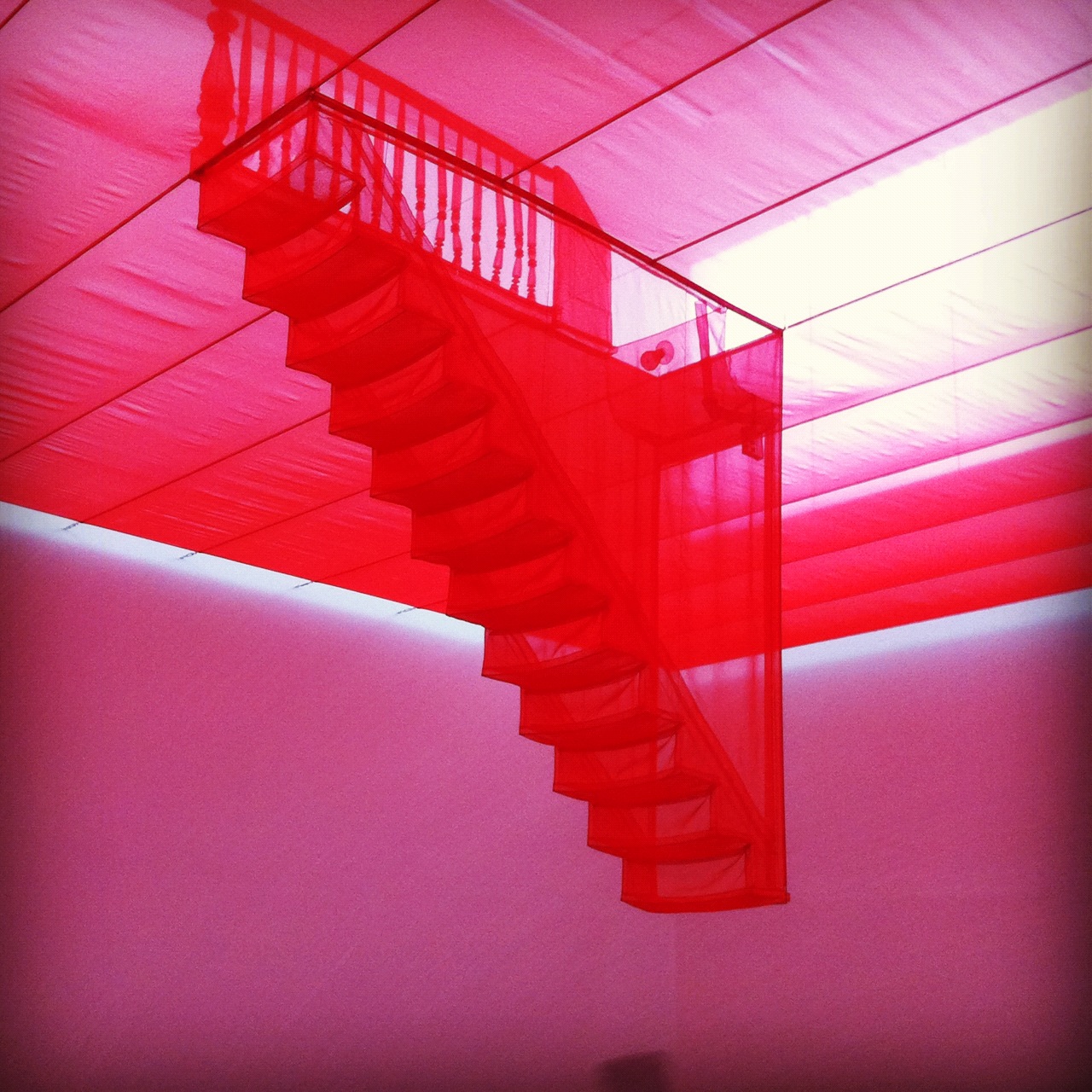
I found a number of exhibits to be amazing to study. I found myself mentally climbing the stairway. I’m not sure where it is leading, and I’m not sure where I was going as I climbed … but the piece itself was stunning, captivating and drew you into its space.

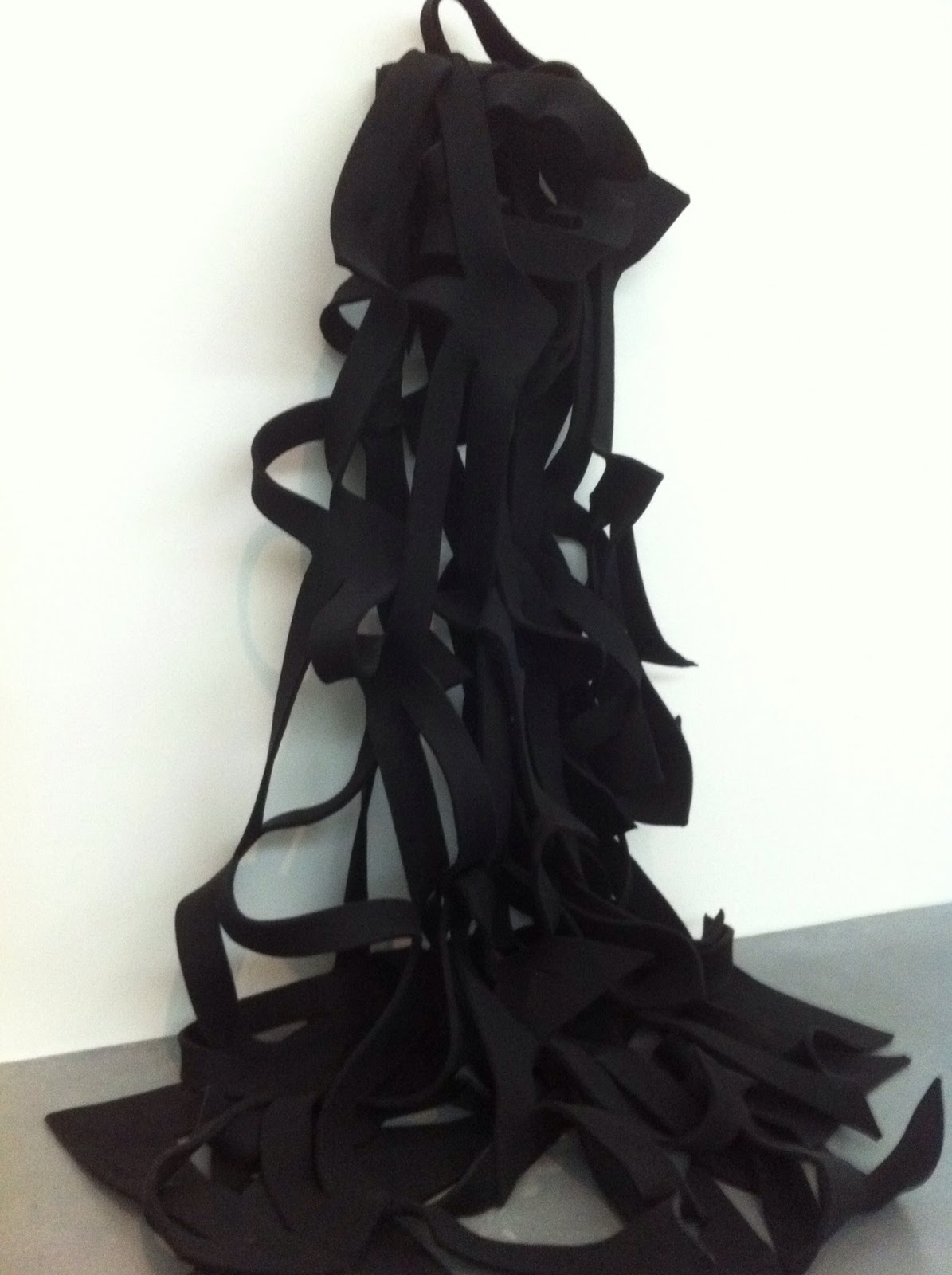
I was particularly struck however by an un-named piece by Robert Morris. Morris’ piece captivated me and got me thinking as he has exerted minimal control over it’s appearance, effectively giving up control of how the art appears. The piece consists of a number of strips of felt which are suspended and allowed to form their own shape under their own weight. Effectively this means that the shape changes each time this work is displayed. The material determines it’s own shape.

I was challenged by this as I wondered whether God had a message for me in this for the gathering. Sometimes I wonder whether we try to control things, events, maybe even God, just too much. In our fear to not offend, or in our obsession with accountability, or our ideas on what should and needs to be included, there is a tendency to try to force things into particular moulds.

We have been trying to create something new with the gathering. Some of what we do is very creative and different. Certainly some visitors, who are very very comfortable in the Christendom mould, have not coped with our openness, our inclusivity, our vulnerability and our desire to move forward together, learning from each other and encouraging each other.

What we do, however, still looks like a church service … a very relaxed and fdcreative one, but still one nevertheless.

I guess when you try to create something new it’s hard to break out of the mould that you have grown up with. When you have been so used to doing something one way, and so used to hearing that a b and c need to be included or done in a particular way, it then becomes very different to see any other way to do things.

So I wonder … whether in some way, and I don’t know how, that we need to let the weight of our ideas, our dreams and our passions find their own shape. In order for this to happen we need to find out how we can give them the freedom to relax into their own shape.

I’m not sure we know how to do that … … yet!

… space …

Due to one thing or another I have fallen behind in keeping up to date with my blog reader. No real excuse, other than I seem to be feeling very tired and quite unenthusiastic for many things at the moment. My writing here is becoming sporadic; I have a desire to write, but do not feel I have anything valid to say at this particular point in time. It’s not a painful or  bad space to be in …. it’s simply a nothing space I guess! But …. I am a firm believer that ides need space to be birthed into …. so I am waiting!

There is some good stuff out there which I have been pleased to catch up with over the past few days.

Near the top of the list is a great Nomad podcast interview with Tom Wright … well worth a listen. He says some good things about the future …. some people who were quite freaked at pub theology a while back about some views of the future might benefit from listening to Wright’s podcast.

There is also a great series here from Jonny Baker … again well worth a read.

If you are looking for a great Bible resource then people up there in Nottingham have come up with Bibledex. This looks pretty good with a short video introduction to each book of the Bible. I’m sure there are lots of ways to make use of this …. if only I was still a youth worker!

While I inhabit this temporary stage of confusion and un-creativity, I have found the photos of Den and the creations of Zara to be both inspiring and restorative of my faith in the creativity of people.

An I can’t forget Naked Pastor … he keeps me sane and makes me laugh … especially on October 19th!

few words …

‘A nations greatness is measured by how it treats it’s weakest members’       Mahatma Ghandi

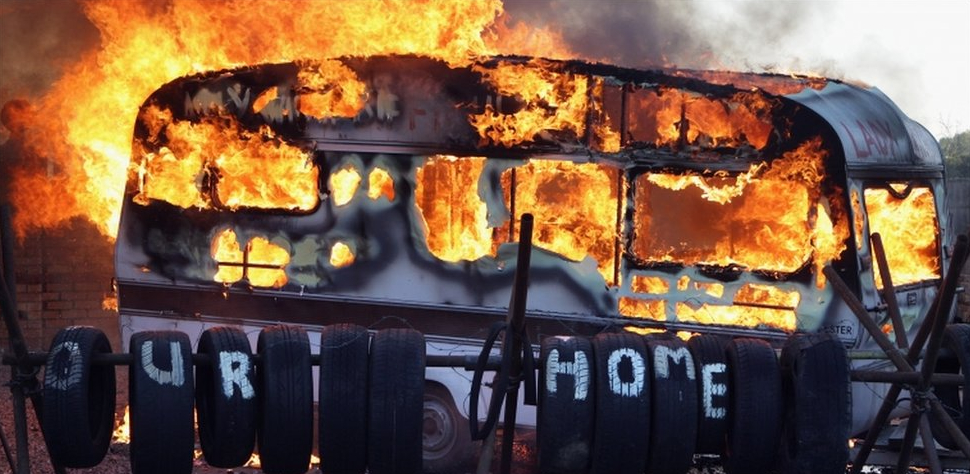
(for those outside the UK some context is here and here )