God in the noise

Each morning I pray in the Ithamar Chapel before going out onto the streets of Rochester. Today I smiled a lot while I was praying as in the background I could hear the school groups playing tunes on bottles filled with water. when I say tunes… well it was more of a joyful noise.

There has been a bit of a conversation going on within the cathedral community with some showing concern that there is nowhere quiet to pray within the cathedral. My immediate reaction to this is that over the last 12 months I have never found that a problem. There is always ‘quiet’, maybe not silence. But, ‘should there be?’ was my almost immediate comeback at myself.

I understand and relate to people wanting quiet, but should a cathedral be a place that provides quite for people whenever they want it? I’ve thought about this and have come to think that as well as being virtually impossible to achieve it surely gives the wrong idea about how we talk and listen to God.

This morning was not quiet. It was, in fact, very noisy and it caused me to smile. It encouraged me to praise and pray to a God of disorder as well as order. The noise and experimentation reminded me as I prayed that God is a creative God, and that God has given us that creative gift in a variety of ways – the ability to create, amongst other things, noise.

After my prayer time I then went up to the nave and saw the children and heard the hub bub around the cathedral. This brought another smile as I thought – surely this is how we want our cathedral to be as well as calm and quiet. The children had looks of awe on their faces as they looked around and explored the spiritual space. The noise and the actions of the children seemed to enhance the spirituality of the space rather than distract from it. It brought a certain life and showed the cathedral to be a vibrant living space. It showed faith is till alive and relevant today.

It is right to have times of quiet in a busy 21st century lifestyle but I have a concern if we give the impression that quiet is always necessary for access to God. If we do give that impression then surely we tell those for whom quiet is a rarity that, essentially, they cannot hear or speak to their creator. The ability to ‘pray continually’ means that God is in the noise as well as in the silence.

God is in the noise as well as the silence, but more often than not we need to be able to understand how to approach God in the noise because noise is all there is.


the church of perpetual experimentation


A couple of people have pointed me to this on You Tube.
Quite interesting.

hit by the porter!

Its been another study day which has worked quite well. I achieved the aim of finishing reading, again, the rule of life of St Benedict. The rule is challenging, but I like the way the rule seems to be all encompassing. It relates to everything from meal times, what to wear and so on because St Benedict saw no distinction between secular and spiritual. This rule of life works from the premise that everything is important to God and so everything needs to be taken account of.

Some things hit me today which I had not noticed before, probably because I zipped through the final few rules last time. Many people are aware that hospitality is a particular hallmark of Benedictine spirituality. Rule 66 is all about the porter.

This rule starts like this: ‘At the door of the monastery place a sensible old man who knows how to take a message and deliver a reply, and whose age keeps him from roaming about.’ There seems to be a bit of Benedictine humour there with images this portrays.

The porters role is to be the first response to visitors. He is the connection between the community and the outside world as the rest of the community would not leave the monsatery often if at all. I think Esther de Waal sums this up well in her commentary on the rule: ‘the porter stands on the edge, based in the enclosure and yet greeting the world outside. So in him we are watching the holding together of desert and marketplace, cloister and world.

I like and very much relate to the idea of standing on the edge and it reminds me of the doorkeeper poem I linked to here 5 years ago.

In particular I have struck and challenged in my thinking over the actual greeting itself from the porter to whoever may knock on the door. His first response is to thank God for bringing a visitor. Then sometime in the encounter the porter is to ask for the blessing of the visitor. When re-reading this rule it hit me that Benedict is saying that hospitality, welcome, care needs to be 2 way. It’s something about all being able to give and receive.

It does not take a big imagination to realise that a lot of the visitors to the monastery would be those who needed help with food, clothing or so on. Many would have been excluded from society, thought of as worthless. The porter, however, sees the face of Jesus and asks the visitor for a blessing. This would immediately show the visiting person that they had a role and had value.

I have been wondering how I might take on this 2 sided view in my ministry and in encounters with people. IN particular I have been thinking about those that ask me to pray for them. I have shared that I am uncomfortable as this gives an impression that my prayers are is some way better, which is a mad idea. I wonder, however, if when I have such encounters that I should end them by making a request of them by asking them to remember me in their prayers as I need prayer as much as them?

I’m still pondering this – would such a response show value and respect, or would it confuse and alienate. It’s a pretty fine line I think?

preparation

A number of people have asked me ho I prepare myself to go to the same place over and over again, and some have asked if I pray before going out.

Over the last year, I have found that prayer, sitting with God, mulling over in God’s presence, crying to God …. whatever you wish to call it, or however you wish to do it, is quite vital for me to do before I go out.

A pattern over the 15/20 minutes before I go out has developed and I share it here in case it may be of use to get others started.

I spend the first 10 minutes or so just chilling with God. Sometimes I sit in silence, always i listen to attempt to discern what God may wish to say or thoughts he may wish to bring up in my mind for the day. I think listening first has proven to be quite key, and certainly fits with the Benedictine model, and can determining the rest of the prayer time.

Next I usually pray through putting on the armour of God (Ephesians 6) using words which sound something like this:
God … I put on …
the belt of truth – help me to be truthful in my actions and speech today, stop me from exaggerating and lead me
the breastplate of righteousness – may I be in right relationship with you, others and myself today – if I need to sort anything show me
the shoes of the gospel – Lord lead me today, may I walk in your steps and may your light shine as we walk together
the shield of faith – if and when Satan say I’m not good enough, help me hide behind this shield in the knowledge that he is right but that you have called me
the helmet of salvation – protect my mind today Lord, no matter what I hear or what I see or what I experience, remind me that my salvation with you is secure
sword of the spirit – Lord as I ponder your word, today show me how to use your word, when to speak and when not to

When I am all armoured up as it were I pray by name for all those people I expect to meet and have got to know and ask God simply to bless them.

After that I feel more comfortable to go out into God’s High Street to see what is happening today and how I might get involved.

If that’s helpful for anyone that’s cool …. if not then its just another reflective blog post!

a never ending cycle

Some more reflections on my loitering times as I realise I have been fairly quiet on this front for a couple of weeks. This is, in the main, because things seem to happen very very slowly at an almost unnoticeable rate until you have a chance to sit back and reflect. When I do this it becomes quite clear that things have moved significantly in some ways.

Its seems to me that my experience goes in cycles. There are bouts of walking into places, being welcomed enthusiastically, and joining in with conversations and general life. This is balanced by other times when I can see the tumbleweed blow through the place as people turn to look the other way and pretend that I am not there. I’ve noticed the phases seem to go about 3 weeks of conversation followed by 10 days or so of tumbleweed. I wonder if these phases will change as relationships get stronger and real friendships start to form.

I wonder if that is a pretty normal cycle for this kind of ministry – I’m not sure as there are not that many people to ask! I also wonder whether there is nothing going on here at all and that it is all just my personal perception. I wonder if it is like when you walk into a room and it goes quiet, and you immediately start to think everyone was talking about you when nothing is further from the truth.

It seems that I have just come through a tumbleweed phase and are moving back into a phase of conversation. I wonder if people naturally chat to a certain level and then retreat a little to see what will happen, observe to see whether I can be trusted with the stuff they have shared. I guess that is quite a natural thing to do. I wonder if building relationships in this way is a series of tests – I say I am not out to bible bash people or drag them into church or tell them what to think – and so people naturally want to test that in their own way to see if that is the truth.

I am kind of looking forward to this week. I am wondering what God will bring across my path as, if I look, there always seems to be something that quite often surprises me.

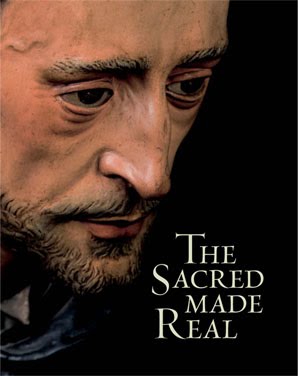
the sacred made real


The Sacred Made Real exhibition coming later in October to the national Gallery looks well worth a visit.

The blurb from the site says:

This exhibition will bring together paintings and painted wooden sculptures by the great Spanish realists of the 17th century. ‘The Sacred Made Real’ will provide a reappraisal of the crucial role of these hyper-realist sculptures in the development of Spanish art.

Providing a unique experience, sculpture and painting will be displayed side-by-side. This will be the first major exhibition to explore this relationship.

Most Spanish sculptures from this time were dedicated to key Christian themes. ‘The Sacred Made Real’ will explore how painters and sculptors combined their skills to create arrestingly real depictions of the saints, the Immaculate Conception and the Passion of Christ.

I must try to get along to see this – anyone fancy going?

Great times


It’s a week one – but still I smile.
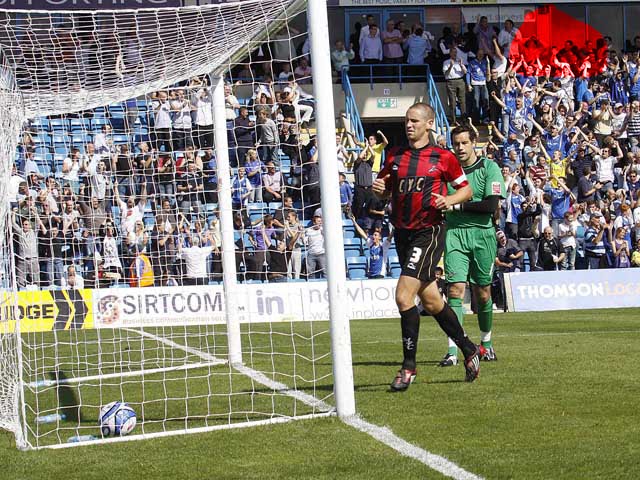
Gillingham 2 – Millwall 0.
I’ve kept quiet this week on the blog but this photo brought it all back to me.
The sheer joy of the occasion for Gills fans.
In the box behind me on Saturday were a lot of Millwall fans.
One was Phil, who was in my youth group something like 20 years ago!
He was telling how Millwall were going to walk it before the whistle.
This picture catches me turning round clapping while Phil, hands on head, is staring up at the roof in exasperation!
I’ve highlighted the bit in red for all to see.
It brings a smile back to my face eve now!!!
(if you are wondering why I am up so ridiculously early on a Saturday it’s because I have just dropped Tom off at the rail station who is now on his way to Leeds to watch Gills hopefully put up another good performance!)

Are you regular?!

The week has been another interesting one as I try to understand what is going on around me. I find myself constantly challenged, surprised and honoured by what ‘normal’ people share with me and ask me to do on their behalf.

I guess I am a noticeable figure around the High Street now and I hear from the staff of places and from other that people have been asking for me and it seems some seek me out to share a need or request me to pray for them or someone that I know. This week alone I have lit 7 or 8 candles on behalf of people who have spoken to me during the week while I have been hanging around. Most of these people have wanted prayer for themselves or a for a loved one. I have offered to pray with them, or go to the cathedral with them, but this has been declined in favour of me praying for them in the cathedral. I am not sure I am comfortable with the theology that lies behind this, my words of prayer are no more special than their words of prayer, but it would not be very loving to ask to talk about the theology of this and so I get on and pray on behalf of these people.

Today one such occurrence came that took me by surprise. I was in conversation with some of the regulars and a woman came up and asked me to pray for her. She gave me her name and just said she was having a tough time, and not wanting to share more she then left. I was taken aback by her boldness in front of these men. For this lady is seemed a normal thing to request, even in a packed pub. Apart from anything else I am amazed at how much or a great privilege this is. I would love to know peoples thinking behind what is going on. What is it about someone sitting with a dog collar on that draws people with prayer requests?

All the questions aside, I am seeing more and more that there is a great need for people to be able to access prayer in some way. I would not say these incidents are common, but they are certainly not uncommon.

When I start to share these stories with people they tell me this part of my role is quite pioneering. Actually I disagree very strongly with that viewpoint. My sitting in the pub, sitting in the coffee shops, wandering around the High Street is not pioneering as I understand it. What I am doing is, I think, what the traditional parish priest used to do – which was to be in the community and be available. After a year I have a number of contacts, a small number of which I think wish to explore faith further – my pioneering side comes in to play as I seek to discover what we do to help those people who are interested.

I am excited that the Church of England is training more pioneers – we certainly need them. But I am starting to wonder if the establishment as such also needs to give permission to parish clergy to be out in their communities and so making themselves available to the people. I do believe, and I realise I lay myself open to heavy criticism here along the lines of not understanding the pressures of parish ministry (which I acknowledge I don’t!) that all clergy should be able to carve out one morning, afternoon or evening each week where they hang out in the same place in their parish – coffee shop, pub, park, whatever …. being in the same place regularly opens us up to a whole new world!

does Benedict give us anything for today?

I don’t particularly enjoy Wednesday’s – well that’s not strictly true. It’s a mixed day. I have to take it as a study day, as per the recommendations, and I love studying and reading – it’s just I need to be in the mood to do so and at the moment it just seems there is a lot of stuff flying around in my head regarding the people in w/spoons, the people who gather at our house each month, missional installations in the cathedral during The Sweeps and Dickens in Rochester – all things that easily distract me from what I should be studying.

I have been looking at Benedictine Spirituality because that is the heritage we have at the cathedral. I’ve been particularly investigating it with an eye to wondering whether there is anything we can learn from Benedictine Spirituality in the way that we engage with tourists and visitors in the cathedral, particularly at those festival times I mentioned above – when we can have thousands of people walking through each day. This is essentially the question I am asking in my next essay for ongoing training.

Benedictine Spirituality is well known as having a hallmark of hospitality which I think is key and will come on to in a moment. The Benedictine rule, however, opens with the words ‘listen carefully’ and the rule seems to keep coming back to this. Listen carefully to God, listen carefully to each other and listen carefully to yourself. I think maybe the last one is one we ignore a fair bit; but Benedict seems to be quite hot on presenting the rule (of which there are 73 chapters looking at all aspects of life due to the understanding that everything is important to God) and then giving some flexibility clause with words like ‘as best you are able’, in which he seems to rely on Godly integrity and listening to our bodies to help us decide whether we can perform a particular task. The correct number of hours of sleep is also a priority in the rule in the early chapters.

So, a logical conclusion to draw from this is that whatever we try to do to engage with people during our festivals the two words we need to keep at the front of our minds is to listen carefully with a flexible approach that recognises that all are different and have a unique set of needs at any one particular time which may range from a glass of water to needing someone to pray with.

The hospitality thing is major in chapter 53. Benedict instructs ‘all guests who present themselves are to be welcomed as Christ’. That’s a pretty tall order and a very serious one. Benedict then goes on to describe how people should be welcomed: announced, prayed with, sat with, every kindness shown, the abbot is to wash their hands and feet, given a meal which is eaten with the abbot, after which they have a room with adequate bedding. I’m pretty convinced that Benedict here is reminding of the time Jesus washed the disciples feet and saying …. if you want to learn how to welcome people as Christ then you need to learn how to serve people as Christ.

How, as a cathedral that take this Benedictine rule of hospitality seriously, can we exercise that in a relevant and authentic way when thousands pass through the doors at street festival times? Is it enough to engage in conversation? should we offer to wash peoples feet? how do we feed thousands of people? Are all our visitors guests in the way Benedict thinks of them? Are we presuming all want to be welcomed as Christ; some come to find space with God, while others come to get out of the cold/heat/rain, or to see the architecture, or to learn of the history. Are all these people guests? Hospitality is not hospitality if it is forced upon those that do not want it – can we have hospitality on offer for people to take if they wish?

Thinking aloud on here seems to be helping the process. If you can help me answer any of this then I’ll have an essay nearly sorted (and you will of course be credited!)

any common themes?

I have been having further thoughts today on the rhythm of life stuff. I’m currently looking at the words that everyone has written to see if I can identify any common themes that see to be coming out. I am sensitive about doing this because I don’t wish my slant to influence how we go and I intend to ship out ll the words to the community to see what common themes they see – it’s just I wanted to see that there were some before doing so. There’s nothing like setting an impossible task to to wreck something that seems to be starting to develop quite well.

I’m sending these out in an email to people connected with the community – but I’d be interested in hearing what common themes readers of this blog see in the words and ideas written below i response to ‘what should church /christian community include?’:

common sense
authentic
questions
freedom to express thoughts/feeling
mission
sharing
family
music
prayer
accountability
people
reflection
quiet
songs of praise
light
fun stuff
incense
mystery
knowing to be on a journey is ok
relationships
social action
worship
eucharist/communion
bible
sensory/stimulation
godly play
craft/creativity
acceptance
listen
understanding own limits
food
social things

it’s a long list!
what, if any, common themes do you see?