
strong opinions … weakly held

I am still receiving daily thoughts from Father Richard Rohr. On some days his writings really grab me, pull me up short or hit me in the gut;  and on others what he writes seems to tie in with conversations I have been generally having.

This week Rohr writes: ‘Almost all religion begins with a specific encounter with something that feels “holy” or transcendent: a place, an emotion, an image, music, a liturgy, an idea that suddenly gives you access to God’s Bigger World. The natural and universal response is to “idolize” and idealize that event. It becomes sacred for you, and it surely is. The only mistake is that too many then conclude that this is the only way, the best way, the superior way, the special way that I myself just happen to have discovered. Then, they must both protect their idol and spread this exclusive way to others.’

As I read those words this week, many conversations around this ‘there is only one way’ theme came to my mind. I seem to have had lots of conversations with people, a lot (but not all) have been with other Christians, who seem to be very concerned with being right and making sure we are all ‘right’ in the same way. This outlook, coupled with the idea that this one idea then needs to be protected does, I think, result in people becoming entrenched in arguments. If you feel you need to protect an opinion or a viewpoint then it becomes very difficult to really hear the opinions and interpretations of others and miss the prompting that may tell you that your opinion needs to alter slightly or even be ditched and changed altogether.

I overheard a statement in the pub the other day …. ‘I have strong opinions, but they are weakly held’. It was said in a joking manner, but I think it sums up an excellent outlook. To my simple mind and thinking, that short stament, for me, somes up how I attempt to sit with my theology and my understanding of how I should live out my theology in my everyday life.

I am starting to believe that having an outlook that says, ‘this is my opinion but I may be wrong and so I am genuinely interested in what you think’ means that dialogue stays open, that surprises happen and that understanding develops in new ways. It gives space for God to simply be God! (Of course it goes without saying that as an anglican priest this all happens in relation to my prayer and bible study life (ie I don’t just rush off with the latest great ideas …. I am a thinker and mull things over …. I don’t think i’ve made a snap decision since about 1970!!!))

So … strong opinions, weakly held ….. firm ideas, gently owned, ….. sound views, lightly embraced …. all of which needs space to listen … to ourselves, to each other and to God.

attentive love

RIchard Rohr continues his Maternal Face of God series today with these words:

Sara Ruddick, in her book Maternal Thinking: Toward a Politics of Peace, speaks of the attentive love of a mother. In summary, Ruddick says mothers are characterized by attentive love. They have to keep watching this new life; they have to keep listening and adjusting to the needs of the child. It is necessary to recognize a new agenda with the growth of the child. If the mother cannot transform herself into attentive love, she quite simply cannot be a mother. She has to learn early on that life is about change, not about “standing your ground,” which is not going to help a child. All growth is about changing and adjusting to what is needed at this moment, with these tears, and by this child. The mother cannot run to abstract truths. Philosophy and theology courses at that point would probably be boring to her.

I cannot help but think that the present persecution of the Religious Sisters by the Vatican reflects this difference. The Sisters, by and large, went toward human need and pain with “attentive love.” The clergy, I being one of them, can easily stay in abstract theories and theologies and never get to love at all.

The case of the Religious Sisters  came up in discussion recently and I was quite perturbed by the seemingly simplistic and insensitive attitude that all the Vatican were doing was ‘asking the sisters to follow Catholic teaching’. This implies the Sisters do not wish to follow teaching and their total dismissal, rather than consideration, is shocking. Surely as we learn more of God, teaching changes. We used to teach that the world was flat … that we learnt more and we change our teaching!

How can we ensure that we are carriers of that attentive love while not falling into what can often be the sad judgementalism of disconnected theories and theologies?

the maternal face of God

During Lent I committed to adding Richard Rohr’s daily meditations to the start of my day. I have found them, on occasions,  to be so encouraging and challenging  that I have decided not to unsubscribe as was my intention.

This week’s series has ben entitled the Maternal face of God. This has been an interesting series and starts by stating that most of us actually experience unconditional love from our mothers rather than our fathers and so goes on to become the basis for many peoples eventual image of God. The images this week have challenged the reader to acknowledge that we all know and accept that God is beyond gender – and yet maternal language can raise an eye or two.

Personally I can relate to this. Recently I led prayers at Evensong during the sweeps festival and wrote a prayer that started Mother God …. but when I came to reading it in the cathedral evensong setting I dropped the maternal reference out of a concern for upsetting people during a major festival in the town and potentially giving the new dean an inbox of complaints. As I reflect I am concerned by my reluctance and wonder why the language concerns me so!

Rohr writes: ‘Whoever God “is,” is profoundly and essentially what it means to be male and female in perfect balance. We have to find and to trust the feminine face of God and the masculine face of God. Both are true and both are necessary for a full relationship with God. Up to now, we have strongly relied upon the presented masculine images while, in fact, our inner life was more drawn to our mother’s energy. That is much of our religious problem today.’

For some, catholics in particular, I wonder if this necessary maternal face of God has been represented by the person of Mary. It seems it is easier for some Christians to venerate another human being in the shape of Mary rather than it is to acknowledge the maternal within God. I believe in some parts of catholicism that venration of Mary has actually become worship resulting in the persons love for Mary being greater than the love for Jesus.

This may all be new and uncomfortable territory for many … but I am seeing that to understand more of the wonder and mystery of God, we need to pay more attention to the maternal symbolism of God as we take on the truth that God is indeed beyond gender.

the paschal mystery

Todays meditation from Richard Rohr .. a good way to enter whatever the Tuesday of Holy Week may have for us:

Christians speak of the “paschal mystery,” the process of loss and renewal that was lived and personified in the death and raising up of Jesus. We can affirm that belief in ritual and song, as we do in the Eucharist. However, until we have lost our foundation and ground, and then experience God upholding us so that we come out even more alive on the other side, the expression “paschal mystery” is little understood and not essentially transformative.

Paschal mystery is a doctrine that we Christians would probably intellectually assent to, but it is not yet the very cornerstone of our life philosophy. That is the difference between belief systems and living faith. We move from one to the other only through encounter, surrender, trust and an inner experience of presence and power.

In other words … we need to live it out in our normal everyday lives!

rolling reformation a year on!

Yesterday I got to again deacon in a pretty unique (and technically illegal … sshhh!) service in the Rochester Bridge Chapel. I blogged about the service and experience here last year. The service we used is based on a pre-reformation text and last year the experience caused me to start to think about the idea of a ‘rolling reformation’ … trying to capture the idea that we need to be constantly undergoing reformation type acts as language and symbolism changes with time. A year on I find myself feeling this even more strongly as technology and communication seems to be fuelling a language revolution which is constantly morphing and re-morphing as it takes words that I once thought I knew how to use and give them a totally different meaning.

At the time Annie was kind enough to comment, suggesting that the idea of a rolling reformation should not be limited to religion but that the rolling reformation mindset could apply to other spheres of our life.

I liked Annie’s comment: ‘It is our nature to question and grow and evolve, and it is natural that our faith should do the same – while retaining the central core belief.’

I think that hits the nail on the head pretty much. Our understanding, our language, our expression, our living out should evolve as we grow in our learning and understanding. I wonder if this means it pulls our ‘absolutes’ to the bear minimum as it throws up in the air how we should live as Christians. Events of history, past (such as the slave trade) and very recent (such as Occupy London), show that our faith and interpretation of the Bible can be very very different and seen from totally different ends of a spectrum with both sides using the Bible in support of their stance.

I talk with a lot of people in my role – it is one of the things I love about this job at this time. I talk with people of no faith, Christians and post Christian. We talk about lots, agree and disagree about lots as well. I guess the thing that is open to debate, as I find in conversation with my new friends is what is, in fact, the central core belief that needs to be retained and what is, indeed, up for the light of a rolling reformation reinterpretation!

God’s law

A heard a kind of joke the other day, which isn’t really a joke, but I liked it and used it to start my sermon last week. I don’t usually do the joke thing at the start of the sermon (no need when most of your sermon is a joke anyway!) but last Sunday I did.

It went something like this:

It involves a group of rabbis. They like to challenge each other. They have various challenges suitable for rabbis. In particular they like to challenge rabbi Gabriel. Gabriel knows too much! Gabriel always has something to say. Gabriel is the one everyone wants to out do. So they call Gabriel over …. ‘our challenge to you is to stand on one leg and recite the whole of God’s law. Gabriel ponders …. and they think they have him …. ‘at last something he will fail at they think’! ….
‘too hard a challenge?’ they ask?
‘Ok’, says Gabriel, and moves into the centre of the circle. He stands on one leg and starts,
‘Love the Lord your God with all your heart and with all your mind and with all your soul.
Love your neighbour and yourself.’
He stops hopping, places both feet on the ground, smiles and says ‘the rest is narrative!

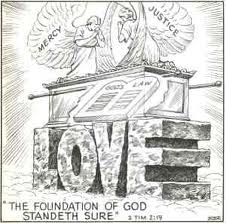
There are lots of arguments flying around ‘church’ at the moment ….. and some people involved in those arguments seem to have lost sight of the core of ‘the law’.

The core is love, and if the core is love we are called to love, and if we love then how can we exclude?

God’s law is love.

Discuss …..

letter to a 6 year old

During the run up to Easter and throughout it I fell behind in keeping up to date through boththe blog world and the news … so I missed this story from the Telegraph publishing a letter from Archbishop Rowan to a six year old girl who wrote a letter to God:

Dear God
How did you get invented?
Love Lulu.

Lulu’s dad sent the letter to various heads of churches … seems only Archbishop Rowan has the time to answer:

Archbishop Rowan’s response:

Dear Lulu,
Your dad has sent on your letter and asked if I have any answers. It’s a difficult one! But I think God might reply a bit like this –
‘Dear Lulu – Nobody invented me – but lots of people discovered me and were quite surprised. They discovered me when they looked round at the world and thought it was really beautiful or really mysterious and wondered where it came from. They discovered me when they were very very quiet on their own and felt a sort of peace and love they hadn’t expected.
Then they invented ideas about me – some of them sensible and some of them not very sensible. From time to time I sent them some hints – specially in the life of Jesus – to help them get closer to what I’m really like.
But there was nothing and nobody around before me to invent me. Rather like somebody who writes a story in a book, I started making up the story of the world and eventually invented human beings like you who could ask me awkward questions!’
And then he’d send you lots of love and sign off.
I know he doesn’t usually write letters, so I have to do the best I can on his behalf. Lots of love from me too.
+Archbishop Rowan


This along with his Maundy Thursday challenge illustrates what a toop bloke we have as Archbishop with a great ability to explain theology to a variety of audiences … thank you Archbishop Rowan!

the first to get it ….

Are you the sort of person who is often the last to ‘get it’ or are you one of the first? …. and by ‘get it’ I mean ‘understand’, be in on what is happening, understand the situation or so on or so on.

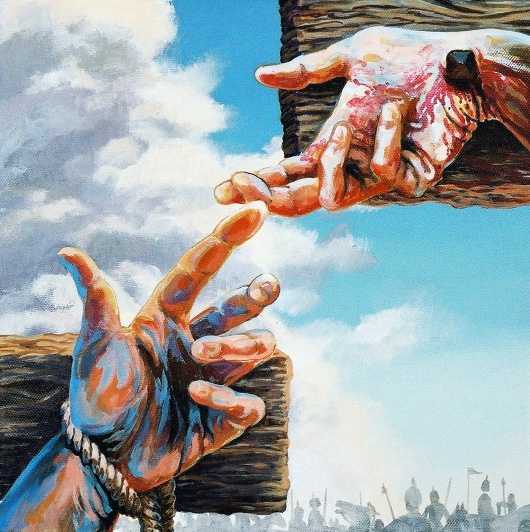
On reading the gospel accounts of the crucifixion scene the other day I think I ‘got’ something for the first time. It seems that the robber who was crucified with Jesus, the one who said:

‘Jesus, remember me when you come into your Kingdom’

was the first person to really get what Jesus was about.

This little statement jumped out and grabbed me as I read the whole gospel. To put this in context everyone else was really taking the piss out of Jesus. Are you really the Messiah? … then do this … do that …. save yourself … if you were the Messiah then you would … Christ was being mocked horrendously. The ‘experts’ of the law and the religious ‘geniuses’ were at the forefront of this mocking. The disciples even frustrated Jesus in that they never seemed to understand what he was about, even though they hung out with him all day long.

Out of the centre of this mockery comes this simple statement … ‘Jesus, remember me’.

The others, those that should have recognised Jesus, see the humiliation, the sacrifice and can’t believe it is God – they are not seeing what is front of them … they have lost the plot. The disciples get scared and run away. In their minds this cannot be the Messiah.

The robber, the condemned man hanging with Jesus sees what is happening and he grasps it, he understands. He gets it – this must be the Messiah!

I think we have a scene here that the ‘educated’, those who should know can learn masses from the outsider, the one on the edge, the distraught, the distressed …. the condemned.

And that got me thinking about myself, and my interactions with people – I find that often people I meet with get Jesus a lot more than others that I know in the church.

I wonder …. what can we learn from Christ from those around us that others may have written off?

which is closer to Christ?

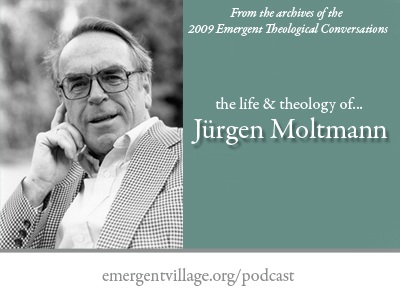
One of the other things I have taken on in Lent is to replace some TV time with listening to podcasts. I have just started listening to Jurgen Moltmann podcasts over at Emergent Village. I’ve subscribed to them on iTunes which is by far the easiest way to listen to them.

The first two podcasts are pretty general interviews to give some background as to where he is coming from and how his theology has come together. In the the later podcasts he gets interviewed in a more focussed way about what he has written.

I have just finished the second interview which displays well Moltmann’s clear thinking but also a great sense of humour. When he is asked about his theology of scripture he answers by saying ‘church and theologians need to read forward and backward in scripture’. He goes on to say that he reads the bible with the ‘supposition of meeting the Divine in human words …. and where there is conflict (for an example here he uses Paul’s ‘there is no male, no female, no jew, no greek’ passage and places it alongside the same writers ‘women shall not speak in church’) he asks himself ‘which sentence is closer to Christ?’

By that I think he means which seems to fit better better with the ‘whole’ message of the the Bible – the message of love for all, acceptance and redemption.

It’s an interesting question that I have taken into my world today …. ‘which is closer to Christ?’

Good, and sometimes challenging, food for thought during Lent!

so … this is what all the fuss is about


Following on from my last post this is what all the fuss is about – Rob Bell’s introduction / questioning from his latest book, Love Wins.
Via the comments Helen linked to Fred’s blog which is worth a read too – as is the full paper from NT Wright here.

What are people so afraid of here?