the starfish and the spider

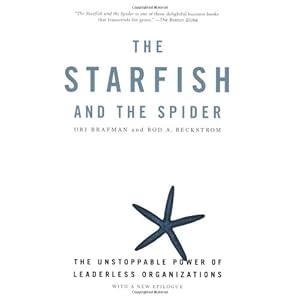
I have recently finished reading the Starfish and the Spider. Lots of people have been surprised as I have been reading this in public as people assumed it must be a theology book (something about dog collars and being interested in nothing else?) but have been intrigued to learn it is a business book. In fact one of the freviews on the back cover boldly claims ‘one of the 10 best business books of the year’.
I have been reading this as the sub heading grabbed my attention; ‘the unstoppable power of leaderless organisations’. The back cover elaborates, ‘if you cut off a spiders head, it dies; but if you cut off a starfish’s leg it grows a new one, and that leg can grow into an entirely new starfish. Traditional top down organsiations are like spiders, but now starfish organsiations are changing the face of business and the world.
I was grabbed with the idea of starfish organisations being able to change the face of the world because, after all, isn’t that what Jesus came to do? I can’t believe the plan was to leave the church as many know it now – that hierarchical, out of touch, exclusive religious mass that is all too common and what many of us seem to have fallen into. Even if we have not, it is the image that a lot of people I meet seem to have of ‘church’.
I had never really thought about this but a starfish does not have a head. It’s central body is not even in charge and the major organs are replicated through each arm. If you cut it in half it will not die and soon you will have two starfish! Some types of starfish can replicate themselves from a piece of an arm – so you could cut it into, say, 30 pieces and soon you would have 30 starfish! 
The starfish can do this because essentially it functions as a decentralised network – to even move one of the arms must convince the others that it is a good idea to do so! There is no central command and yet the starfish lives, replicates and adapts to its environments quickly and with skill. As there is no central command, but rather each leg has everything it needs to flourish, then it is not easily destroyed.
Wouldn’t it be great of the church could work like that? A church that is decentralised, that has the freedom and ability to re-grow wherever it needs to re-grow so that it looks and acts however oi needs to look and act in a certain environment amongst certain needs.
I’m not really sure where this thinking is leading me yet – and I hear the cry of ‘yes but ….’ with fears like correct doctrine, making decisions, and so on; but I also see the massive plus here for mission – and by that I mean being good news, responding to local need quickly, honestly and compassionately.

The idea of leaderless church attracts me. Essentially we have a leader – on this occasion the correct answer is Jesus. So, is there a need for a sole human leader as well? Would not a starfish mentality be better than a spider mentality as far as church is concerned? Could then the church respond with compassion in integrity rather than become embroiled in stuff which many see as a distraction from our calling and mission.

It’s an interesting thought – and the book is worth a read too!

the box

I read a lot of blogs and keep up to date via Google Reader.

I found this cartoon this week on Naked Pastor. David, aka Naked Pastor, sums up a lot of my fears in his cartoons. This none in particular hits the nail on the head of what, to me, is wrong with a lot of what we call church. A number of people I seem to engage with during the week seem to have this image of church – an image where thinking is controlled.

I don’t wish to be part of something which aims to control how we think or what we believe. I want to be part of something that explores together and learns from each other as we journey with each other.

discovering our blessedness

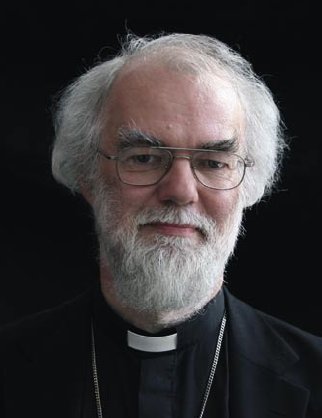
I received the heads up (thanks Richard) of this recording of Archbishop Rowan’s address to the recent Synod meeting.

Archbishop Rowan talks about the current situations ‘of freedom’ facing the church and advocates a 3D listening and decision making process as we seek a way ahead together and recover a sense of balanced liberties. It won’t surprise many that again he encourages listening and learning from each other, which is clearly the correct thing to be doing.

I like this quote towards the end of his talk:

‘we shall discover our blessedness as we hunger for what the neighbour, the stranger and the opponent has to give and as we find the time for them to give and us to receive it’.

It’s only about 28 minutes long … go listen!

a trad day of the pioneering sort

The day has been an interesting day in the life of a pioneer – because it has been quite traditional rather than pioneering.

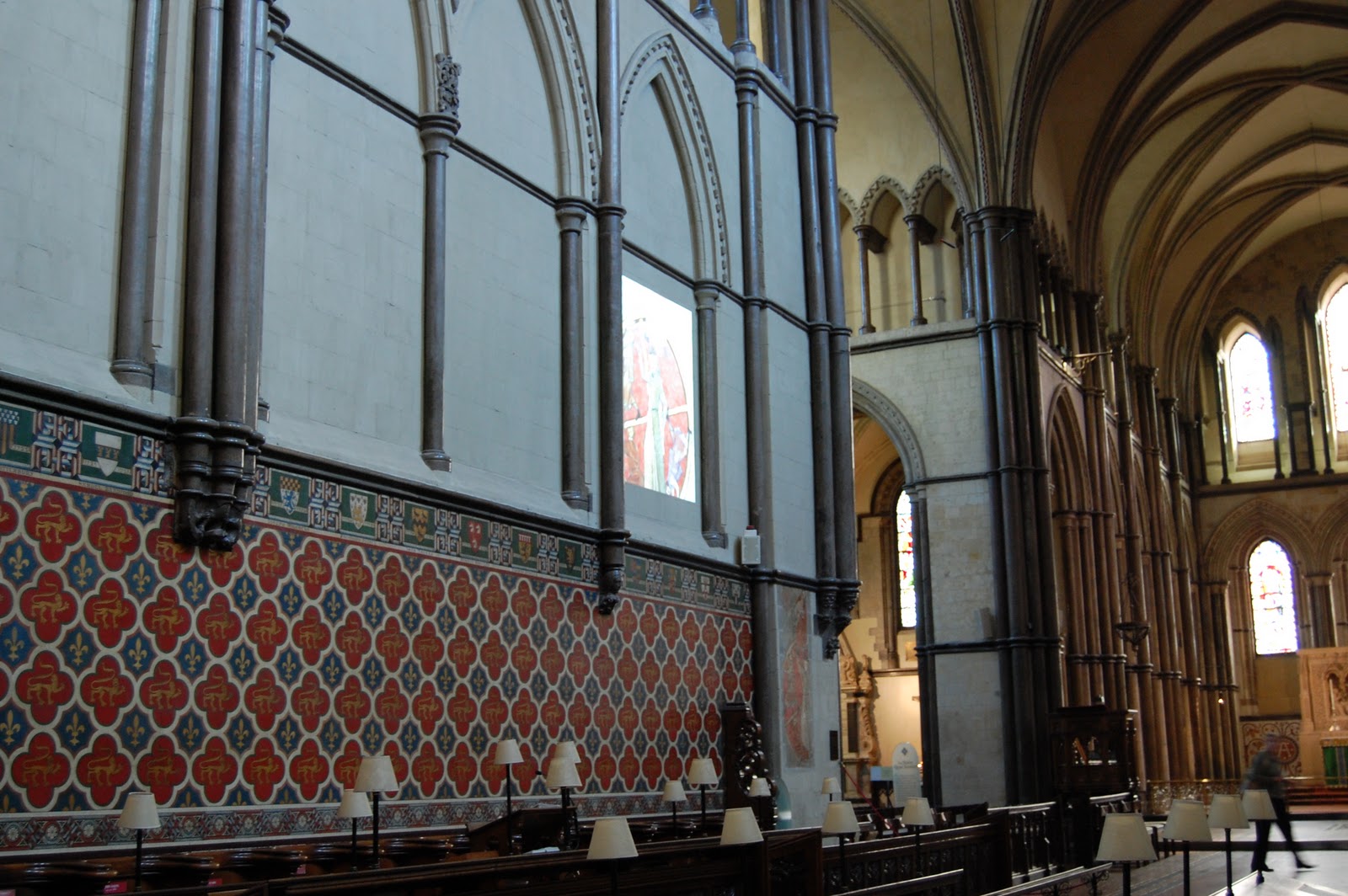
My day started with me presiding at the 10.30 Eucharist in the cathedral. Two things still massively hit me about doing this. First I am always amazed at how great a privilege it is to be able to lead people in worship in this way. presiding at the Eucharist in such a special place on behalf of some quite special people is quite an honour. Today I made a few errors but the congregation are very forgiving but that did not distract me from how special this is, and I still can’t help but be close to tears or have a silly grin at different parts of the liturgy. The second thing that still surprises me is how nervous I still get at singing the 3 lines of the Eucharistic prayer. I have got over the embarrassment of singing publicly, but I am still incredibly nervous and spend ages in the car before the service singing the lines over and over again. Today I did not think I was coping very well with th singing but an encouraging smile from one of the younger members of the congregation helped!

After this I traveled to another church in the diocese to take a baptism – this was the first I have ever done (well that is if we exclude the doll I baptised in Sarah’s Year R  class soon after my ordination!) At first I weas nervous about doing this – not because of the service itself but because this wsa a baptism at 1.00pm, and so being outside the main church service. It is difficult to welcome the child into the family of the church when the rest of the family are not there.

It was, however,  an honour to be able to support this family in this way. The family would not call themseleves church goers but when we were chatting last week we got on to talking about why they wanted their child baptised. The mum immediately said words like ‘something inside me tells me it is the right thing to do – we never even had to think about it, it just seemed natural!’ I believe that ‘something inside me’ is the Spirit of God and as we baptise we have to trust that God is working in these situations.

Following the baptism I moved back to the cathedral for Choral Evensong as it was my turn to read one of the readings and lead the prayers. Another fairly traditional service. Today, however, I was struck by the number of people that were present and the ya they seemed to be ‘engaged fully’ with all that was going on. I’m not sure what I make of Evensong – often the thought of it does not appeal to me, but when I am there it is pretty obvious that God is powerfully present through the music and liturgy. When I attend I enjoy this old service and find something quite mystical in the language that is intriguing.

I am home after what is pretty much a pretty traditional day – but a day where as a pioneer I have been challenged and given food for thought.

mysteries of God’s moving

Yesterday I spoke of the first gathering in the crypt which was how my Sunday ended. Like a number of my Sunday’s however, last Sunday was a day when I experienced the two worlds I live in – of established church and fresh expression of church. Sometimes I wonder if I am developing two personalities – particularly on those days when I am in inherited/established church for part of the day and then creating something new in the other part of the day. It just feels weird.

On Sunday morning it was a privilege to be interviewed and speak at St Peter and St Paul in Aylesford.
I have known Chris and Kathy for many years from working with them in Gillingham and so when they invited me to speak I jumped at the chance. Chris interviewed me and I spoke about what I do throughout the day and why I do it.

Afterwards I did a little preach and used Genesis 26:12-19 and Mark 4:30-34 as my texts. It was the Genesis text that I thought would take people by surprise. In fact it took me by surprise and I am amazed at how God seems to work.

In my preparation I felt God saying/it right to (delete whichever so it enables you to feel comfortable) to use the example of Issac re-digging the wells of his father when he has to move into ‘new’ territory as an illustration for fresh expressions of church. I used this as an illustration for the ethos I use in my role as creating a new way of being church. I find it interesting that Issac can choose to go anywhere and yet decided to return to the wells of his father.

As I seek to develop a new way of being church I essentially have the freedom, like Issac, to go anywhere but, like him, feel it is right to re-dig the old wells … but instead of searching for water I am searching for the fresh traditions and ideas of our faith that can be related with integrity today. I guess I am saying, as well, that I am looking to dig up the ‘stuff’ that has been placed on top of the wells of our faith – stuff like prejudice, outdated cultural practices, certain biases and so on. I think rather than being wacky or new we need to rediscover some stuff and then be creative with how we can use that stuff in a meaningful way. (Stuff is my new theological term!)

So … why was I surprised?
After the service 3 ladies came up to me all excited. These 3 ladies pray together each week and for the last couple of weeks they have been praying about ‘wells’ without knowing too much about what it meant but feeling it was important for them to keep praying about. Then … 2 weeks later I come along and speak about wells in their church.

Coincidence … or God-incidence?
It was pretty exciting to share in their excitement and joy.
God may well be moving in mysterious ways!

Fundamentalism an embarrasment to me as a Christian

Following the stuff I wrote on April 1st it seems Lord Carey is in the news again …. for once I seem to be agreeing with Ruth Gledhill who writes for the times.
I think the article and video sum up pretty much how many Christians in this country feel today – I really do hope people don’t listen to people like Lord Carey (who is entitled to his view) and somehow feel all Christians feel and think like him.

there are times when Christians just annoy me!!!!

Rant alert! If you may wish to avoid this post if you:

(1) agree with the claims of Lord Carey that Christians are being persecuted in the UK
and
(2) want to get Delirious to number 1 in the charts for Easter

 … as you are not going to agree with me or like what I say!

These two items in the news and flying around facebook have really niggled me over the last few days.

First Lord Carey whinging that Christians are being persecuted in this country and suggesting that we should stand up for ourselves. This has really annoyed me for two reasons. I believe the comments are incredibly insensitive in light of real persecution of Christians in other countries such as Nigeria or Zimbabwe. Rochester Diocese has strong links with Zimbabwe and we have been hearing horrendous stories of people being beaten and murdered by police for trying to attend church. When a letter from the bishop was read in the cathedral at the midnight service on Christmas Eve people were shocked and moved to tears. You can red more here. To suggest we are persecuted in Britain because some people cannot wear an item of jewelery at work is an insult to those Zimbabwean Christians.

Secondly, Lord Carey and his friends have suggested we should stand up for our rights. I thought that as Christians we are to imitate Jesus in our lives. I am interested how Lord Carey feels this is a demand that Christians can make? During Holy Week I am more conscious than normal that Jesus does not stand up for himself. Jesus does not defend himself during his trial even though he was innocent of any crime. Jesus leaves it to God. Show me anywhere in the Bible where Christians are told to stand up for themselves? We are warned, however, in plenty of places that life will be hard for us – Zimbabwe is experiencing that as I write and you read – and maybe in the UK we will experience something in the future. We are not, however, being persecuted, victimised or even sidelined now!

It’s exciting to see the current Archbishop, whom I admire greatly, speaking out against this inappropriate ‘persecution in the UK’ statement.

My rant continues to Delirious and the campaign to get Christians to unite to get their song to number 1 in the charts for Easter.  I just wonder ‘why?’ in exasperation!
The only people to benefit from this will be iTunes and the members of the band.
Getting the song to number achieves …. well what does it achieve. Please, if I am missing something here tell me?!

It’s great that Christians can unite to do something, but please can’t we be more imaginative than getting our own songs to number 1? can’t we unite around something that will make a difference – that, if you like would really make history!

If we put this in a wider perspective – a few days ago  we saw Sport Relief on British TV screens. We learned that 3000 children die unnecessarily each day of the year from malaria because they do not have a £5 mosquito net to sleep under each night. 3000 children each day of the year – that’s a 9/11 atrocity every single day of the year! That figure is just from malaria – imagine adding the figures from other diseases and hunger. I feel tears developing as I think. In case you were wondering that amounts to a death toll equalling more than the total population of Birmingham every single year.

Is it any wonder people do not take Christians or our faith seriously in this country? – 3000 children dying daily, brothers and sisters in Christ being massacred in other lands through wanting to worship – and we moan about not being able to wear a silver cross and get very excited about getting a song to number 1.

rant over!

echoes of Romero

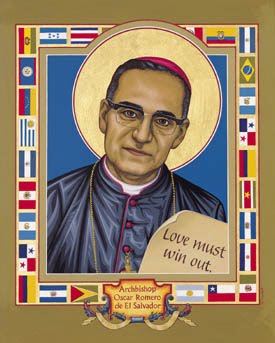
Today is the 30th anniversary of the assassination of Oscar Romero, the Archbishop of San Salvador. You can listen to a good 26 minute program from the BBC here which gives some good background and interviews of people who were with Romero when he was murdered. You can also find loads more info at the website of the Romero Trust.

I became aware of Romero while at SEITE when I was looking at liberation theology as part of a module on mission. Romero believed wholeheartedly, as would many of us, that the gospel should transform the world, particularly society, as well as the soul. Gospel liberation, says Liberation theology, is not just spiritual, it must be social and political as well.  As a practical response to his interest and belief in liberation theology, Romero moved out of his palace to live with the people so he could ‘listen their pain’.

In the face of oppression and government led brutality he spoke out, which was a surprise to the Vatican as he was appointed with the view that he was a moderate – and he was until he saw the murdered body of his Jesuit friend. It seems the reality of the real life situation changed his outlook for ever.

I love some of Romero’s words; which when you take them in the context of the horrific and brutal regime of fear he was working under, show them selves to be words of true faith and courage.

Words such as:

‘it would be sad if, in a country where people are being killed so horrifyingly, there weren’t also priests among the victims.’
and
‘my life has been threatened many times. I have to confess that, as a Christian, I don’t believe in death without resurrection.’

On the last full day of his life he pleaded with the soldiers to disobey their orders to kill: ‘No soldier is obliged to obey an order that is contrary to the will of God. In the name of God and in the name of this suffering people, I beg you, I ask you, I order you in the name of God: stop the repression’
This appeal was too much for the authorities and the next day Romero was dead, shot while celebrating mass in the chapel.

One thing that amazes me, I guess, it that Romero has not been made a saint by the catholic church. In fact it does seem that other churches recognise Romero far more than the catholic church does. Why is that? I wonder if he is still seen, even after 30 years, as an embarrassment … whatever, I think their, at best oversight and at worse, ignorance of this mans faith is quite shocking. Some say it’s only  matter of time, while other wonder if it will ever happen at all as the current pope is known to be a great opponent of liberation theology …. well you would be wouldn’t you if you lived in the Vatican – you wouldn’t want to move out of there!

The meeting of the waters

Wednesday is a study for me as a curate and I spent today reading Fritz Kling’s ‘The Meeting of the Waters’. The book takes its title from the meeting of 2 different coloured rivers, the Rio Negro and the Rio Solimoes, at Manaus in Brazil (as shown in the picture). The subtitle, 7 Global Currents That Will Propel the Future Church, particularly attracted my eye!

Kling went on what he has termed ‘a listening tour’ of the global church, asking the same questions to different groups of people over the period of a year. He has noticed 7 trends that have emerged from their conversations around the world.

mercy – Christians into social justice
mutuality – all people demanding to be respected
migration – global relocation to cities
monoculture – cultures becoming increasingly similar
machines – technology are transforming lifestyles everywhere
mediation – incresing need for the church to be mediator
memory – all regions have a history that shapes them for good or bad

Kling does not argue that these currents are new, but he does argue that for the first time we are seeing that these currents are pretty uniform on a  global basis. He also goes on to suggest that while these currents cross boundaries they are invisible, and as such they are making advances without being noticed.

The book is written in a lively engaging style through the lives and eyes of others and encourages us to take note of what is happening in order to ask ourselves, as church, ‘what do we do to engage authentically?’ The last sentence of his opening chapter drew me in which I guess is why I have read it from cover to cover today …

… the currents provide a starter kit for a new generation of globally minded Christians who want to see God’s kingdom come – in brothels and barrios, in statehouses and criminal courts, in movie theatres and boardrooms, and in rain forests and greenbelts.

For me,  as a person who’s good socialist roots have instilled within me a strong preferential for the poor, reminds me that the kingdom is not just for marginalised and the oppressed.

Creativity is not a novelty

http://vimeo.com/moogaloop.swf?clip_id=10024185&server=vimeo.com&show_title=1&show_byline=1&show_portrait=0&color=&fullscreen=1
Creativity is Not Novelty from Transposition Films on Vimeo.

‘We confuse creativity with novelty’
and
‘church is not the place for evangelism’

are two comments from Steve Frost that may get you thinking …. creatively(!?)