imagery vs facts

Today Celtic Lent challenges our modern belief that only the facts of what happened are useful for helping us to understand what happened. The Celtic Christians, however, believed imagery and metaphor were the important things for interpreting what was happening.

In the Dream of the Rood, instead of a weak beaten Jesus stumbling with cross through the streets of Jerusalem, we see a young hero who was eagerly approaching the cross. This image sets our focus on the spiritual realms rather than the physical. So rather than the facts, we are drawn into the imagery of what is really happening behind the scenes, behind the Celtic Christians look at the happenings on the cross and ask ‘what is really happening here?’

That question is answered as we look at the young hero Jesus of the story physically weakened but spiritually strong as he enters the battle to redeem humanity and creation and destroy Satan and evil.

Today I’m going to try and carry that image with me; the image of Christ eagerly approaching the cross to save humanity and restore creation. I am going to try to grapple with that image from the Dream of the Rood of Jesus hugging the cross to begin the battle which he knows he will win.

What are your things on this imagery and theology?
Do you find the image of a brave warrior Christ as liberating or repulsive?
What do you believe happened at the cross?
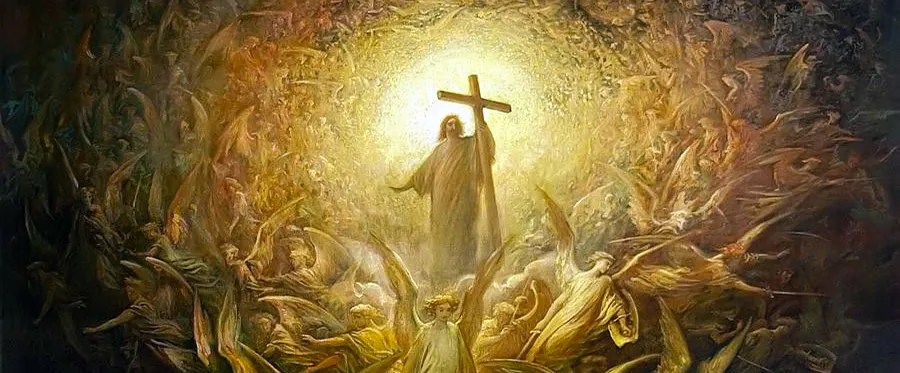
the dream of the rood

This morning’s Celtic Lent thought introduces us to the Dream of the Rood, which is the story of Christ’s death set firmly within the hero saga style with the theology of Christus Victor right at its centre.

The poem is a man’s dream of the actual cross (the rood) telling the crucifixion story. What amazes and challenges me again (see my other posts from this week) is that Christ is not portrayed here as he sacrificial lamb that many of us have but instead, he is portrayed as a warrior king that has come to the cross ready for battle. He is a Dryhtnes which is translated as a warlord in charge of a band of warriors

This week we are going to unpack this poem and so many of us will find the warrior language a challenge as we have predominantly come to accept the idea of Christ as the sacrificial lamb. So, this week David Cole asks us to try and come this week with fresh eyes, with Celtic/Anglo Saxon eyes from the 8th century while remembering that scripture tells us there is a battle going on on around us spiritually.

As we prepare for this week it might be helpful to return to Ephesians 6:10-18 to prepare us for spiritual battle imagery.

The Armor of God

10 Finally, be strong in the Lord and in his mighty power. 11 Put on the full armor of God, so that you can take your stand against the devil’s schemes. 12 For our struggle is not against flesh and blood, but against the rulers, against the authorities,against the powers of this dark world and against the spiritual forces of evil in the heavenly realms. 13 Therefore put on the full armor of God, so that when the day of evil comes, you may be able to stand your ground, and after you have done everything, to stand. 14 Stand firm then, with the belt of truth buckled around your waist, with the breastplate of righteousness in place, 15 and with your feet fitted with the readiness that comes from the gospel of peace. 16 In addition to all this, take up the shield of faith, with which you can extinguish all the flaming arrows of the evil one. 17 Take the helmet of salvation and the sword of the Spirit, which is the word of God.

18 And pray in the Spirit on all occasions with all kinds of prayers and requests. With this in mind, be alert and always keep on praying for all the Lord’s people.

Substituion Atonement or Christus Victor …?

Today’s Celtic thought brings us to the teaching of Christus Victor rather than the teaching of Substitution Atonement (I deserve to die due to my sin, Jesus took my place so that I could be made right with God) that many of us have been brought up with. In the early years of the church the main teaching was that of Christus Victor (Christ died on the cross to defeat all the works of evil and to defeat Satan) rather than substitution atonement which only became ‘popular’ in the last 800 or so years.

As we have already seen earlier in our Lent journey, the Celtic Christians understanding was that we were already ‘made right’ with God because we are all, created in the image of God and so God dwells within each one of us, working with us to become the person we were originally created to be.

Whilst there is truth in both teachings, and the Celts would certainly have had an outlook of both/and rather then either/or, the teaching of Christus Victor resonates more with me at the moment. The fact that I, that all of us, are born in original blessing suggests we are already ‘ok’ with God and don’t deserve to die. If we don’t deserve to die then Jesus must have been doing something other than simply taking my place, our place, on the cross. Defeating evil and Satan so that the whole of creation could be what it was originally created to be jut seems to make a lot more sense. The cross is then no longer seen as a place of sacrifice but more a weapon that can be used to protect and save.

This teaching is quite new to many of us, and it is worth a good consideration and I genuinely wonder what others think about this. I wonder, too, why I feel some ‘concern’ even writing this. Concern that challenges ‘am I really a Christian?’ believing something different to what I have been taught across the nearly 60 years of my life.
So …. Substituion Atonement or Christus Victor …. what do you think?

in our dna

Today’s thought looks again at the Eucharist an I have pondered upon the thought throughout the day. I have considered the thought and belief that, through Eucharist, God dwells within us but that also we dwell in God.

No matter how we feel, we are part of God.

As we feast on God we grow and become more like the image of God that God created us to be. We start from that premise of being born saturated in God’s blessing, rather than of original sin, and as we journey we grow successfully more into that person we were originally created to be.

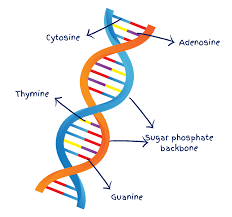
The real challenge here, for me, is that if this is true then it is true for everyone. If God is a God of justice and compassion then we are all blessed from the beginning. We are all created in the image of God. We all have God dwelling within us. God, it seems. dwells within us at the deepest level. It’s almost like God is in our DNA.

Does knowing this have an impact on how we live our lives?
Does remembering that all are created in the image of God have an impact on how we live our lives?
Does being endwelled with God and ourselves dwelling in God change how we live our lives?

Caim Prayer

Yesterday we thought about the Eucharist bread in Celtic Christian Theology via Celtic Lent. Today we consider the wine.

The Celts did not have a polite sip of the wine. The cup that was passed contained a round a bottle and a half of wine and, after the whole loaf of bread had been dunked in the wine each person took a good glue! These worshippers were really throwing themselves into the Jesus story and experiencing the events as fully as they were able through the liturgy and actions. Through the dining of the wine they were immersing themselves in the saving and victorious blood of Christ.

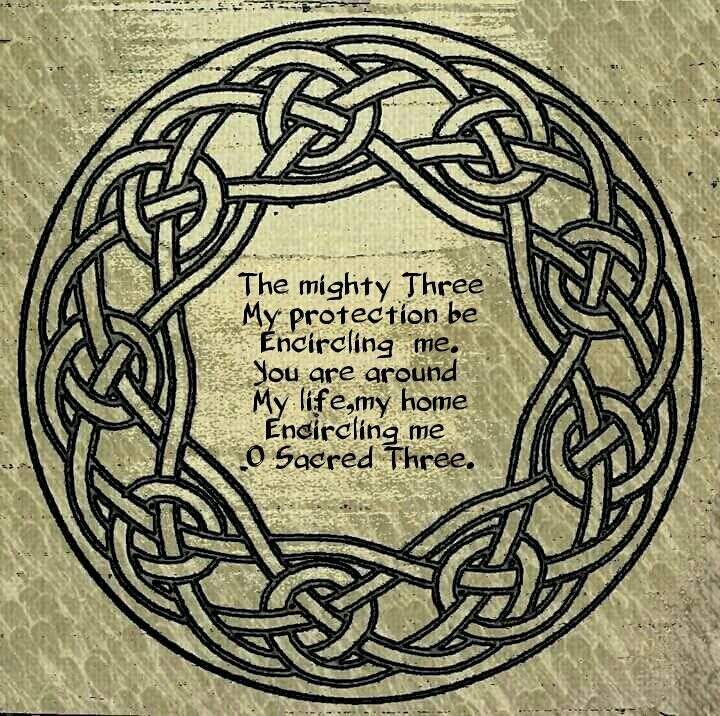
One tradition that I totally love was that after the wine had been drunk, the priest would then visit each worshiper and circle their head with the cup while saying a Caim, or circling prayer, such as:

Encircle me Lord
Keep harm without
Keep safety within

Encircle me Lord
Keep turmoil without
Keep peace within

Encircle me Lord,
Keep evil out of
Keep your peace within

Saying these prayers either alone or wit others have become, for me, a powerful way to start the day and remind myself throughout the day as I repeat them that, very consciously, I am walking on holy ground with the creator.

Taste the Bread

Today’s thought taught us more about the Eucharist of the Celtic Christians where symbolism and struggle are integral to the act of worship.

From the Stowe Missal we learn that the priest would use a whole large loaf of bread. The effort to break this bread in half (if you’ve ever tried) represents the insults and the beatings that Christ encountered. Once the bread was broken the priest would then break up the bread into smaller pieces and would arrange the pieces on a plate in the shape of a cross. Ongoing we then see the holistic theology of God being in everything put into practice in a practical way. Once the bread was received by the person they are instructed, from the missal, to take the time to savour the bread and to allow themselves to taste the mysteries of God.

No dualism for these Celtic Christians means we can experience God in taste as well as through our other senses.

That’s quite a thought and a challenge.
If God is everywhere are we able to experience God through all our senses?
What does ‘tasting the glory of God’ look like for you?
What reactions do you have to this inclusive theology?
Does this have an impact on you today on your Lenten journey.

what’s in a number?

Numbers were symbolic and important to the Celtic Christians. Cole shows us that the number 3 appears as a sacred number. Celtic triads from around the time of the Stowe Missal, such as ‘three candles that illumine every darkness: truth, nature and knowledge, were key to living out life as a Christian and journeying with Christ.

The Missal also talks of the priests actions in the liturgy. The priest bows three times for his sins, and for the people he walks 3 steps forwards and 3 steps backwards. These are all to symbolise that we sin in a triad – in thought, word and deed.

I wonder whether adopting some physical exercise, like that above, during confession would help my spiritual practice. I wonder if it would help embed my worship in a challenging and meaningful way? Rather than saying words alone, my body would also be entering into the tri-symbolism. It would help me to understand, or rather remember, that my whole person sins and needs restoration rather than just the cerebal and speaking part of me. After all we all know that ‘actions speak louder than words!

just words or opportunity

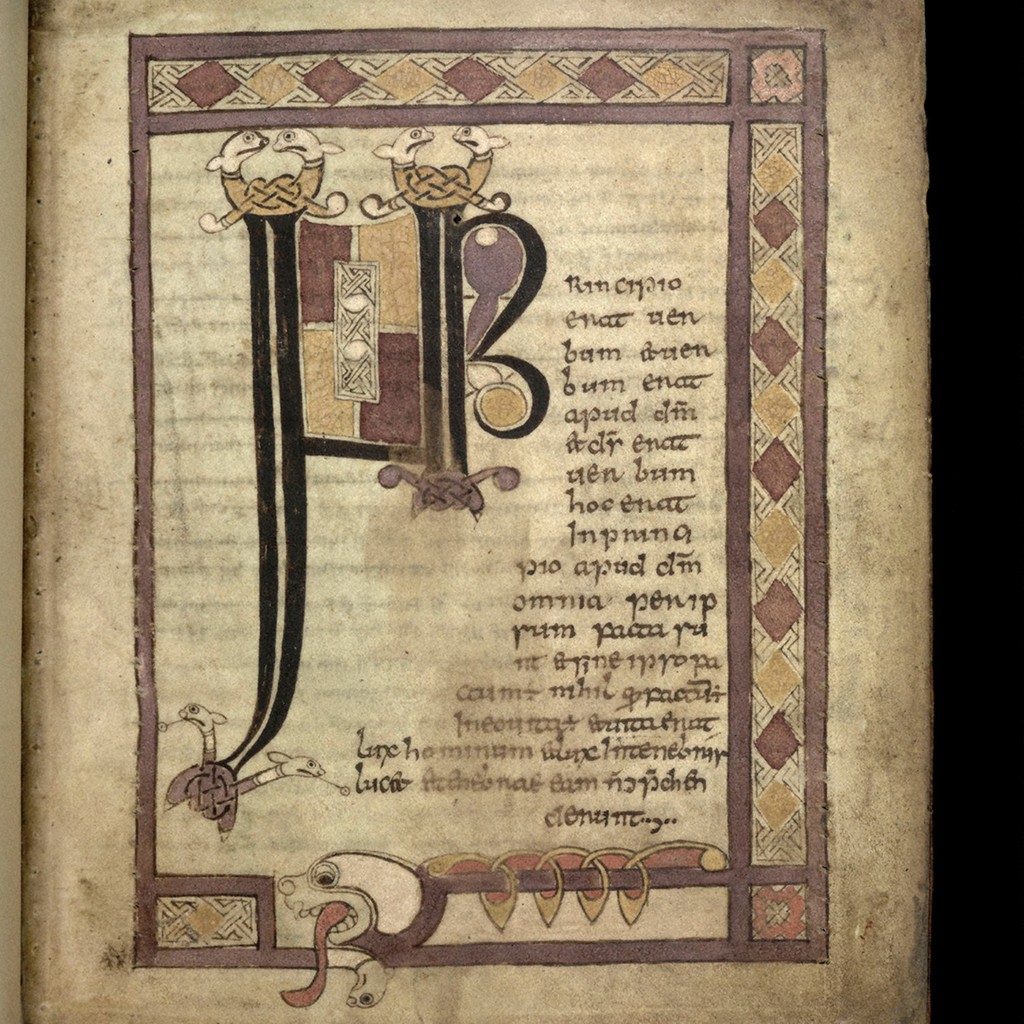
This week in Celtic Lent we are looking at the Stowe Missal, which is about 60 leaves of illuminated writing explaining the order of the Eucharist service of the monastic centre, along with some prayers and hymns.

Over many years I have had good discussions with friends about liturgy. Many of my friends have the opinion that is is boring and stifling to the spirit when we use the same set of words week by week. I have always argued that reciting similar words actually has the opposite effect and allows the spirit to truly meet with us in a meaningful way.

The Celtic Christians did not see liturgy as just a collection of words. They believed liturgy had a mystical depth to it. It was seen as something greater than them , and something to be entered and absorbed within. Each liturgy was an opportunity to be absorbed more completely into the Christ experience.

The Stowe Missal was written to to help the people engage more deeply and be absorbed more completely int the divine presence. So, Eucharist, for the Celtic Christians isn’t just a service that they had to do, its was instead a sacred mystical act that drew them closer to God.

So …. at the start of this new day, this thought is causing me to ask, how do I view liturgy? Is it just a set of (familiar) words or is it more of that opportunity to be drawn into, and absorbed by, God? And if that is so, what am I going to do about this? How am I going to view and treat liturgy moving forward? I’m not sure …. but I definitely want to lear how to embrace and be part of the mystical experience.

How do you view liturgy? Words or opportunity?

I am wonderful!

Today’s thought has brought tears to my eyes.
I wish to simply take some quotes and leave them with you today to ponder as you journey on

O Lord, you have searched me and known me.
You know when I sit down and when I rise up;
    you discern my thoughts from far away.
You search out my path and my lying down,
    and are acquainted with all my ways.
Even before a word is on my tongue,
    O Lord, you know it completely.
You hem me in, behind and before,
    and lay your hand upon me.
Such knowledge is too wonderful for me;
    it is so high that I cannot attain it.

Where can I go from your spirit?
    Or where can I flee from your presence?
If I ascend to heaven, you are there;
    if I make my bed in Sheol, you are there.
If I take the wings of the morning
    and settle at the farthest limits of the sea,
10 even there your hand shall lead me,
    and your right hand shall hold me fast.
11 If I say, ‘Surely the darkness shall cover me,
    and the light around me become night’,
12 even the darkness is not dark to you;
    the night is as bright as the day,
    for darkness is as light to you.

13 For it was you who formed my inward parts;
    you knit me together in my mother’s womb.
14 I praise you, for I am fearfully and wonderfully made.
    Wonderful are your works;
that I know very well.
15     My frame was not hidden from you,
when I was being made in secret,
    intricately woven in the depths of the earth.
16 Your eyes beheld my unformed substance.
In your book were written
    all the days that were formed for me,
    when none of them as yet existed.
17 How weighty to me are your thoughts, O God!
    How vast is the sum of them!
18 I try to count them—they are more than the sand;
    I come to the end[a]—I am still with you.
Psalm 139

‘God creates us. God with loving hands knits us together and moulds our being. God does not make mistakes. God does not make faulty goods. ….. God’s loving formation of our being creates the perfect human being – you – in the divine image.’ (page 106, Cole, D ‘Celtic Lent.

Dave Cole ends with this prayer today:
Almighty Creator, Intimate friend, loving Father, restorer of all that I am, I pledge to work with you to restore the beautiful being which you created, beginning with the declaration that I am wonderful! I say this not because of ego, but because the scripture says that you made me, I am one of your works, and that your works are wonderful. Thank you. May my restoration begin with my belief in myself. Amen

restoration v recovery

Following on from yesterday’s thought from Celtic Lent on original sin or original blessing, today we jump on a few hundred years to the ninth century Celtic saint, John Scotus Eriugena.

Eriugena and the Celtic Christians did not believe salvation was about changing human beings to be acceptable to God but rather that salvation was about restoring us to be the person that God created us to be in the first place.

Eriugena writes:

‘Just as the skin of the human body is afflicted of the contagion and deformity of leprosy, so human nature was infected and corrupted … and made deformed and unlike its creator. When it is freed from this leprosy by the medicine of divine grace, it will be restored to its original fairness of form.’

As we travel towards Easter this challenges the traditional ideas that still remain from my upbringing in the western/latin/roman based church. ‘I am good, and embodied in the image of God’ is something I need to be reminding myself of daily. Maybe I need to develop some sort of chant or tun to help me with that. Good Friday, and Easter, is about us being restored to the person we were initially meant to be.

What does this mean to me and you today?