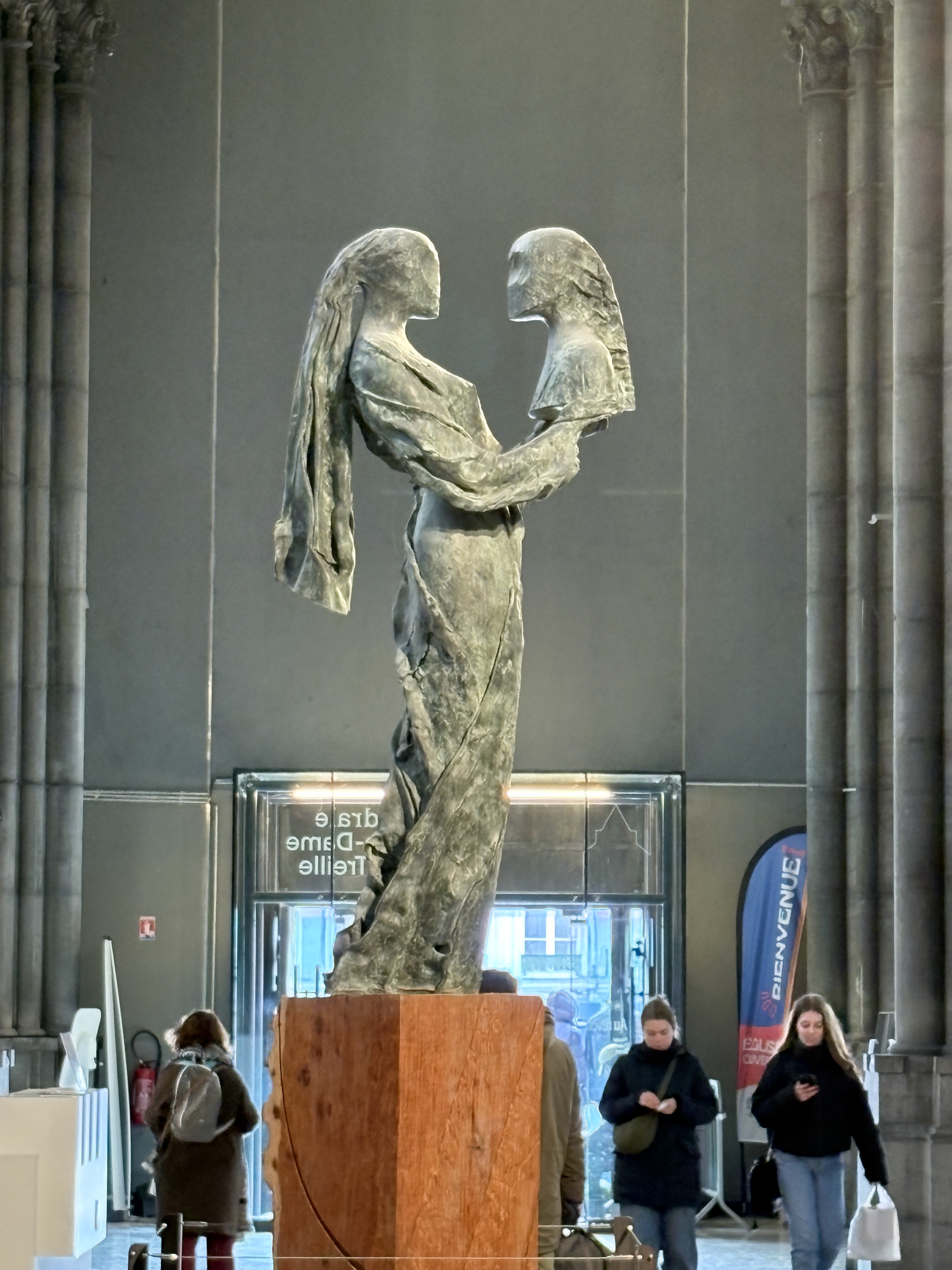
just words or opportunity

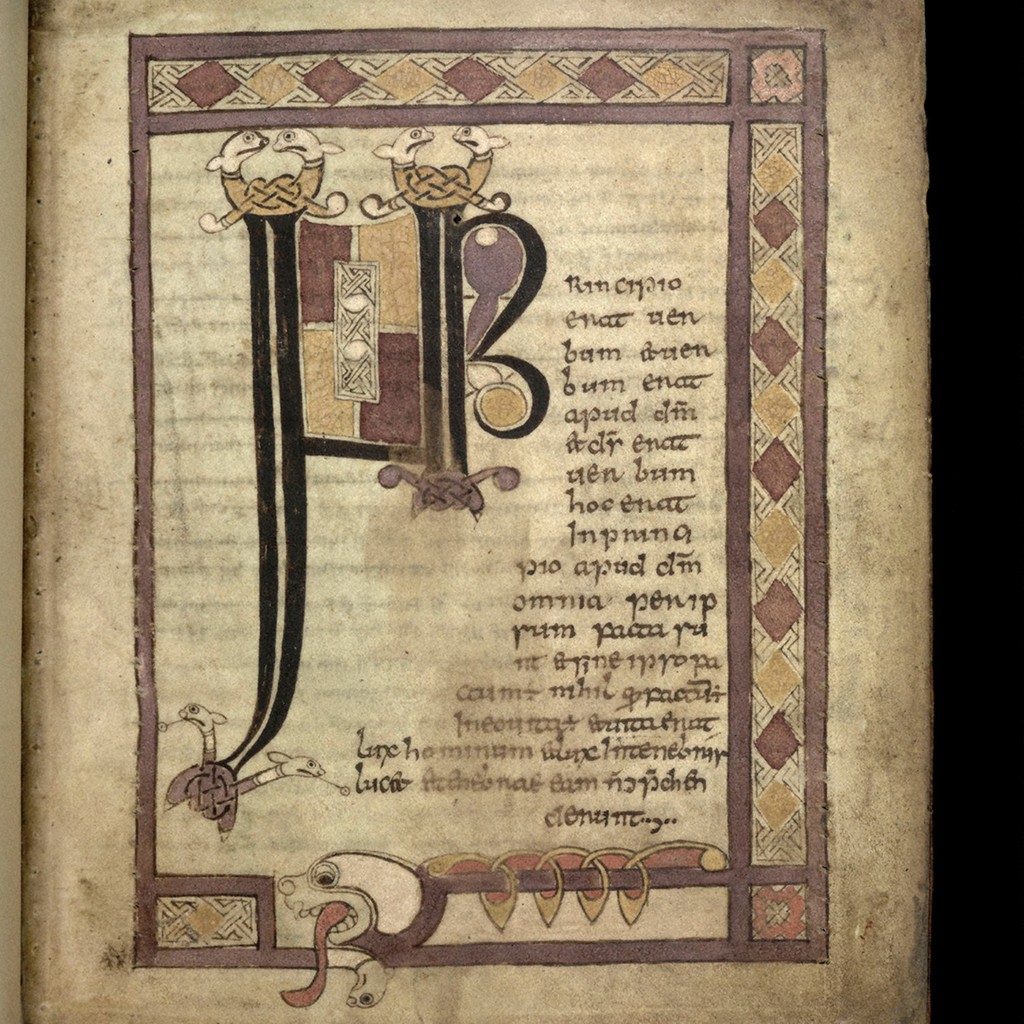
This week in Celtic Lent we are looking at the Stowe Missal, which is about 60 leaves of illuminated writing explaining the order of the Eucharist service of the monastic centre, along with some prayers and hymns.

Over many years I have had good discussions with friends about liturgy. Many of my friends have the opinion that is is boring and stifling to the spirit when we use the same set of words week by week. I have always argued that reciting similar words actually has the opposite effect and allows the spirit to truly meet with us in a meaningful way.

The Celtic Christians did not see liturgy as just a collection of words. They believed liturgy had a mystical depth to it. It was seen as something greater than them , and something to be entered and absorbed within. Each liturgy was an opportunity to be absorbed more completely into the Christ experience.

The Stowe Missal was written to to help the people engage more deeply and be absorbed more completely int the divine presence. So, Eucharist, for the Celtic Christians isn’t just a service that they had to do, its was instead a sacred mystical act that drew them closer to God.

So …. at the start of this new day, this thought is causing me to ask, how do I view liturgy? Is it just a set of (familiar) words or is it more of that opportunity to be drawn into, and absorbed by, God? And if that is so, what am I going to do about this? How am I going to view and treat liturgy moving forward? I’m not sure …. but I definitely want to lear how to embrace and be part of the mystical experience.

How do you view liturgy? Words or opportunity?
Fifth Sunday

I am wonderful!

Today’s thought has brought tears to my eyes.
I wish to simply take some quotes and leave them with you today to ponder as you journey on

O Lord, you have searched me and known me.
You know when I sit down and when I rise up;
    you discern my thoughts from far away.
You search out my path and my lying down,
    and are acquainted with all my ways.
Even before a word is on my tongue,
    O Lord, you know it completely.
You hem me in, behind and before,
    and lay your hand upon me.
Such knowledge is too wonderful for me;
    it is so high that I cannot attain it.

Where can I go from your spirit?
    Or where can I flee from your presence?
If I ascend to heaven, you are there;
    if I make my bed in Sheol, you are there.
If I take the wings of the morning
    and settle at the farthest limits of the sea,
10 even there your hand shall lead me,
    and your right hand shall hold me fast.
11 If I say, ‘Surely the darkness shall cover me,
    and the light around me become night’,
12 even the darkness is not dark to you;
    the night is as bright as the day,
    for darkness is as light to you.

13 For it was you who formed my inward parts;
    you knit me together in my mother’s womb.
14 I praise you, for I am fearfully and wonderfully made.
    Wonderful are your works;
that I know very well.
15     My frame was not hidden from you,
when I was being made in secret,
    intricately woven in the depths of the earth.
16 Your eyes beheld my unformed substance.
In your book were written
    all the days that were formed for me,
    when none of them as yet existed.
17 How weighty to me are your thoughts, O God!
    How vast is the sum of them!
18 I try to count them—they are more than the sand;
    I come to the end[a]—I am still with you.
Psalm 139

‘God creates us. God with loving hands knits us together and moulds our being. God does not make mistakes. God does not make faulty goods. ….. God’s loving formation of our being creates the perfect human being – you – in the divine image.’ (page 106, Cole, D ‘Celtic Lent.

Dave Cole ends with this prayer today:
Almighty Creator, Intimate friend, loving Father, restorer of all that I am, I pledge to work with you to restore the beautiful being which you created, beginning with the declaration that I am wonderful! I say this not because of ego, but because the scripture says that you made me, I am one of your works, and that your works are wonderful. Thank you. May my restoration begin with my belief in myself. Amen

restoration v recovery

Following on from yesterday’s thought from Celtic Lent on original sin or original blessing, today we jump on a few hundred years to the ninth century Celtic saint, John Scotus Eriugena.

Eriugena and the Celtic Christians did not believe salvation was about changing human beings to be acceptable to God but rather that salvation was about restoring us to be the person that God created us to be in the first place.

Eriugena writes:

‘Just as the skin of the human body is afflicted of the contagion and deformity of leprosy, so human nature was infected and corrupted … and made deformed and unlike its creator. When it is freed from this leprosy by the medicine of divine grace, it will be restored to its original fairness of form.’

As we travel towards Easter this challenges the traditional ideas that still remain from my upbringing in the western/latin/roman based church. ‘I am good, and embodied in the image of God’ is something I need to be reminding myself of daily. Maybe I need to develop some sort of chant or tun to help me with that. Good Friday, and Easter, is about us being restored to the person we were initially meant to be.

What does this mean to me and you today?

Original sin or blessing?

Since becoming a Christian at 17 I have always struggled with the concept of original sin which, I now know, came from Augustine and was adopted by the Roman/Latin church. I remember having long discussions with leaders of my church in Weymouth. In the confirmation group I asked awkward questions which people didn’t seem to have answers for. I could not understand how a new born baby could be ‘born in sin’ and be born containing ‘original sin’. To me then, and even more so now, the concept simply does not fit with the concept of a loving God who created us all in God’s image.

If we are created in God’s image, stated this arrogant loud teenager, then how on earth could we be born with Original Sin?
I remember tagging on the patience of my teachers as I proudly stated that, if anything, we must all be born in ‘original blessing’ as this is the only thing that makes any sense f we are created in God’s image.

In today’s thought from Celtic Lent we hear that this very concept was a distinguishing difference of theology between the Latin church and Celtic Christians. The catholics believed the core of us, our soul, was eveil and fallen and required transformation from Christ. The Celtic Christians believed our core was a divine image but tainted which needed fixing by Christ.
In the words of Genesis 1:31; ‘God saw everything that they had made, and behold, it was very good’

This makes a massive difference to how we view other people and creation itself. If we consider ourselves and others as being inhabited by that divine image then that surely significantly impacts upon our behaviour towards each other. Surely it means we see each other differently and we would want to cherish, uphold and applaud each other in our daily journeys. Surely this would mean Christian ‘spaces’ would be open, welcoming and loving to absolutely everyone!

Original sin, or original blessing ….. you decide?

change your tune

Today’s Celtic Lent thought was focussing on music.

It seems that as the Celtic monks travelled from place to place it is thought that they sung or chanted the psalms. Cole writes: ‘It was, perhaps, a natural extension for the Celtic monks from this external practice that their inner journey, another life journey, would also have been filled with the sound of psalms and spiritual songs. Or perhaps it was the other way around – perhaps the external expression was the natural result of the internal process of filling their inner life journey with spiritual songs of praise.The journey itself was filled with praise: the external journey as well as the internal one’.

We live in an age where many of us are plugged into music continually. I notice throughout the dat that I often have a tune reverberating around my head. I often wonder where that tune has come from and whether it is an indication of the soundtrack for my personal journey.

Today’s thought has left me with many questions such as ….
Is there a theme tune for my life?
If so, where has that come from?
If there isn’t why not?
Does the tune in my head reflect what’s in my heart?
Is my tune an indication of where I am with my Creator?
When I catch myself in the moment, what is singing from my soul?
Does the tune from outside of my life have an influence on me?
Where is God in the music?

It’s been really great stuff to think on today.

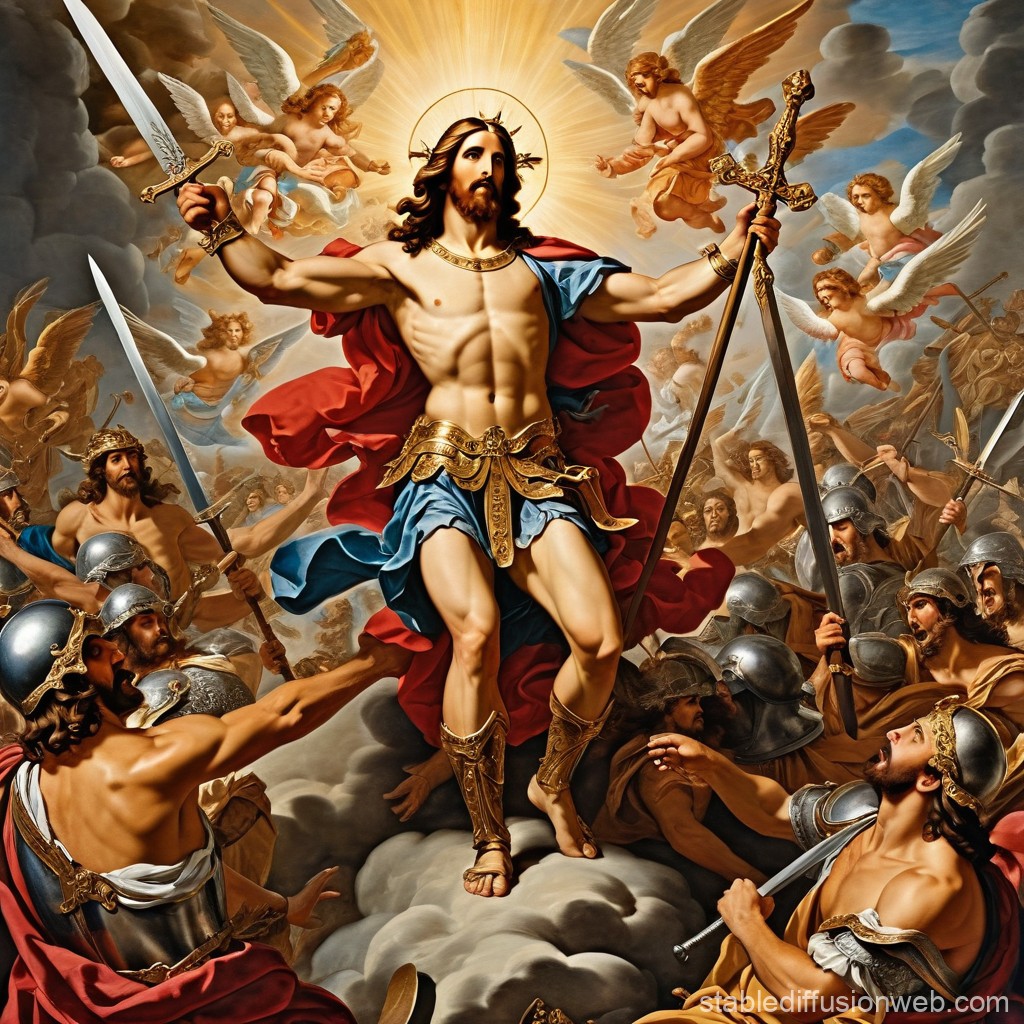
Warrior Jesus

source: https://stablediffusionweb.com/image/18295280-warrior-jesus-in-battlefield-with-angels

In today’s Celtic Lent reading we hear abut Jesus as a victorious hero more than as a loving saviour.

The Celtic Christians loved their hero sagas of where the great warriors were honoured as well as remembered. They sous sing about their heroes and their great feats. Their heroes lived with an everyday sacrificial struggle, giving up their lives to save someone or a group of people.

At the cross this hero status was placed on Jesus. Christ is their conquering hero, defeating satan so that we can live a full life.

Throughout today I have reflected on this ‘different’ approach to the works of the cross. I have wondered what difference a conquering hero makes over a loving saviour and how that difference, if there is one, could lay out in my daily journey with God.

How do I react to this image of Jesus the warrior?
How do you react to this image?

creation

Today’s Celtic Lent thought has us focussing on creation.
Yesterday we were reminded that the Celtic Christians took a non-duality approach to life. Today we remember that they believed that all of creation is being reconciled back to God through the work of Jesus and not just humanity.

When I discovered this a few years ago it became clear top me that my rhythm of life had to have a creation/environment element to it if it was going to journey with a God who was in love with the whole of creation, and not just people. For me, my rhythm of life has an aspiration to recycle as much as possible and to deliberately avoid products consisting of non recyclable materials. It’s not alleys easy and sometimes you have to search a little longer than you might like. But I personally feel it is important to make the effort.

Just before committing to this element of my rhythm I met a couple who ha been in church ministry for years who on the whole avoided buying anything new and recycled as much as possible. They got their clothes from charity shops and any appliances or vehicles were always purchased second hand. I really admired their commitment to their homegrown rule. It challenged me massively as well but (shallow I know), I like to buy new clothes and hats so that wasn’t a step I could take. I do, however, feel I should be able to!

So … how do we view the earth?
Is the earth special and sacred to you?
Would you change how you ‘walked’ if you remembered you were always standing on sacred ground?

Be thou

In today’s reading we looked at the wonderful Celtic hymn of ‘Be Thou My Vision’. David Cole introduced us to different lyrics from earlier translations which are all based in that foundation of Celtic non-duality in their approach to faith. I have come to love this concept of their being no sacred and secular. God created the world, God inhabits the world and God will recreate the world, so how can the world be anything other than sacred. God is here … the ground we walk on is God’s. Wherever we are, we stand on holy ground …. that is an amazing thought to take into your day!

In today’s contemplation section we were asked to think about the ‘be thou’ statements in the hymn that explain who God is to you and asked to write some for ourselves. This is my attempt below ….

Be thou my Feelings when Ive sunk to the bottom
Be thou my breathing when I can’t catch my breath
Be thou my meditation as I open to you
Be thou my speech to enrich those I meet
Be thou my silence so I can hear what I need to hear
Be thou my passions as I aim for self control
Be thou my Justice when I feel life is unfair
Be thou my hope as I look to new opportunities
Be thou my calm when people around me are shouting

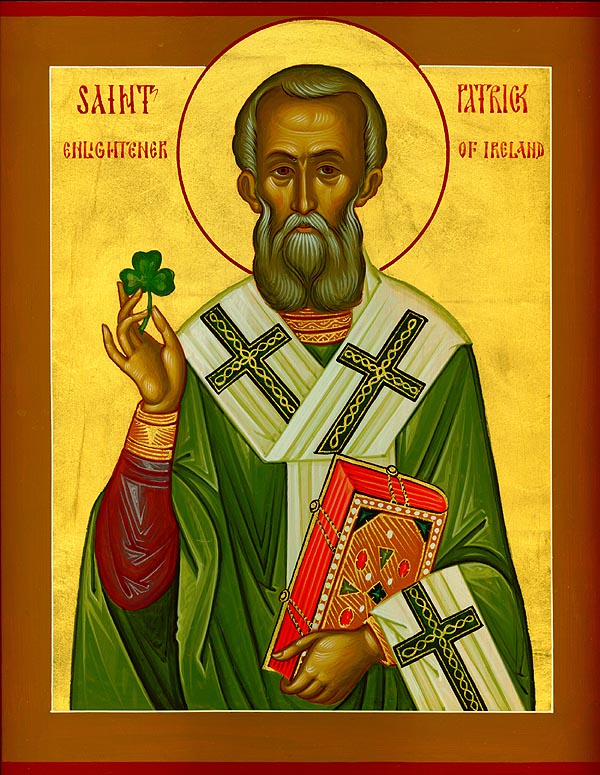
St Patrick’s Prayer

Today’s reading has been looking at St Patrick’s breastplate prayer. As part of my rhythm I have come to use this prayer in its fullness on a weekly basis. On a daily basis, before going out, I use the end part of the prayer which reminds me of who I am and who I walk with:

Christ be with me, Christ within me,
Christ behind me, Christ before me,
Christ beside me, Christ to win me,
Christ to comfort and restore me.
Christ beneath me, Christ above me,
Christ in quiet, Christ in danger,
Christ in hearts of all that love me,
Christ in mouth of friend and stranger.

Sometimes it has been a hard prayer to pray due to my context.
Sometimes I really just don’t want to pray.
Sometimes I’m just too angry with God to pray.
Sometimes I feel too disconnected to pray.
Sometimes I love these words of prayer.

But, without fail, these words lift me daily. Saying these words daily has become a good habit. A practice that constantly reminds me that, no matter what is happening to me or how I’m feeling, that I am not alone. Not only am I not alone, but I am totally surrounded, totally inhabited and totally immersed in God.