easter blues

We have journeyed through and experienced Lent in a different, Celtic, way and come out the other side into a time of rejoicing and celebration. Jesus destroyed evil and defeated Satan so that we, you and me, all of us, could be ‘released’ to become the amazing fantastic incredible people that God originally created us to be.

How exciting!!!

And yet …. in my times as a church leader, and before, after easter I have looked around and it seems as if everyone is totally knackered! So tired and washed out in fact that clergy in the CofE traditionally have a post Easter break to give time to recover. There seems to be a sense of anti climax as we return to normal day to day life with seemingly nothing at all being changed. We have experienced, been challenged, awakened and yet …. it may just be me … but what I see more and more is Easter Blues, fed by an acknowledgment that life just goes on as normal.

Does it have to be like this?
I kind of feel it’s a choice we make; a choice that most of us make subconsciously.
A fire starts with a spark.
A flood with a trickle.
A race with a step.
A thought from a space.
We were reminded during Celtic Lent that everyone is made in the image of God.
If we look for that image in people around us what would happen?
If we allowed our Image of God-ness out when with others, how might they react?
If we gave space for that out could be quite exciting to see what God may do.

Maybe we need to pull ourselves out of the Easter Blues, take on board that we are surrounded and inhabited by the Creator, Warrior God whilst we stand on sacred ground.

Surely, that alone is quite life giving.
warrior ???

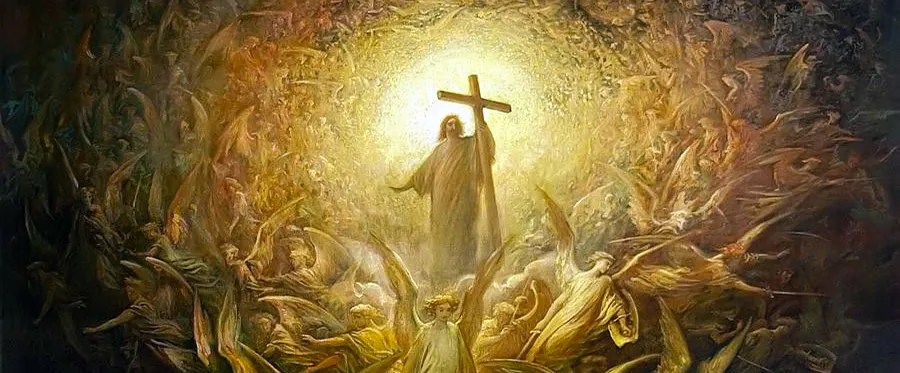
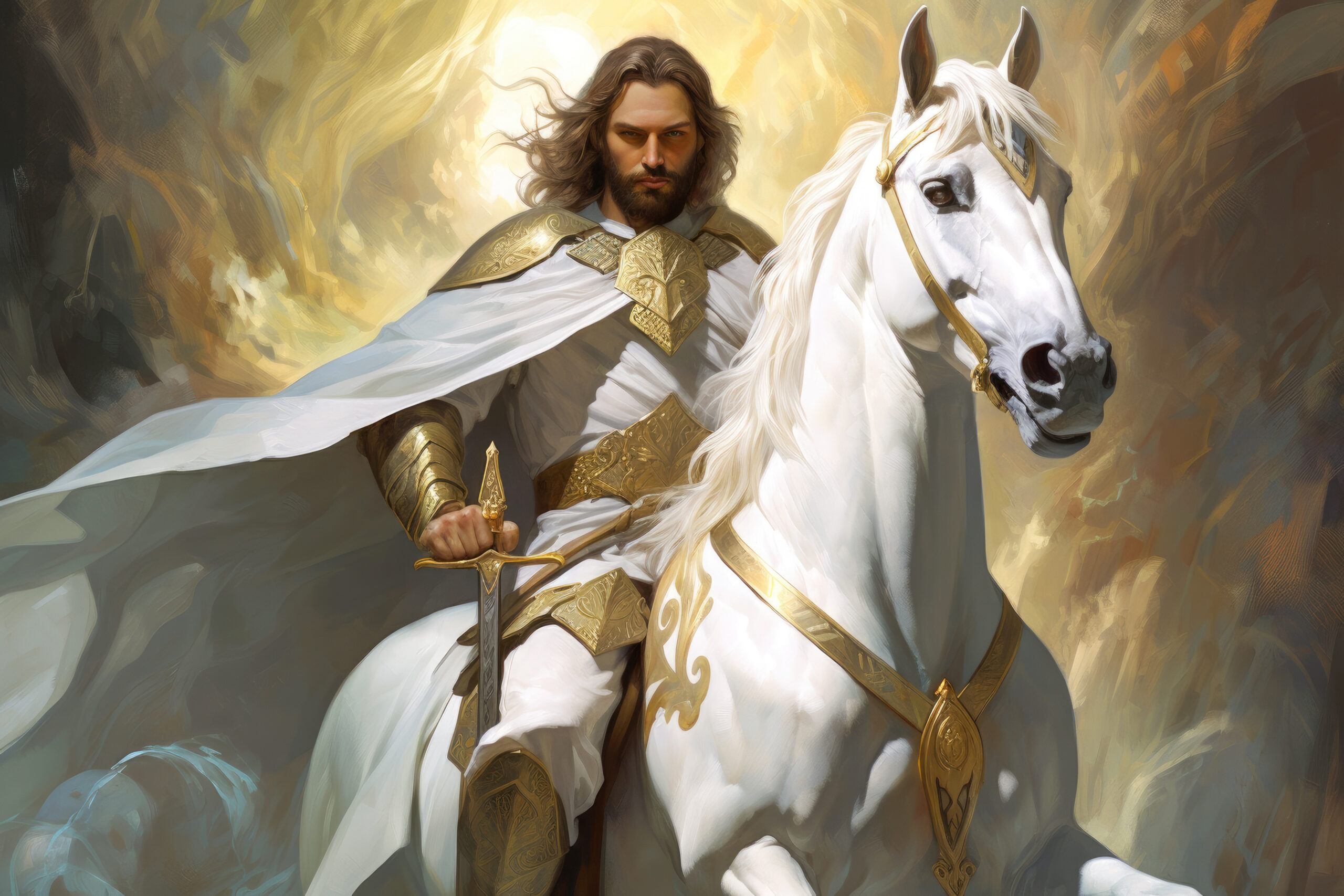
Today’s Celtic Lent thought draws us back to the cross and specifically the removal of Christ’s body from the cross. The account from the gospels that Nicodemus and Joseph of Arimathea took Jesus’ body off the cross and laid it in a tomb are not realistic. It would have taken more than two people to do this and The Dream of the Rood talks of troops of warriors who came from afar to help their king after the battle.

The Dream of the Rood is, again, looking at the spiritual side of things rather than the physical. I think we might call the warriors spoken of here as angels. Heavily armoured fighting warrior like angels. This reminds me of an incident quite a few years ago when I was director of Gillingham YFC. We ran a drop in coffee shop for young people and many nimby type people were making it difficult for us to exist there. We feared physical aggression rather than just complaints. On a day we expected lots of aggro a couple of the team members, totally independent of each other, came to me to say that that they saw an two angels standing outside the shop. The angels were wearing blue armour and had their swords were drawn in front of their face like the Queens (now KIng’s!) Guards at Buckingham Palace. Both people gave an almost identical account 30 mins apart from each other. Although I went outside and saw nothing I acknowledged we were in a spiritual battle and the expected onslaught never came.

As Christ’s followers says today’s though, we are also called, and become, warriors. I don’t know what you think about that, but I don’t feel very warrior like. For many reasons (which I will go into another time) I feel pretty exhausted, beaten up and thrown aside by individuals and an organisation I loved, and love, very much. To be a warrior is the farthest from my mind at this point in time.

So … what about you?
Where do you see yourself in this epic saga?
Do you see yourself as a spiritual warrior?
If so does this knowledge change your outlook?
If it doesn’t what do you think of the concept?

the dream of the rood

This morning’s Celtic Lent thought introduces us to the Dream of the Rood, which is the story of Christ’s death set firmly within the hero saga style with the theology of Christus Victor right at its centre.

The poem is a man’s dream of the actual cross (the rood) telling the crucifixion story. What amazes and challenges me again (see my other posts from this week) is that Christ is not portrayed here as he sacrificial lamb that many of us have but instead, he is portrayed as a warrior king that has come to the cross ready for battle. He is a Dryhtnes which is translated as a warlord in charge of a band of warriors

This week we are going to unpack this poem and so many of us will find the warrior language a challenge as we have predominantly come to accept the idea of Christ as the sacrificial lamb. So, this week David Cole asks us to try and come this week with fresh eyes, with Celtic/Anglo Saxon eyes from the 8th century while remembering that scripture tells us there is a battle going on on around us spiritually.

As we prepare for this week it might be helpful to return to Ephesians 6:10-18 to prepare us for spiritual battle imagery.

The Armor of God

10 Finally, be strong in the Lord and in his mighty power. 11 Put on the full armor of God, so that you can take your stand against the devil’s schemes. 12 For our struggle is not against flesh and blood, but against the rulers, against the authorities,against the powers of this dark world and against the spiritual forces of evil in the heavenly realms. 13 Therefore put on the full armor of God, so that when the day of evil comes, you may be able to stand your ground, and after you have done everything, to stand. 14 Stand firm then, with the belt of truth buckled around your waist, with the breastplate of righteousness in place, 15 and with your feet fitted with the readiness that comes from the gospel of peace. 16 In addition to all this, take up the shield of faith, with which you can extinguish all the flaming arrows of the evil one. 17 Take the helmet of salvation and the sword of the Spirit, which is the word of God.

18 And pray in the Spirit on all occasions with all kinds of prayers and requests. With this in mind, be alert and always keep on praying for all the Lord’s people.

Substituion Atonement or Christus Victor …?

Today’s Celtic thought brings us to the teaching of Christus Victor rather than the teaching of Substitution Atonement (I deserve to die due to my sin, Jesus took my place so that I could be made right with God) that many of us have been brought up with. In the early years of the church the main teaching was that of Christus Victor (Christ died on the cross to defeat all the works of evil and to defeat Satan) rather than substitution atonement which only became ‘popular’ in the last 800 or so years.

As we have already seen earlier in our Lent journey, the Celtic Christians understanding was that we were already ‘made right’ with God because we are all, created in the image of God and so God dwells within each one of us, working with us to become the person we were originally created to be.

Whilst there is truth in both teachings, and the Celts would certainly have had an outlook of both/and rather then either/or, the teaching of Christus Victor resonates more with me at the moment. The fact that I, that all of us, are born in original blessing suggests we are already ‘ok’ with God and don’t deserve to die. If we don’t deserve to die then Jesus must have been doing something other than simply taking my place, our place, on the cross. Defeating evil and Satan so that the whole of creation could be what it was originally created to be jut seems to make a lot more sense. The cross is then no longer seen as a place of sacrifice but more a weapon that can be used to protect and save.

This teaching is quite new to many of us, and it is worth a good consideration and I genuinely wonder what others think about this. I wonder, too, why I feel some ‘concern’ even writing this. Concern that challenges ‘am I really a Christian?’ believing something different to what I have been taught across the nearly 60 years of my life.
So …. Substituion Atonement or Christus Victor …. what do you think?

in our dna

Today’s thought looks again at the Eucharist an I have pondered upon the thought throughout the day. I have considered the thought and belief that, through Eucharist, God dwells within us but that also we dwell in God.

No matter how we feel, we are part of God.

As we feast on God we grow and become more like the image of God that God created us to be. We start from that premise of being born saturated in God’s blessing, rather than of original sin, and as we journey we grow successfully more into that person we were originally created to be.

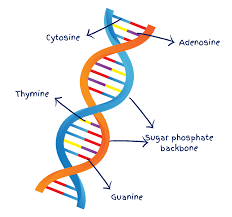
The real challenge here, for me, is that if this is true then it is true for everyone. If God is a God of justice and compassion then we are all blessed from the beginning. We are all created in the image of God. We all have God dwelling within us. God, it seems. dwells within us at the deepest level. It’s almost like God is in our DNA.

Does knowing this have an impact on how we live our lives?
Does remembering that all are created in the image of God have an impact on how we live our lives?
Does being endwelled with God and ourselves dwelling in God change how we live our lives?

Caim Prayer

Yesterday we thought about the Eucharist bread in Celtic Christian Theology via Celtic Lent. Today we consider the wine.

The Celts did not have a polite sip of the wine. The cup that was passed contained a round a bottle and a half of wine and, after the whole loaf of bread had been dunked in the wine each person took a good glue! These worshippers were really throwing themselves into the Jesus story and experiencing the events as fully as they were able through the liturgy and actions. Through the dining of the wine they were immersing themselves in the saving and victorious blood of Christ.

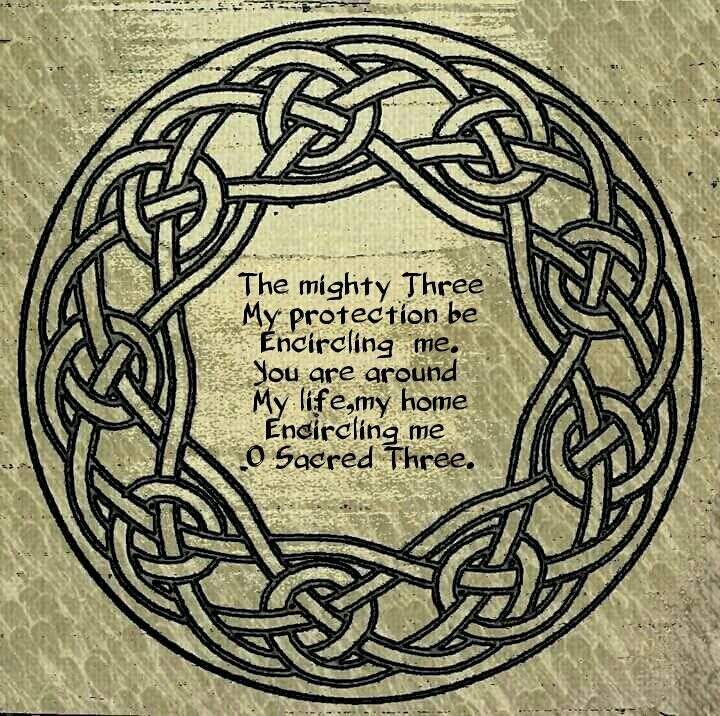
One tradition that I totally love was that after the wine had been drunk, the priest would then visit each worshiper and circle their head with the cup while saying a Caim, or circling prayer, such as:

Encircle me Lord
Keep harm without
Keep safety within

Encircle me Lord
Keep turmoil without
Keep peace within

Encircle me Lord,
Keep evil out of
Keep your peace within

Saying these prayers either alone or wit others have become, for me, a powerful way to start the day and remind myself throughout the day as I repeat them that, very consciously, I am walking on holy ground with the creator.

Taste the Bread

Today’s thought taught us more about the Eucharist of the Celtic Christians where symbolism and struggle are integral to the act of worship.

From the Stowe Missal we learn that the priest would use a whole large loaf of bread. The effort to break this bread in half (if you’ve ever tried) represents the insults and the beatings that Christ encountered. Once the bread was broken the priest would then break up the bread into smaller pieces and would arrange the pieces on a plate in the shape of a cross. Ongoing we then see the holistic theology of God being in everything put into practice in a practical way. Once the bread was received by the person they are instructed, from the missal, to take the time to savour the bread and to allow themselves to taste the mysteries of God.

No dualism for these Celtic Christians means we can experience God in taste as well as through our other senses.

That’s quite a thought and a challenge.
If God is everywhere are we able to experience God through all our senses?
What does ‘tasting the glory of God’ look like for you?
What reactions do you have to this inclusive theology?
Does this have an impact on you today on your Lenten journey.

what’s in a number?

Numbers were symbolic and important to the Celtic Christians. Cole shows us that the number 3 appears as a sacred number. Celtic triads from around the time of the Stowe Missal, such as ‘three candles that illumine every darkness: truth, nature and knowledge, were key to living out life as a Christian and journeying with Christ.

The Missal also talks of the priests actions in the liturgy. The priest bows three times for his sins, and for the people he walks 3 steps forwards and 3 steps backwards. These are all to symbolise that we sin in a triad – in thought, word and deed.

I wonder whether adopting some physical exercise, like that above, during confession would help my spiritual practice. I wonder if it would help embed my worship in a challenging and meaningful way? Rather than saying words alone, my body would also be entering into the tri-symbolism. It would help me to understand, or rather remember, that my whole person sins and needs restoration rather than just the cerebal and speaking part of me. After all we all know that ‘actions speak louder than words!

just words or opportunity

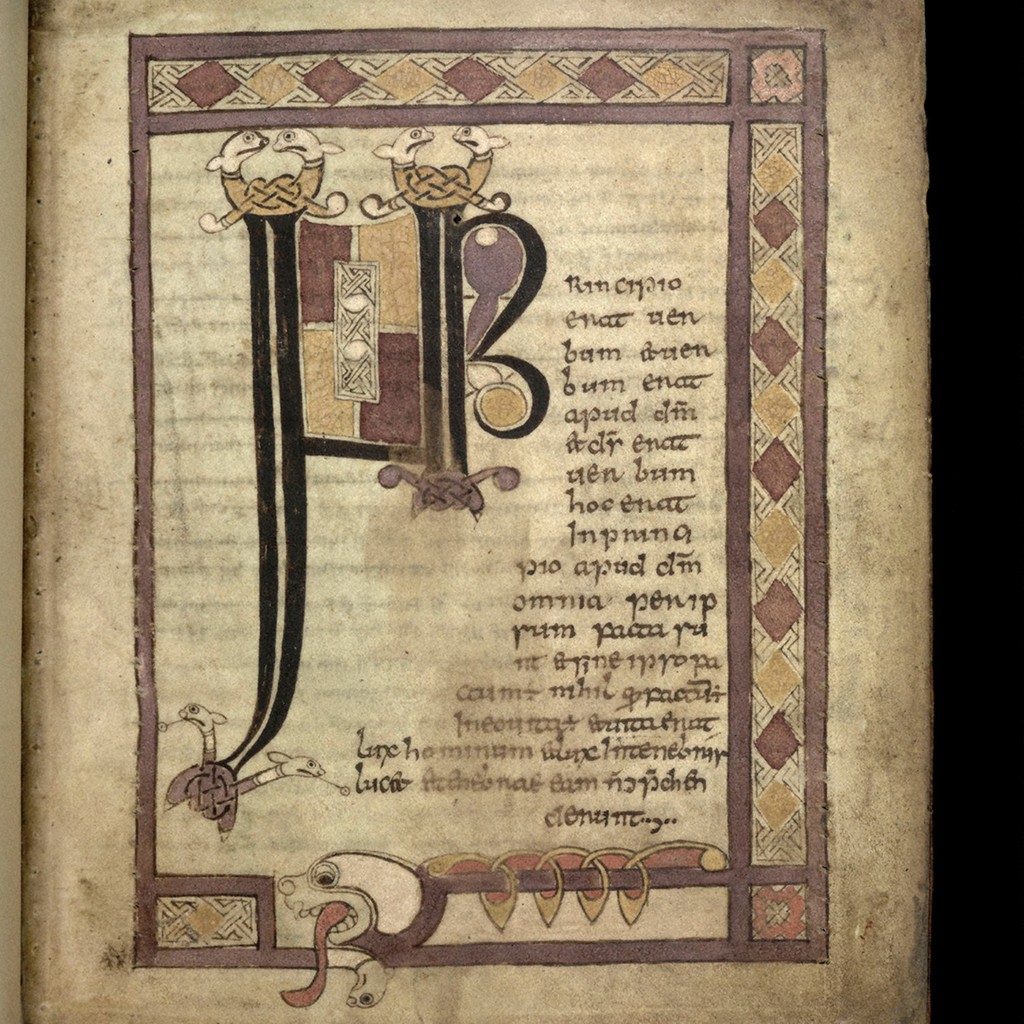
This week in Celtic Lent we are looking at the Stowe Missal, which is about 60 leaves of illuminated writing explaining the order of the Eucharist service of the monastic centre, along with some prayers and hymns.

Over many years I have had good discussions with friends about liturgy. Many of my friends have the opinion that is is boring and stifling to the spirit when we use the same set of words week by week. I have always argued that reciting similar words actually has the opposite effect and allows the spirit to truly meet with us in a meaningful way.

The Celtic Christians did not see liturgy as just a collection of words. They believed liturgy had a mystical depth to it. It was seen as something greater than them , and something to be entered and absorbed within. Each liturgy was an opportunity to be absorbed more completely into the Christ experience.

The Stowe Missal was written to to help the people engage more deeply and be absorbed more completely int the divine presence. So, Eucharist, for the Celtic Christians isn’t just a service that they had to do, its was instead a sacred mystical act that drew them closer to God.

So …. at the start of this new day, this thought is causing me to ask, how do I view liturgy? Is it just a set of (familiar) words or is it more of that opportunity to be drawn into, and absorbed by, God? And if that is so, what am I going to do about this? How am I going to view and treat liturgy moving forward? I’m not sure …. but I definitely want to lear how to embrace and be part of the mystical experience.

How do you view liturgy? Words or opportunity?

Fifth Sunday