Taste the Bread

Today’s thought taught us more about the Eucharist of the Celtic Christians where symbolism and struggle are integral to the act of worship.

From the Stowe Missal we learn that the priest would use a whole large loaf of bread. The effort to break this bread in half (if you’ve ever tried) represents the insults and the beatings that Christ encountered. Once the bread was broken the priest would then break up the bread into smaller pieces and would arrange the pieces on a plate in the shape of a cross. Ongoing we then see the holistic theology of God being in everything put into practice in a practical way. Once the bread was received by the person they are instructed, from the missal, to take the time to savour the bread and to allow themselves to taste the mysteries of God.

No dualism for these Celtic Christians means we can experience God in taste as well as through our other senses.

That’s quite a thought and a challenge.
If God is everywhere are we able to experience God through all our senses?
What does ‘tasting the glory of God’ look like for you?
What reactions do you have to this inclusive theology?
Does this have an impact on you today on your Lenten journey.
what’s in a number?

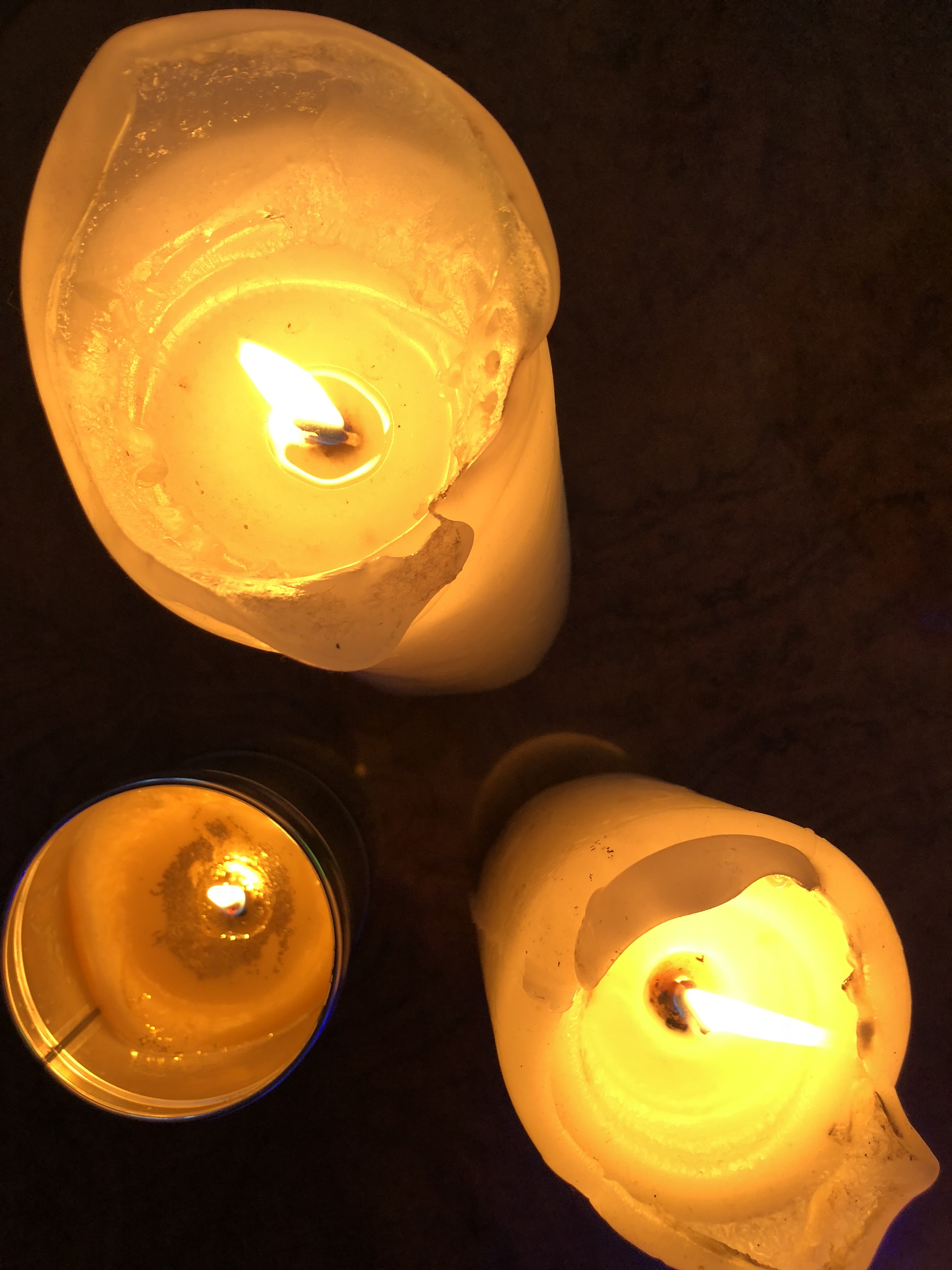
Numbers were symbolic and important to the Celtic Christians. Cole shows us that the number 3 appears as a sacred number. Celtic triads from around the time of the Stowe Missal, such as ‘three candles that illumine every darkness: truth, nature and knowledge, were key to living out life as a Christian and journeying with Christ.

The Missal also talks of the priests actions in the liturgy. The priest bows three times for his sins, and for the people he walks 3 steps forwards and 3 steps backwards. These are all to symbolise that we sin in a triad – in thought, word and deed.

I wonder whether adopting some physical exercise, like that above, during confession would help my spiritual practice. I wonder if it would help embed my worship in a challenging and meaningful way? Rather than saying words alone, my body would also be entering into the tri-symbolism. It would help me to understand, or rather remember, that my whole person sins and needs restoration rather than just the cerebal and speaking part of me. After all we all know that ‘actions speak louder than words!

Fifth Sunday

restoration v recovery

Following on from yesterday’s thought from Celtic Lent on original sin or original blessing, today we jump on a few hundred years to the ninth century Celtic saint, John Scotus Eriugena.

Eriugena and the Celtic Christians did not believe salvation was about changing human beings to be acceptable to God but rather that salvation was about restoring us to be the person that God created us to be in the first place.

Eriugena writes:

‘Just as the skin of the human body is afflicted of the contagion and deformity of leprosy, so human nature was infected and corrupted … and made deformed and unlike its creator. When it is freed from this leprosy by the medicine of divine grace, it will be restored to its original fairness of form.’

As we travel towards Easter this challenges the traditional ideas that still remain from my upbringing in the western/latin/roman based church. ‘I am good, and embodied in the image of God’ is something I need to be reminding myself of daily. Maybe I need to develop some sort of chant or tun to help me with that. Good Friday, and Easter, is about us being restored to the person we were initially meant to be.

What does this mean to me and you today?

Original sin or blessing?

Since becoming a Christian at 17 I have always struggled with the concept of original sin which, I now know, came from Augustine and was adopted by the Roman/Latin church. I remember having long discussions with leaders of my church in Weymouth. In the confirmation group I asked awkward questions which people didn’t seem to have answers for. I could not understand how a new born baby could be ‘born in sin’ and be born containing ‘original sin’. To me then, and even more so now, the concept simply does not fit with the concept of a loving God who created us all in God’s image.

If we are created in God’s image, stated this arrogant loud teenager, then how on earth could we be born with Original Sin?
I remember tagging on the patience of my teachers as I proudly stated that, if anything, we must all be born in ‘original blessing’ as this is the only thing that makes any sense f we are created in God’s image.

In today’s thought from Celtic Lent we hear that this very concept was a distinguishing difference of theology between the Latin church and Celtic Christians. The catholics believed the core of us, our soul, was eveil and fallen and required transformation from Christ. The Celtic Christians believed our core was a divine image but tainted which needed fixing by Christ.
In the words of Genesis 1:31; ‘God saw everything that they had made, and behold, it was very good’

This makes a massive difference to how we view other people and creation itself. If we consider ourselves and others as being inhabited by that divine image then that surely significantly impacts upon our behaviour towards each other. Surely it means we see each other differently and we would want to cherish, uphold and applaud each other in our daily journeys. Surely this would mean Christian ‘spaces’ would be open, welcoming and loving to absolutely everyone!

Original sin, or original blessing ….. you decide?

making a stand

One of the great stories of Saint Patrick was the focus for this morning’s Celtic Lent thought.

It was Easter Eve in 433 and the tradition was that all fires in homes and on hillsides were extinguished. The king had banned anyone from re-lighting those fires until he had lit his for all to see first. Patrick defied this law, climbed the hill of Slane and lit his Easter fire. The king was totally pissed off and commanded Patrick be put to death. That’s very brief and the full story can be read here.

The courage of Patrick is striking and that’s what I have been pondering on my travels today. Despite knowing this would annoy the kind and that he would be condemned to death, Patrick trusted in the power of God. Because he trusted that power he didn’t fear what the king might or might not do. In fact, Patrick’s stance of faith eventually resulted in the king, albeit reluctantly, becoming a Christian himself.

I’ve wondered today how I understand that power of Christ.
I’ve wondered how that power manifests in my life.
I’ve wondered is there stuff I do that stops that power flowing through me.
I hope, that like Patrick, I can make a stand for the gospel.

names

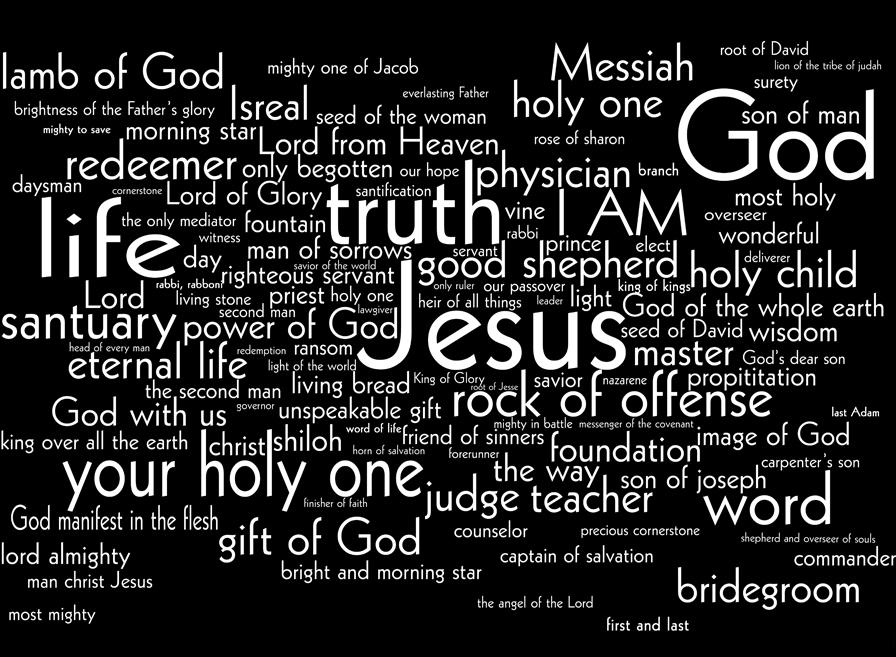
Today’s Celtic Lent thought gets us to think further about the names we use for God. It outlines in the past how ancient communities have taken certain attributes of God’s character and how these would often relate to the sins of the writer. For example, the writer naming God as ‘guiding light’ may have come from the writer feeling lost and not knowing what to do next.

the Celtic poem, Prayer, talks of God as; holy storyteller, holy scholar, silent one, and generous thunderous giver of gifts. Some amazing names and attribute of God there to focus on.

Throughout today, in my setting, I have asked myself what attributes of God resonate the most with myself at the moment. I have settled on ‘Rock like warrior of a hundred hosts … inspire me, lead me, fight for me, restore me’.

Warrior Jesus

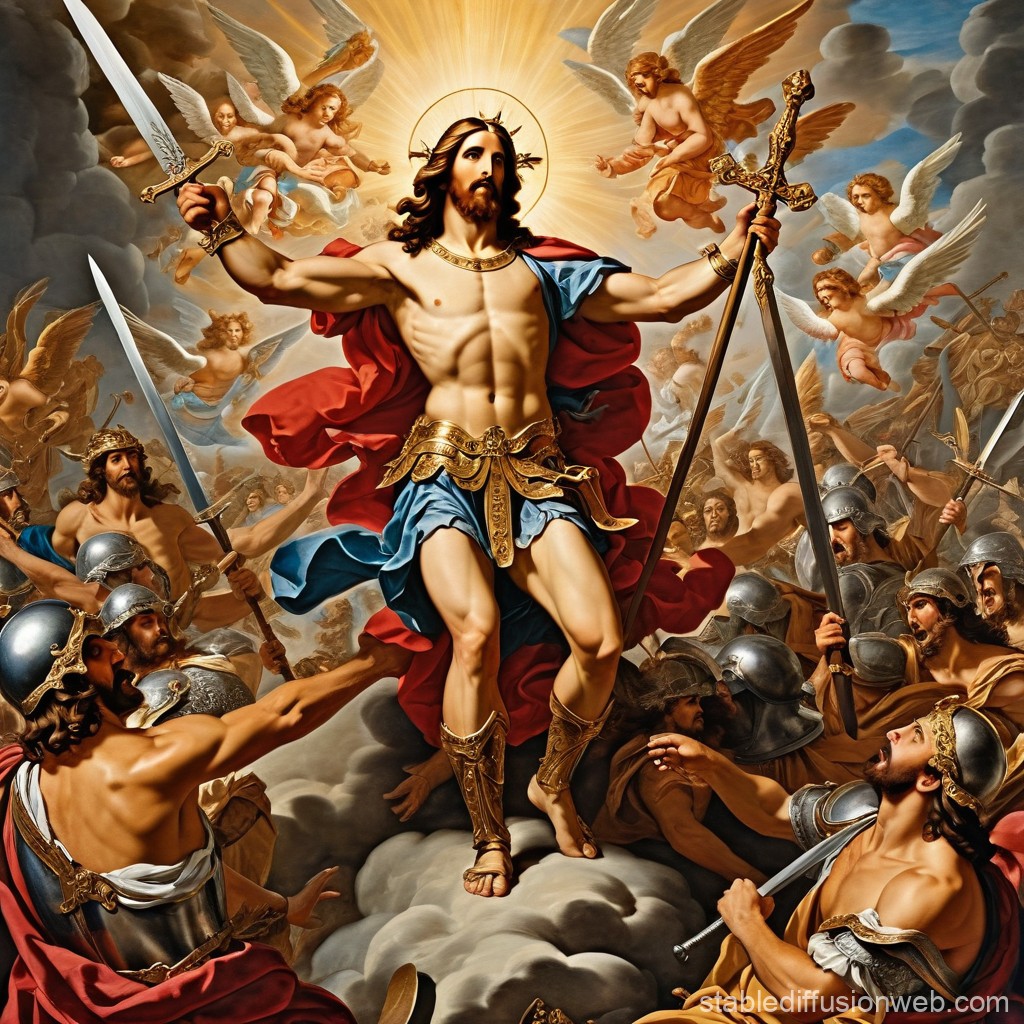
source: https://stablediffusionweb.com/image/18295280-warrior-jesus-in-battlefield-with-angels

In today’s Celtic Lent reading we hear abut Jesus as a victorious hero more than as a loving saviour.

The Celtic Christians loved their hero sagas of where the great warriors were honoured as well as remembered. They sous sing about their heroes and their great feats. Their heroes lived with an everyday sacrificial struggle, giving up their lives to save someone or a group of people.

At the cross this hero status was placed on Jesus. Christ is their conquering hero, defeating satan so that we can live a full life.

Throughout today I have reflected on this ‘different’ approach to the works of the cross. I have wondered what difference a conquering hero makes over a loving saviour and how that difference, if there is one, could lay out in my daily journey with God.

How do I react to this image of Jesus the warrior?
How do you react to this image?

Be thou

In today’s reading we looked at the wonderful Celtic hymn of ‘Be Thou My Vision’. David Cole introduced us to different lyrics from earlier translations which are all based in that foundation of Celtic non-duality in their approach to faith. I have come to love this concept of their being no sacred and secular. God created the world, God inhabits the world and God will recreate the world, so how can the world be anything other than sacred. God is here … the ground we walk on is God’s. Wherever we are, we stand on holy ground …. that is an amazing thought to take into your day!

In today’s contemplation section we were asked to think about the ‘be thou’ statements in the hymn that explain who God is to you and asked to write some for ourselves. This is my attempt below ….

Be thou my Feelings when Ive sunk to the bottom
Be thou my breathing when I can’t catch my breath
Be thou my meditation as I open to you
Be thou my speech to enrich those I meet
Be thou my silence so I can hear what I need to hear
Be thou my passions as I aim for self control
Be thou my Justice when I feel life is unfair
Be thou my hope as I look to new opportunities
Be thou my calm when people around me are shouting

stories

This week Celtic Lent is going to be looking at some stories, accounts and writings that relate to ourLent journey. Stories have alway been key to Christian community. Gathering and sharing and remembering can be inspirational as we attempt to navigate our lives around the stuff we encounter.

So …. which stories, characters or creative wrings have inspired you? Here’s a few that have stayed with me over the years, some have been historical characters, some people I’ve met, and some I’ve read in novels, heard in songs or seen in films. All of them have encouraged me and been enlightening as I was searching for some light at the end of tunnel.

Saint Brendon. His story inspires me as he stepped into the unknown. With some mates he jumped into a boat to take the gospel to other lands which he wasn’t even sure existed. On top of this the common understanding at the time was that the earth was flat, so Brendon was literally willing to sail off of the end of the earth in obedience to God!

For similar reasons, Abraham inspires me. He was asked to move by God. He did so even though he had no idea where he was going.

Ken and Connie cousins were two amazing saints that looked after me, loved me, and took me to St Mary’s church in Weymouth. They became aware that my home life was not great and so they lovingly took me under their wing. They sponsored me at my confirmation and stayed in touch until they died. I remember them both as totally devoted to Christ and this showed in the love they had for others around them. They inspired so many and their greatest delight was always to see others start their journey with God.

I remember I was struggling with a mass problem and this clip from Patch Adams floored me and had me streaming tears in the cinema. This short clip really has changed how I approach life and I totally believe that God spoke to me through this scene.

That’s a few of my key stories …. would some of you like to share yours?