
variety helps

I have a fairly varied week this week ahead, by recent standards, and I think I will benefit from getting outside my patch so that when I return I can look again with fresh eyes and listen afresh to what is happening around me.

It’s amazing how quickly the body adapts to new surroundings and I am conscious that I feel very comfortable in most of the places that I hang out which may be a good thing. It is also true though that comfort leads to familiarity and with familiarity things are missed, or is it just we stop observing?

This week my variety has a few good highlights:
Wednesday – meeting up with Brother Colin who is a Franciscan friar in Canterbury and very kindly agreed to be my spiritual director.
also on Wednesday I am looking forward to watching Alice in the Cities and the newly found (to me) Rochester Film Salon. I love film and I like meeting new people, so I hope this evening is great – of course if anyone out there wants to come with me that would be cool too!

On Thursday late afternoon I am meeting up with a cluster of people I trained with to have a few drinks and chat about how things are going. It will be good to hear what is happening with other people.

Friday night I’m popping in on the Saints Alive celebration in the cathedral hosted by the Churches Together in Medway. Last year I spoke at this event and it will be cool to just be there as part of the congregation, see some old friends and catch up with what is happening in other parts of the city.

Other times through the week I hope to pop in on SPLAT, which is a fantastic holiday club run by Sarah. Seeing the enthusiasm on the faces of children and the creativity of the leaders is always a special privilege.

A change is as good as a rest my nan always used to tell me – actually I think it is much better.


3 p’s


Yesterday I caught up with Ian Mobsby in London. I am in the privileged position of having Ian as my mentor and meeting with him inspires me and helps me to see things differently.

Amongst loads of ideas and possibilities, Ian chatted with me about my role having 3 faces to it, those of pastor, pioneer and prophet (I know that wine induced blog name of SHP was really God inspired!).

I am seeing the pastor thing starting to occur in my conversations with people in places. The couple who shared about their daughter, others who have shared about concerns over work, and general life issues. The pastor role is one I have always joked I don’t have as I am a pioneer, but it is an important part of the role. When I connect with people to develop a new expression of church, my role is to pastor, not in an elevated way or lone role , but in a way that I serve others and serve others with others if that makes sense.

The pioneer role I can see. This is what I am doing. The going to places and hanging there and waiting to see what happens. I believe it will continue to be a struggle, but those early pioneers (whether we look at faith, railroads, or gold diggers) all had tough times and times of loneliness as they thought about where to go next. As with above this is not a role I do alone, which is why my prayer continues to be another pioneer to share with.

The prophet role is not one that I had seriously thought of. This is a role of, again with others, imaging what life could be like. Re-imagining how Christian faith can play out in contemporary culture. Part of this is also, I think, putting the vision out there and taking a proactive role, but in such a way that i am not seen as leading or seeking my own agenda, but in a way that genuinely and authentically allows others to mould the shape of whatever it is that God creates here.

The final sentence there is one I am enjoying saying to myself over and over again. In a world where we are governed seriously by diaries and meeting targets I believe it is important that I remind myself on a daily basis that this is not my work, I am not to create or engineer but simply to be and to wait and to discover. The creation, or birthing, of this community is God’s work – my job is to search, gather, care and see what happens.

Well I’m off now to search some more …

circle of collaboration

Yesterday was quite an incredible day.

In the morning I said goodbye to a great pastor who has left a wonderful legacy and although not at the end of his ministry has finished the part of his journey with the church in Gillingham.

In the evening I attended AngelSpace and brushed shoulders with young people who are right at the start of their ministry with some not even believing that they could possibly have a ministry or be used by God in any way.

As I look back over the 24 hours, it is as if God is saying the cycle continues. There are times of sadness when things come to end, but if we look around us these are balanced out with times of excitement too.

An event I had to miss yesterday which I really wanted to get to were some of the Southwark ordinations in Croydon. More people, more friends, starting out on a new ministry and excited and daunted by the prospect.

The cycle continues and has been continuing for centuries. This thinking connects with The Long View poem I quoted last week as well as my trip to the cathedral roof. If we think we are going to do major stuff and see lots of things through to completion we are going to be incredibly restricted and disappointed in what we do. If we take that long view and realise we are working in collaboration, not just with our present team colleagues and associates, but also with Christians that have died before us and those that come after us we can start to understand that our role is to simply play our part.

It hit me as I was going to sleep that we talk a lot about ‘sowing seeds’ and ‘others seeing the fruit’ or ‘we don’t know what the spirit is doing’ – but in reality a lot of language we use is that of great expectation. Sometimes we expect to sow, water and plant all in one quick swoop!

I just wonder whether this can put people off of becoming involved in mission or ministry. ‘Come and be part of something exciting’ sounds good, but may be the thought scares people off. ‘Come and see how your individual gift can be used’ may be more attractive. I’m not so sure either way?

We have been called to use our gifts, to play our part, in the great master plan of the creator. Some of it may not make sense, some of what we do may not even be seen by anyone but God, but all of it contributes, all of it is valid, and all of it would be missed at some time if it was not there.

When we understand we play but a part we then grasp how unimportant we are because of our dependency on each other and upon God. If we realise this we start to be concerned that we do our thing well, which stops us looking nto ‘check’ to see if others are working as well as us! As we grasp and focus on our part, we allow others to grasp and focus on theirs. The whole process releases us to be what we are called to be – nothing more and nothing less.

This cycle of collaboration puts all in perspective and really does liberate us in our expectations of ourselves and of others.

As I move out this week to join with God in his community, I want to be conscious that I am riding on the prayers of those that have gone before me, sowing in areas that have been prepared well for others to see fruit from while I see the results of seeds sown and nurtured by others.

The Long View

These words were shared with me recently – they are amazing!

The Long View

It helps, now and then, to step back and take a long view.

The kingdom is not only beyond our efforts,
it is even beyond our vision.

We accomplish in our lifetime only a tiny fraction
of the magnificent enterprise that is God’s work.
Nothing we do is complete, which is a way of saying
that the kingdom always lies beyond us.
No statement says all that could be said.
No prayer fully expresses our faith.
No confession brings perfection.
No pastoral visit brings wholeness.
No program accomplishes the church’s mission.
No set of goals and objectives includes everything.

This is what we are about.
We plant the seeds that one day will grow.
We water seeds already planted,
knowing that they hold future promise.

We lay foundations that will need further development.
We provide yeast that produces far beyond our capabilities.

We cannot do everything, and there is a sense of liberation
in realizing that. This enables us to do something,
and to do it very well. It may be incomplete,
but it is a beginning, a step along the way,
an opportunity for the Lord’s grace to enter and do the rest.

We may never see the end results, but that is the difference
between the master builder and the worker.

We are workers, not master builders; ministers, not messiahs.
We are prophets of a future not our own.
Amen.

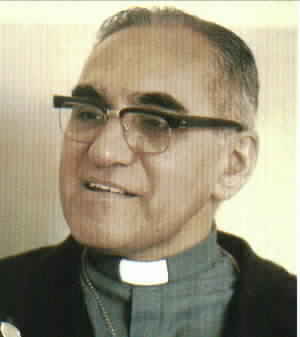
Attributed to Archbishop Oscar Romero

(thanks to Jonnie Parkin)

the wall

Today I think I have started to hit a wall. I’m an active person, I’m a person who likes to be doing stuff and I think I have a mind that lovers to struggle with problems and find a way ahead.

Currently my days are consisting of wandering around the High Street, sitting in places so I am making myself present to people. I am starting to ask myself, however, how long can I sit, wait, just be there (whether ‘there’ is High Street, bench, pub, coffee shop) before I just look plain odd. It is becoming harder to pull myself on to the street and, to be honest, I am quite relieved that today I have a study day it will give a chance to do some reading and mull over these questions I have.

I am aware that I may sound a little daft and impatient – after all I have only been ordained for 11 days and I never ever expected anything to start to ‘happen’ for a good 4-6 months. I am also aware that just by being present in places that I am a visible presence or reminder of God in a similar way that the Cathedral indicates the presence of God to the city. But … I guess now that I am in the position of being available and searching for evidence of God’s missional working a number of doubts are bombarding my mind from all directions. I guess it’s a case of a very active mind playing games when it has nothing of substance yet to really to occupy it.

So, I stand at the wall. I’ve been here before but there have always been places to hide before such as team issues to sort, essays to write, people to visit. I’ll be here again. It’s not a great place to be. Currently I feel like it’s just me and God ‘out there’ and that is something I need to get used to for the time being.

I am praying for 6 people to join me. I believe I need to continue to pray until I somehow bump into these 6 people or they bump into me; people who want to discover more of God but believe that church is not what they are looking for. Actually – just writing this stuff is quite therapeutic (it may be boring for you!) as I’ve just realised all I am asking God for is 6 people … that’s a pretty simple request isn’t it? At the moment my task needs to be allowing God to lead me … sounds simple but in reality it’s a challenge.

I’m at the wall … but I’m searching for a window.

Paused

I read an article in Big Issue yesterday. There was an interesting article about Christians doing work with people on streets. The writer, who lives on the street, was complaining about Christians who are out to convert people and makes the point that, in his observations, he has noticed the Christians he sees ‘targeting the vulnerable’ on the streets. He claims that these Christians deliberately target vulnerable people for ‘conversion’ rather than just being helpful.

It’s a challenging article and ends by saying ‘If you see me, be a good Samaritan and walk by on the other side as I am just not interested.’

I don’t like the language of ‘targeting’ the vulnerable but we can all see what the writer is meaning. Mny of us can agree in part as we have observed the practices of some. This is a difficult area, as I firmly believe Jesus came to reveal his Kingdom to all, but I would argue he took a particular interest in the ‘vulnerable’ of his time … prostitutes, lepors, the hungry, the outcast and so on.

But … should we take this article, and it will not be a solitary view, to heart. Should we analyse how we reach people on the streets in ‘mission’? (I think we should!) If nothing else, this article should cause us to check out our motives. What is at the heart of what we do? Yes, I want people to know that God loves them, but should we take into account the vulnerability of so many?

How do we achieve that fine line of ‘being Jesus’ as all Christians are called to be and not taking advantage of peoples vulnerabilities? I would hate churches to stop working with the vulnerable out of a fear of being misunderstood; but this writers views have caused me to pause!

Archbishop Rowan’s letter

The Archbishop of Canterbury has written an open letter today, summing up his reflections on the Lambeth Conference.

I was encouraged to see this mission perspective given with voice to the stuff of real urgency of our time:

First, there was an overwhelming unity around the need for the Church to play its full part in the worldwide struggle against poverty ignorance and disease.

You can read the whole letter here.

Lure of the East

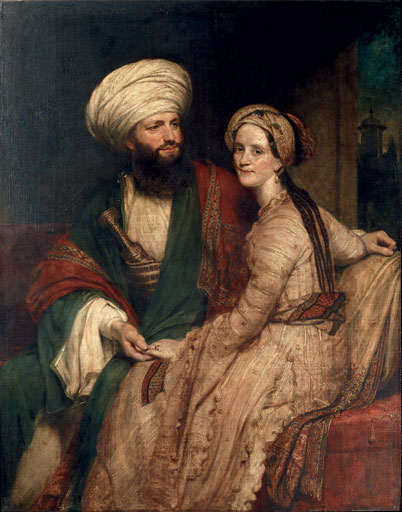
I managed to catch the Lure of the East exhibition at the Tate Britain last week.

The guide to the exhibition starts:

Private travel from Britain to the Middle East was rare before the 1830s, but travel for warfare, diplomacy, trade and religion had been going on for centuries. While outside Europe, these early travellers and residents assumed ‘Oriental costume’ for different reasons. Many believed themselves to be safer when dressed similarly to local people, while more academic visitors often wished to appear incognito in order to facilitate their researches; others did so out of a love of ‘fancy dress’, while still others wished to signal a committed solidarity with the culture whose clothes they put on.

After visiting the exhibition and being terribly civilised with a pot of tea in the members room, I reflected upon those words and got to thinking on mission and the church. Seeking to be in culture but not of culture puts us in the same position as these early traders.

It causes me to ask ‘Do we ‘wear’ culture to feel safe, to be unnoticed as we carry out research, because we wish to appear trendy or because we feel a solidarity with the culture we seek to reach?

It’s an interesting and necessary question – and its a question where I hope my answer is the last one, but how can I be sure it is none of the other three, which seem pretty negative and/or lack integrity for me. To ‘wear the dress’ of culture to fel safe, to be incognito, or to look good do not sit easily with me as I seek to reach the people of this culture with the gospel of Jesus Christ.

As I contemplate this ministry (10 weeks and counting to ‘O’ day) I was planning to be thinking a lot about how to be in but not of culture – I need to add to that the question of why I want to wear the culture at all.

small beginnings

I had the pleasure today of spending some time with the trustees of Gillingham YFC.

It was particularly cool as I was asked to share something of the history of GYFC and it was an exciting experience to take the time to remember the stories and be able to share how this great ministry of GYFC started very simply with Sarah and myself wandering the streets on a Saturday night talking with young people.

It was amazing to remember old names, miracles that had happened, conversations we had, and young people who’s lives had been transformed.

GYFC is now unrecognisable to what it was when I was there which is a sign of good health and development.

Amazing how God takes a little act and builds upon it.

Visions have to start somewhere, and it was great today to remember that the starting point of vision is often quite small.

Apostolic JD

Hirsch blogs here under the title Apostolic Job Description.

I like Hirsch and the Shaping of things to come co-written with Frost was one of the books at the time that got me and a number of other people asking key questions around mission and ecclesiology.

Hirsch suggests in this post that there are 3 primary functions of apostolic ministry:

1. To embed mDNA through pioneering new ground for the gospel and church
2. To guard mDNA through the application and integration of apostolic theology
3. To create the environment in which the other ministries emerge

This implies that other ministries emerge from the apostolic, that it initiates other ministries. Without the release and encouragement of this, other parts of the body will suffer.

I had not really thought of this but as I think it seems to make a lot of sense, not in a hierarchal ‘this ministry is better than yours’ sense but in a practical sense that all ministries are equal with and appointed by God … but simply that somehow something has to happen first.

It’s grabbed my attention … any comments out there?