what is it about women?!

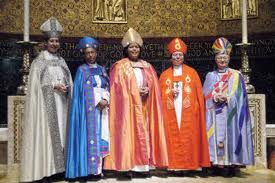
Today I have been dipping in and out of the General synod debate on women bishops. Some readers will now be confused and asking ‘what …. you mean the Church of England doesn’t have women bishops!!!???’ Sadly, no we don’t! Not yet …. but happily I think the day is coming and will be coming soon. (I kid you not – I had such a conversation last week in the coffee shop and the look of shock was amazing!)

I must admit to feeling a sense of frustration with some of the arguments against being recycled when, through our process of discerning and diocesan synod voting, it is clear that the overwhelming majority of dioceses believe this is where God is leading us. Out of the 43 dioceses, 41 voted in favour of women bishops. These meetings and discussions will have been covered in prayer and people will have debated prayerfully (as they have in general synod) … so we have asked God to lead us and God has.

I long for the day when we see women as bishops within our church – this will put right a massive sense of incompleteness that many have carried for a very long time.

It’s interesting that around the blog world the last couple of weeks that Driscoll and others have been shouting that the church is not masculine enough. A masculine Christianity is needed goes their argument … really? Coming from Driscoll, in a church that only recognises  male leadership I fail to grasp how it can be more masculine!

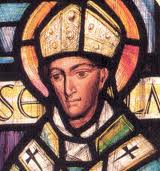
TSK has been following the blog conversation and, as is his great skill, he writes a good summary here. In the discussion of headship, gender and suchlike TSK draws attention to the Song of Anselm who was Archbishop of Canterbury in 1109:
Jesus as a mother you gather your people to you
You comfort us in sorrow and bind up our wounds

TSK’s 6 challenges are real challenges to consider at the end of his post and challenge me, particularly number 2!

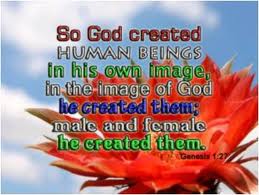
Some of the basis of the argument for all this stuff over gender and headship arises because many have lost sight of who God is. God is not human, God is God. God is not male, not is not female. When God created humanity …. male and female were created .. and both male wand female were created IN THE IMAGE OF GOD. How then can there be a difference or a holding back or a depriving of one part of God’s image from carrying out their calling from God? In one part i deprived, we are all deprived!

Maybe we need to take time, to contemplate, to rediscover that we follow a God of inclusion, a God of blessing and yes, a God of paradox …. but most of all a God of love and unity. One God, creator of all!


mixed sunday

The blog has been quiet for a while. The reason has been that I have been feeling pretty wordless since Monday and, in time, I will share this but it is not right to do so at the moment.

Last Sunday (am I really that far behind!) was a pretty good day. The day started by taking up a great opportunity to preach St. Augustines, a parish church (which happens to be the parish I live in), in which I have known some people for a little while. It was good to catch up with people and I seemed to get positive comments from my sermon, which got some people asking questions – which is always my aim when I preach! I came away thinking this is a great parish church looking at ways in which it can engage well with it’s community.

In the afternoon we had the first gathering of 2012. I guess we are developing a way of working or ‘tradition’; and it seems to be a developing tradition that at the start of the year we do ‘the journey’ which I have blogged a lot about elsewhere.

The journey gives us a safe opportunity to consider where we are with God and where other members of the community are. It reminds us that the Christian life is a journey of good and bad, of joy and sadness, of cruising and battling. It reminds us that all of these stages are valid, all are necessary, and so all are ‘right’ places to be in in their season. Most importantly, it reminds us, and shows the younger members of our community, that Christianity is real and we don’t need to pretend it is easy. It shows that having difficulties and questioning God are not signs of ‘back-sliding’ but are actually signs of discipleship being taken seriously.

Last Sunday – two totally different gatherings, but both rooted in prayer, faith and worship of the Creator God. That inclusiveness and commitment to engaging with a theological diversity is one of the things I love about the Church of England!

1000 fresh expressions …

The latest survey on attendance has, for the first time, researched Fresh Expressions and the news is both exciting and encouraging. This paragraph from the report quoted on the Fresh Expressions website show that the bold step a few years to try something different os starting to make a difference:

The first ever statistical analysis of fresh expressions of church has concluded that there are at least 1,000 CofE fresh expressions or new congregations across the country. Around 30,000 people attend fresh expressions each month who don’t attend traditional regular services, equating to an average of around 40 people per participating parish exploring new forms of church – the statistical equivalent of an additional diocese. Almost all dioceses have reported fresh expressions or new congregations with over half of these initiatives aimed at families with young children.

While that is exciting I read this with just a tad of frustration. I still come across senior church people that tell me ‘fresh expressions is not working‘  or that ‘fresh expressions will not exist in 3 years time‘ alongside Beth Keith’s research which quotes, ‘Many pioneers, while affirming the principle of the mixed economy, did not have positive experiences of working within it. Whilst they were aware of the pressures felt by the wider Church through declining attendance and resources, they were frustrated that the maintenance of existing churches reduced the opportunities and resources for mission and evangelism. For example: pioneers repeatedly reported issues with mixed posts where pioneering aspects were not clearly defined. Maintaining existing churches, fulfilling traditional curacy requirements, or working in church structures remained an ongoing pressure greatly reducing the opportunities for mission

I sense across the nation a certain ‘attitude’ within church (not everywhere but in lots of places) that was there towards people involved in full time Christian youth ministry. It was an attitude or belief that these youth ministers were just doing this work for a little while before moving in to real ministry. By real ministry was meant work in church with adults.

Sadly from discussions with others I think that attitude with pioneers up and down the country still exists …. the attitude that says ‘pioneers are doing this for a period and soon they will ‘grow up’ and want to do real ministry.‘ This time the real ministry refers to traditional church ministry.

Personally …. i don’t see my ministry that way … and my hope is that this piece of research will allow us all to acknowledge the real contribution that Fresh Expressions is making.

Apostolic Living

I have signed up for this day with Affirming Catholicism on 28th January. It looks a great day and I have had an email saying there are still vacancies.

there are great speakers leading thesessions: Paula Gooder, Mike Oakley, Mark Russell and Janete O’Neill asking the question … ‘what does it mean to live as a disciple of Christ in the 21st Century?’ It’s a question the gathering is centred around and it is a question that I grapple with a day by day basis.

The day is located atSouthwark Cathedral and Borough market on a Saturday is always an amazing experience; so that is where I will be at lunchtime!

You can download a brochure here … so if you are free why not book a place.

meal of passion!

The gathering ate together last night at our home. A great experience with a good chance to share where we are at, what we are doing and how things are going.

Between our main course and pudding we thought a bit about our passions and our talents which led into a discussion of how the gathering reflects these and in fact whether, as an expression of church, that it should.

I adapted an exercise that Jonny put me on to last week but for our purposes concentrated on just passions and talents. It was interesting, although not surprising, to see that a lot of our values matched. There was a lot of passions around justice, family, friends and fun. Those values were expressed in various forms across the whole age span of the community from 7 years to 40 something. It was personally exciting to see the children speak of ‘against poverty’ and ‘championing the needs of people’.

Creativity was also a recognised passion and while we think we are a creative community we are painfully aware that we are not a community that is yet involved in doing something to lesson the injustices we see around us.

In our discussion we started to think and explore about how we might address this and also how our location might enable our mission to make a difference where we are. I think we all agree that although the crypt is a special and particularly sacred space, that is is not the correct space for the gathering to use in the way we use it.

We have become a community that spends a lot of time being creative and worship is fun and challenging. But, we never got together to spends lots of time planning great worship; we got together because we wish to explore being church in a way that makes a transformative difference to our community.

So for our next gathering we are looking to meet somewhere new and explore the advent and Christmas theme by asking local organisations ‘how can we help you make a difference?’ or ‘what is needed’ and see if there is any way we can respond.

Last night was a really positive and exciting gathering … not this time because of creative worship, but this time because of a shared passion to make a difference.

Please pray for us as we seek to move forward.

remember … the poppy

Today is Remembrance Day, 11.11.11. I don’t often do long posts, but today my talk at last years Remembrance Service in the cathedral seems appropriate to share in light of what has been in the press recently:

‘Silence falls. Our soldiers fade away. No mans land turns slowly into a peaceful field of poppies. The only sound is that of a bird, singing sweetly.’

The stage directions for what has become known as one of the most powerfully moving scenes ever to grace our TV screens. The final stage directions for the last ever episode of the Blackadder comedy series. We see a slow motion shot of Captain Blackadder and the rest of his company going over the top. The theme tune hauntingly plays on a piano. Explosions around them. The soldiers disappear into a Flanders field as the colour fades away. Hesitantly, colour returns until we see before us a field of vibrant red. Poppies.

This image of the poppy continues to speak powerfully to us today. The poppy has become iconic. Speaking across the generations of sacrifice and remembrance.

I stand before you today nervous and a little unsure while feeling quite inadequate in this task of speaking to you during this service of remembrance. I’m 45, have a wife and 3 children, exist fairly comfortably and like to think I know a bit about life! I am conscious that some of you here today may only be half my age and yet you have experienced many things that I cannot even begin to imagine, and if I am honest – nor do I want to!

You people of our armed forces present today are brave people who have chosen to serve this country so that others, civilians like me, can live in peace and be protected from the horror of war.

I remember in my teenage years how war was glorified by those like Hollywood giving the impression that war was full of heroics and victory. Then the Falklands War happened. I was living in Weymouth at the time and waved off a good friend Richard who had joined up 4 years earlier. Rich survived the Sir Galahad and when I met him it was clear something had changed.

Looking into his eyes something was different, something was missing. Maybe some part of him had even died. As we talked it was clear he was hiding stuff, to protect us from the horror. The Hollywood image disappeared.

There are no words, there are no anecdotes … there is simply nothing that can take away the horror of war which has resulted in the death of your friends, your family members, civilians caught up in war zones and yes the deaths of those you have fought who are sons, daughters, mothers, fathers and friends of different people.

I am struck by our iconic symbol of this day. In this cathedral you can see 2 icons before you. The thing I love about icons is that the longer you look, the more you see. Icons have layers and layers of meaning. To the casual observer these depths of meaning can be missed. If I were to ask you what a poppy symbolised you would probably say ‘remembrance’.

There are two other iconic layers I wish to draw your attention to. The poppy is the source of opium. A powerful pain killing drug. The poppy speaks of the pain of the memory but also of the desire for the pain to be taken away. Just for a little while. As much as we may want that, we also know it does not help us or the rest of society if we try to escape the reality of pain. We live with the scars. Knowing that irrespective of whether those scars are from the wounds of missing loved ones or from the actual things we have experienced during war – both massively hurt! We face up to the pain which Remembrance day helps us to do.

There is another iconic layer of meaning of the poppy. This meaning has its roots in the Greek and Roman times. It comes from the knowledge that poppies bloom every spring. The redness of the poppy, which would be seen without exception every year, seen as a promise of hope and resurrection.

In those Flanders trenches, the poppy flowering each year with the coming of the warmer weather, brought life; it brought hope and colour to that war torn landscape. Red as the colour of hope. Nearly 100 years later the icon of the poppy can continue to be a symbol of hope. A promise of new life.

In the words we heard read in Isaiah, we hear talk of justice and peace coming:

‘My people will abide in a peaceful habitation, in secure dwellings, and in quiet resting places’

When will this happen? – Isaiah  goes on to say when a spirit from on high is poured out on us.  If we had read the set gospel reading for today, we would have heard the disciples ask the same question of a similar event … ‘when will all this happen?’

That gives us hope. Faith in the resurrected Christ does not draw out the ‘if’ question but the ‘when.’ When will this happen? There is a certainty there! This is not a faith that talks of being whisked to heaven where everything is ‘fluffy’ and nice. The choir the anthem sang are words from Revelation. These words tell us what will happen. There will be a new earth, and God will live with us and wipe away the pain.

There will be no more death, no more sorrow, no more crying, no more pain. Today we can remember that we have that hope of a new world here on earth.

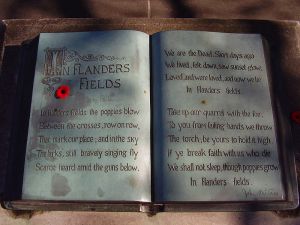
I end with the, now famous, words written by Major John McCrae from the trenches in 1915:

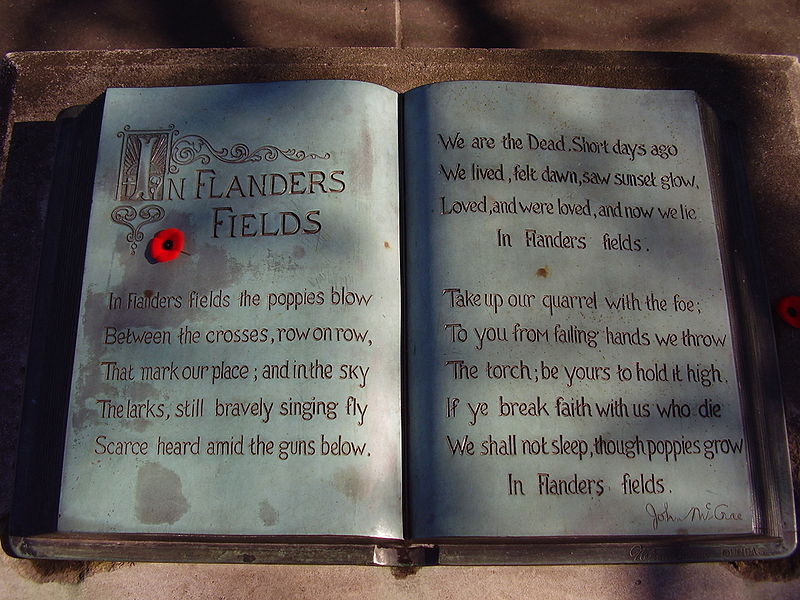
In Flanders fields the poppies blow
Between the crosses, row on row,
That mark our place; and in the sky
The larks, still bravely singing, fly
Scarce heard amid the guns below.

We are the Dead. Short days ago
We lived, felt dawn, saw sunset glow,
Loved and were loved, and now we lie,
In Flanders fields.

McCrae’s poppies symbolise the war dead. From the blood they shed on the battlefield, seeds germinated, sprouted, and grew into beautiful red flowers that inspired and heartened the living.

The poppy … an iconic sign of remembrance and hope – may we (are we able to) let it continue to inspire and hearten us today?
mind jump

It’s been a great couple of days so far at Pickwell Manor.

We are only half way through the week but my head is already very full of content, ideas, discussions and questions and so I think I need some space to just allow time to process what is going into my thinking at the moment. It is certainly amazing to have the input of both Shannon Hopkins and Steve Baker. Both have been involved in creating innovative stuff, one of Steve’s ventures being Pickwell and one of Shannon’s being Sweet Notions.

I am finding the week to be very challenging as we look at social enterprise and mission. I guess I am not fully comfortable yet with the idea of using a business model and thinking to enable or fund mission which I believe to be the responsibility of the church. I guess part of my difficulty is that I have grown in a model of church where I have always been taught and always acted with a stong ethos of the church paying for, or resourcing, mission.

By that I do not necessarily mean the establishment, although I guess I do partly. But I mean far more the actual people of the church …. us, you and me, if we call ourselves Christian. I have grown up in church where I believe there has been a strong underlying ethos that we fund mission from our giving.

To think differently, particularly in a business way, even when thinking social enterprise which I do see as more acceptable, as a means of sustaining mission activity is quite a jump to get my head around. That does not mean that it is not good and right, because I suspect it is good and right and very worth exploring (if I did not think that then I guess I would not have applied to join this course). It does mean, however, thinking differently and, for me personally, that means looking carefully at my values and ensuring what I think about doing fits well with those.

In the past when I was director of Gillingham YFC I allowed us to fall into the trap of our vision following the money and funding available. This got us into a couple of difficulties as this resulted in us having to neglect areas of our work that were key. So, my inbuilt brake or fear of mission and vision following funding rather than funding following mission and vision is on a mild to heavy alert.

I am using part of this week to think about the future and to write a proposal to present to people in the coming weeks of how my future as a pioneer could map out. There are plenty of ideas spinning around which I am now trying to settle onto paper into some understandable and achievable form … so maybe watch this space!

rolling reformation a year on!

Yesterday I got to again deacon in a pretty unique (and technically illegal … sshhh!) service in the Rochester Bridge Chapel. I blogged about the service and experience here last year. The service we used is based on a pre-reformation text and last year the experience caused me to start to think about the idea of a ‘rolling reformation’ … trying to capture the idea that we need to be constantly undergoing reformation type acts as language and symbolism changes with time. A year on I find myself feeling this even more strongly as technology and communication seems to be fuelling a language revolution which is constantly morphing and re-morphing as it takes words that I once thought I knew how to use and give them a totally different meaning.

At the time Annie was kind enough to comment, suggesting that the idea of a rolling reformation should not be limited to religion but that the rolling reformation mindset could apply to other spheres of our life.

I liked Annie’s comment: ‘It is our nature to question and grow and evolve, and it is natural that our faith should do the same – while retaining the central core belief.’

I think that hits the nail on the head pretty much. Our understanding, our language, our expression, our living out should evolve as we grow in our learning and understanding. I wonder if this means it pulls our ‘absolutes’ to the bear minimum as it throws up in the air how we should live as Christians. Events of history, past (such as the slave trade) and very recent (such as Occupy London), show that our faith and interpretation of the Bible can be very very different and seen from totally different ends of a spectrum with both sides using the Bible in support of their stance.

I talk with a lot of people in my role – it is one of the things I love about this job at this time. I talk with people of no faith, Christians and post Christian. We talk about lots, agree and disagree about lots as well. I guess the thing that is open to debate, as I find in conversation with my new friends is what is, in fact, the central core belief that needs to be retained and what is, indeed, up for the light of a rolling reformation reinterpretation!

take shape

I have had the week off.
I have had time to think, to reflect, to read, to watch movies.
I have also done a lot of walking as I ‘tweeked’ the old back after preaching last week.

As the week unexpectedly opened up for me I decided on one day that my walking should be around the Tate Modern. I love the Tate and, apart from various coffee shops, I really miss just popping in and out of this creative space like I used to be able to when I was a member and working in London twice a week when with YFC.

Personally, for me, I find I hear from God through film and art just as much as I do through Bible study.  I find wandering through the galleries of the Tate, and just wandering around the Borough Market area of London to be quite an inspiring space for me, especially when I am feeling dry as I have for the last few weeks.

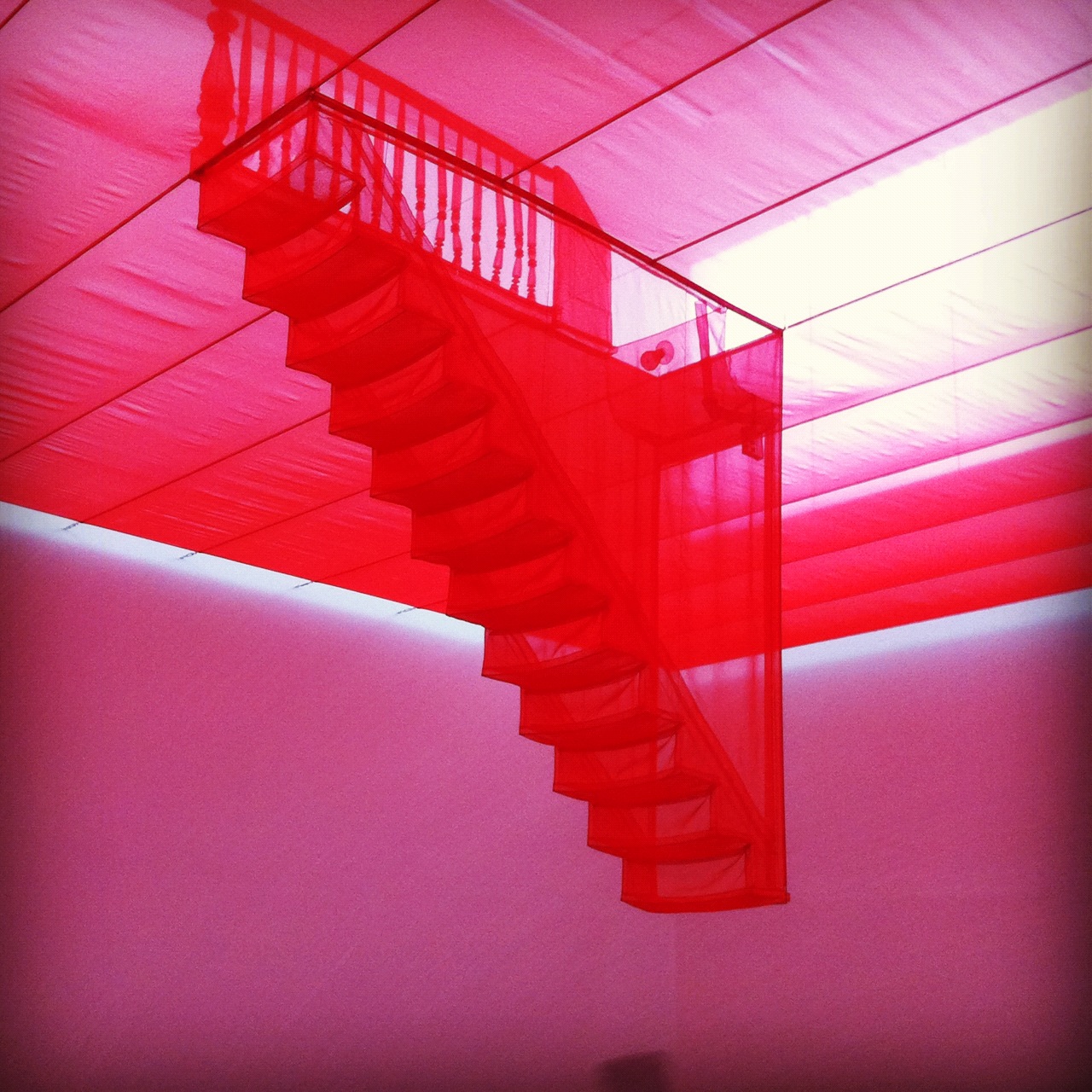
I found a number of exhibits to be amazing to study. I found myself mentally climbing the stairway. I’m not sure where it is leading, and I’m not sure where I was going as I climbed … but the piece itself was stunning, captivating and drew you into its space.

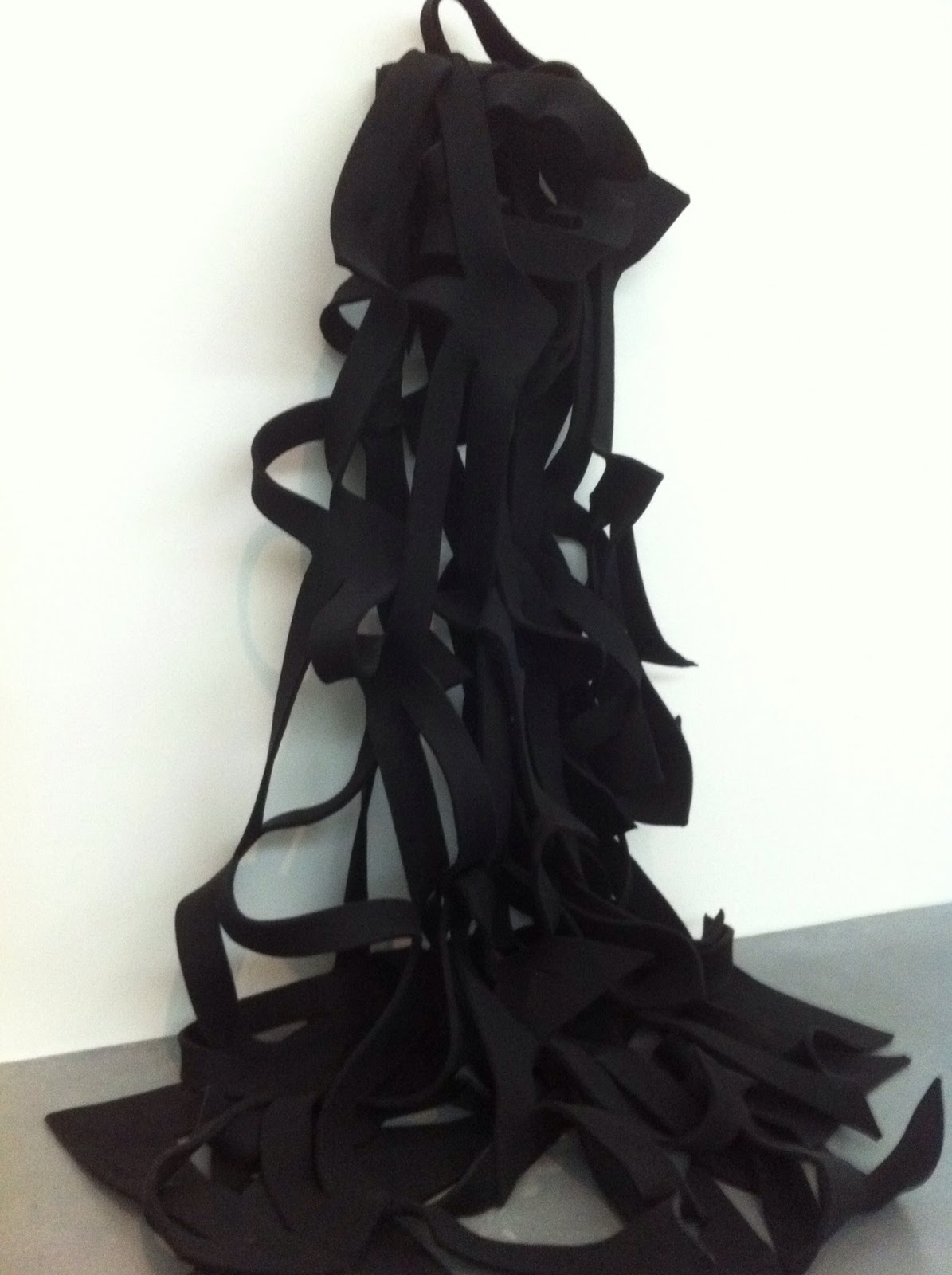
I was particularly struck however by an un-named piece by Robert Morris. Morris’ piece captivated me and got me thinking as he has exerted minimal control over it’s appearance, effectively giving up control of how the art appears. The piece consists of a number of strips of felt which are suspended and allowed to form their own shape under their own weight. Effectively this means that the shape changes each time this work is displayed. The material determines it’s own shape.

I was challenged by this as I wondered whether God had a message for me in this for the gathering. Sometimes I wonder whether we try to control things, events, maybe even God, just too much. In our fear to not offend, or in our obsession with accountability, or our ideas on what should and needs to be included, there is a tendency to try to force things into particular moulds.

We have been trying to create something new with the gathering. Some of what we do is very creative and different. Certainly some visitors, who are very very comfortable in the Christendom mould, have not coped with our openness, our inclusivity, our vulnerability and our desire to move forward together, learning from each other and encouraging each other.

What we do, however, still looks like a church service … a very relaxed and fdcreative one, but still one nevertheless.

I guess when you try to create something new it’s hard to break out of the mould that you have grown up with. When you have been so used to doing something one way, and so used to hearing that a b and c need to be included or done in a particular way, it then becomes very different to see any other way to do things.

So I wonder … whether in some way, and I don’t know how, that we need to let the weight of our ideas, our dreams and our passions find their own shape. In order for this to happen we need to find out how we can give them the freedom to relax into their own shape.

I’m not sure we know how to do that … … yet!

sunday reflections

Sarah was away at the weekend in Florence with friends celebrating Jo’s birthday. Sounds like they had a great time.

I did as well! Being home alone with the children (for just a weekend!!) it’s quite a cool experience as my children are so amazing.  I don’t know whether it is true for most children, but in the main, ours will tend to run things past Sarah rather than me. With Sarah away stuff came to me and it was a joy being involved in their lives in a slightly different way.

We also took the excuse to catch up with friends either over takeaways or at Nandos … and that was great too. I think this was massively helped by myself not being on the rota for Sunday …

Not being on the rota gave an indication of what life is like for others who do not have a church connection that requires some form of attendance on a Sunday morning. The word that summed up the experience was ‘relaxed’. With no rush to get out the door there were no arguments among people and the day was relatively stress free and happy.

With time being so precious today for families, and for most Sunday being the day when families can get together (I know this is not the case for everyone as people work Sundays too … I know!!) I have been thinking for a while that maybe ‘church’ needs to view Sunday differently.

With the gathering I am wondering whether our Sunday’s together should be more social, with less emphasis and worry on doing something that is worshipful and teaches us … so that the Sunday can be a ‘sabbath’ experience where rest, fun, socialising and eating together can be really embraced. I guess to do that though, we would need to take on a commitment to worship at another time during the week, and that could well be costly and difficult itself … or would it?

Would church on a Wednesday tea time, or a Monday evening really be any more of a challenge than church on a Sunday morning or afternoon? Do we need to think wider than we are …?

Any comments ….